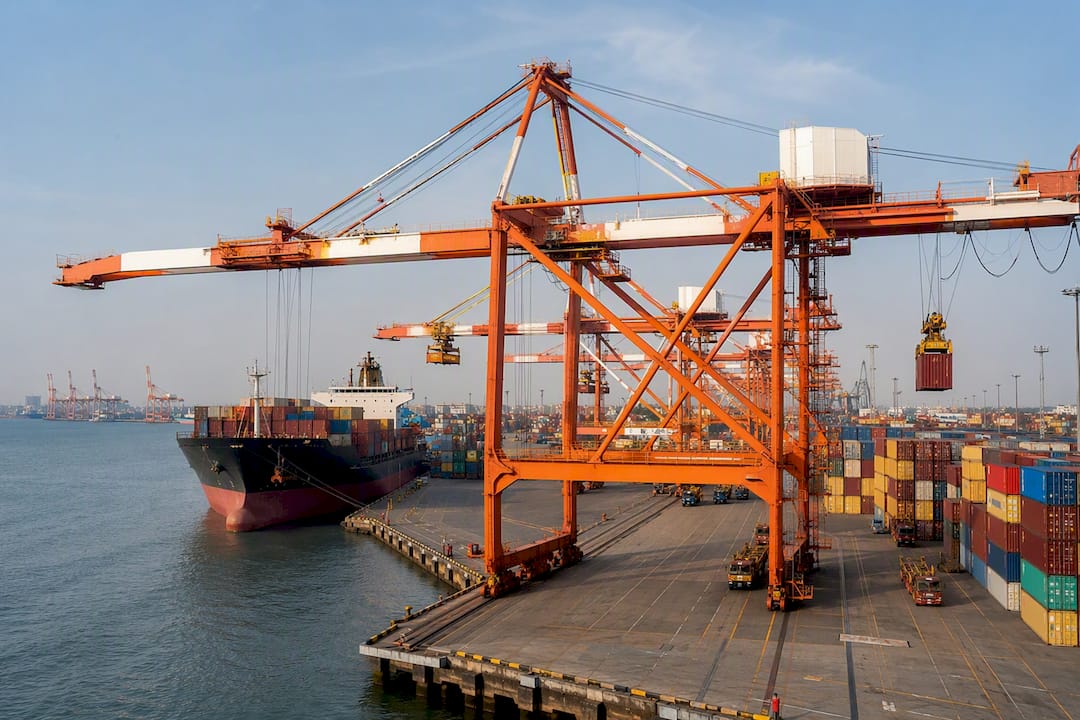
The Port of Xingang (UN/LOCODE CNTXG) is the core deep-water seaport area of the Port of Tianjin and the principal maritime gateway for northern China. It sits on the western shore of Bohai Bay, roughly 170 kilometers from Beijing, and functions as the sea entry point for the entire Beijing–Tianjin–Hebei economic zone. Tianjin Port Group operates the facility, which spans three primary terminal areas: Beijiang, Nanjiang, and Dongjiang.
If you’re booking a shipment or filing customs paperwork, here’s what you need to know right away:
- UN/LOCODE: CNTXG, confirmed through the official UNECE LOCODE listings
- Operator: Tianjin Port Group, the state entity managing terminal leases, dredging, and berth allocation
- Cargo scope: containers, bulk dry and liquid cargo, ro-ro, reefer, and breakbulk, per iContainers’ port profile
- Strategic role: the seaward anchor for Beijing, Tianjin, and Hebei manufacturing and consumer demand
For anyone moving inventory out of northern China, Xingang isn’t just “a port near Beijing.” It’s the specific set of berths you name on your bill of lading, and getting that name right saves you from documentation headaches later.
Key Takeaways
Successful Xingang shipping depends on naming the correct terminal and UN/LOCODE on every document, confirming berth and pilotage windows in advance, and building peak-season buffers into your timeline.
| Point | Details |
|---|---|
| Confirm the exact terminal | Use Beijiang, Nanjiang, or Dongjiang, not a generic “Tianjin” reference, on your bill of lading. |
| Verify UN/LOCODE CNTXG | Cross-check the code against UNECE’s official listings before filing customs documents. |
| Match cargo to terminal | Route containers through Beijiang, bulk through Nanjiang, and ro-ro or project cargo through Dongjiang. |
| Track vessels with AIS | Cross-check carrier ETAs against live tracking data 24 to 48 hours before arrival. |
| Work with a coordinated forwarder | ForwarderOne pairs a dedicated account manager with DDP service to manage pickup, customs, and US delivery as one workflow. |
Where to Verify Port Data and Track Vessels
For anyone confirming details independently, a handful of primary sources cover almost everything in this guide:
- The Port of Tianjin’s official profile for jurisdictional area, terminal names, and operator details
- UNECE’s LOCODE database for confirming CNTXG and other Chinese port codes on shipping documents
- MarineRadar’s Xingang port page and VesselFinder for live AIS vessel tracking and berth activity
- The China Customs English portal for current clearance and inspection procedures
- iContainers’ Xingang port profile for a cargo-type and terminal capability overview
What Is the Port of Xingang, and How Does It Differ From the Port of Tianjin?
Confusion between these two names causes more paperwork errors than almost anything else in northern China freight documentation. “Port of Tianjin” is the umbrella term for the entire municipal port jurisdiction. “Xingang,” sometimes written Tianjin Xingang, refers specifically to the main seaport zone within that jurisdiction, the physical cluster of terminals where ships actually load and unload.
Think of it the way you’d think of “the Port of Los Angeles” versus a specific terminal complex inside it. The Port of Tianjin’s jurisdictional area covers approximately 470 square kilometers, which includes administrative zones, industrial parkland, and multiple terminal clusters. Xingang is the operational heart of that footprint, the collection of deep-water berths across Beijiang, Nanjiang, and Dongjiang that handle the vast majority of vessel traffic.
Why this distinction matters for your paperwork:
When you’re completing a bill of lading, letter of credit, or customs declaration, the port of loading or discharge should reflect the actual UN/LOCODE, CNTXG, rather than a generic reference to “Tianjin.” Banks reviewing letters of credit and customs brokers processing entries both cross-check port codes against the UNECE LOCODE database, and a mismatch between the stated port name and the code you’ve entered can trigger a document discrepancy notice. That’s a delay you don’t need when a shipment is already at sea.
A related and more subtle mistake: naming “Port of Tianjin” generically when your cargo actually moved through a specific Nanjiang container berth. Terminal-level detail rarely blocks a shipment outright, but it does slow down anyone downstream trying to trace where your container physically sat, which matters if you’re disputing detention charges or investigating a delay.
Practitioner insight: conflating Xingang with the broader Tianjin jurisdiction is one of the most common booking mistakes new importers make. Confirming the exact terminal area, Beijiang, Nanjiang, or Dongjiang, before you finalize your booking prevents routing confusion at the terminal gate and keeps your documentation internally consistent.
The port’s scale backs up its reputation. Tianjin Port Group operates dozens of berths across the three terminal zones, handling everything from raw steel coils to consumer electronics destined for Amazon fulfillment centers. That breadth is exactly why getting the naming right on your first booking saves time on every shipment after it.
How Are Beijiang, Nanjiang, and Dongjiang Terminals Different?
Each terminal area at Xingang specializes in different cargo profiles, and knowing which one your goods will move through changes how you plan pickup and inland transport.
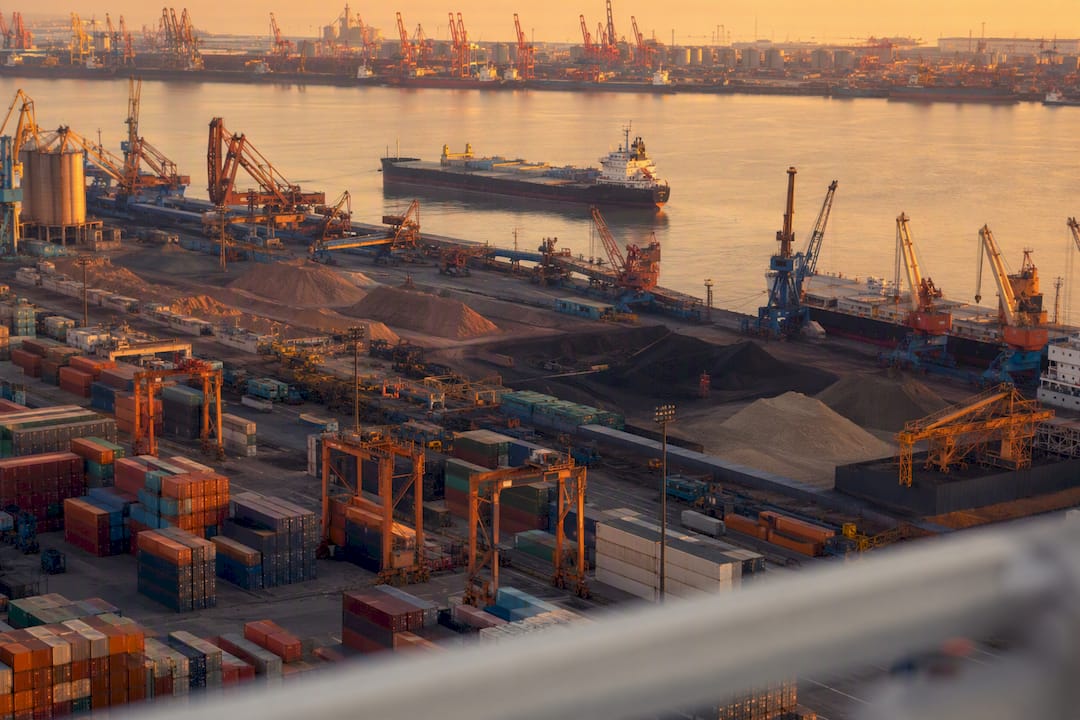
Beijiang (North Port Area) handles a significant share of the port’s container volume alongside general cargo. It’s the terminal zone most container shippers interact with first, equipped with gantry cranes and yard space built for high-turnover box handling. If you’re shipping consumer goods, electronics, or general merchandise in standard containers, Beijiang is likely where your cargo lands.
Nanjiang (South Port Area) is oriented more toward bulk cargo, both dry bulk like coal, ore, and grain, and liquid bulk including crude oil and chemical products. Nanjiang’s berths are built with the deeper draft and specialized pumping or conveyor infrastructure that bulk cargo requires, infrastructure that a standard container terminal doesn’t carry.
Dongjiang (East Port Area) is the newer, purpose-built zone, developed partly as a free trade area with terminals designed for containers, ro-ro vehicle shipments, and some project cargo. Dongjiang’s ro-ro quays make it the natural choice for automotive exports and heavy machinery that needs to roll on and off rather than get craned.
A few operational specifics worth flagging before you book:
- Reefer plug capacity is concentrated in specific yard zones within Beijiang and Dongjiang, so confirm plug availability with your agent before committing to a temperature-controlled booking.
- Berth depths across the three zones vary by design purpose. Bulk berths at Nanjiang generally accommodate deeper-draft vessels than the container berths at Beijiang.
- Project cargo, oversized machinery, wind turbine components, industrial equipment, typically routes through Dongjiang or designated heavy-lift berths, where cranes are rated for non-standard loads.
Getting the terminal area right matters most at the pickup stage. A trucker dispatched to the wrong terminal zone at Xingang can burn hours navigating between Beijiang and Dongjiang, which are separated by enough distance that a wrong turn isn’t a five-minute fix. Confirm the terminal code on your delivery order before dispatching drayage, not after.
What Cargo Types Move Through Xingang, and What Are the Capacity Signals?
Xingang handles a genuinely mixed cargo profile, which is part of why it functions as northern China’s primary gateway rather than a single-commodity port. Containerized freight makes up the largest share of general merchandise, but the port’s bulk and liquid handling capacity is just as central to its role, particularly for the steel, coal, and chemical industries clustered around Tianjin and Hebei.
For chemical and industrial supply chains, RJR Worldwide’s chemical sourcing overview is a useful example of why supplier requirements should be mapped before port and customs planning begins.
Container flows cover the full range of consumer and industrial goods, from furniture and electronics to auto parts and packaged foods. This is where most Amazon sellers and e-commerce importers interact with the port, loading standard 20 and 40 foot containers destined for US fulfillment centers.
Non-container flows are substantial and worth understanding even if you never touch them directly, because they compete for berth time and yard space with your container booking:
- Steel products and coiled metal, much of it originating from Hebei’s steel mills
- Coal and dry bulk minerals moving through Nanjiang’s bulk terminals
- Crude oil and refined chemical products via dedicated liquid bulk berths
- Finished vehicles and heavy machinery through Dongjiang’s ro-ro facilities
Reefer and project cargo each carry their own booking nuances. Reefer bookings need confirmed plug availability at the specific terminal, not just port-wide capacity, since yard-level cooling infrastructure is limited and shared across multiple shippers during high season. Project cargo, oversized industrial equipment or turbine components, needs lead time measured in weeks rather than days, because heavy-lift crane scheduling at Xingang is a shared, bookable resource rather than an on-demand service.
For the inland leg of oversized cargo, HaulPilot’s oversize-load route planner illustrates why clearance constraints and route checks belong in the plan before a heavy-lift booking is finalized.
Pro Tip: If you’re shipping anything outside a standard dry container, confirm equipment and crane availability with your forwarder at least three weeks before your target sailing date. Reefer plugs and heavy-lift slots book out fastest during Q3, ahead of the US holiday shipping rush.
Seasonal pressure is real and predictable. Every year, the run-up to Chinese New Year compresses factory output into a shorter window, which pushes more cargo through Xingang’s terminals in a shorter span and extends both booking lead times and terminal dwell. The same pattern repeats, in reverse, right after the holiday when factories restart and backlog clears through the port simultaneously. If your business depends on holiday-season stock availability in the US, this seasonal compression at origin is often the actual bottleneck, not the ocean transit itself.
Which Shipping Lines and Inland Routes Connect to Xingang?
Xingang is served by the kind of liner network you’d expect from a top-tier northern China gateway: major East-West alliance services connecting to North America’s West Coast, intra-Asia feeder networks linking to Korea and Japan, and dedicated services to Europe via the Suez routing. Carriers structure these as scheduled loops, meaning a given trade lane typically has a fixed weekly or biweekly sailing rather than an on-demand charter.
Typical trade lanes and transit expectations:
- Transpacific to US West Coast: commonly in the range of two to three weeks of ocean transit, before accounting for terminal dwell and inland rail
- Transpacific to US East Coast (all-water via Panama or Suez): meaningfully longer, often five to six weeks
- Intra-Asia (Korea, Japan): short-haul feeder services, frequently under a week
- Europe (via Suez): typically four to five weeks depending on the specific string and port rotation
These figures shift with vessel scheduling changes, congestion, and carrier blank sailings, so treat them as planning ranges rather than guarantees.
Inland connectivity is where Xingang earns its “gateway to Beijing” framing. The port connects to a dense rail and road network purpose-built to move cargo into the Beijing–Tianjin–Hebei corridor:
- Dedicated container rail lines run from Xingang’s terminal areas directly into Beijing’s freight yards, cutting out a chunk of highway congestion for high-volume shippers.
- Expressway corridors link the port to Beijing and Shijiazhuang (Hebei’s capital) for road-based drayage, typically a same-day or overnight run depending on destination.
- Intermodal transfer yards near Beijiang and Dongjiang allow containers to shift from vessel to rail without a full drayage leg, which matters if your inland destination is a rail-served industrial park rather than a port-adjacent warehouse.
For shippers whose final destination is genuinely northern, Beijing, Tianjin municipality itself, or Hebei’s manufacturing belt, this rail and road density is Xingang’s single biggest practical advantage over a port further south. You’re not just closer to the ocean, you’re closer to the inland corridor that actually moves your goods the last several hundred kilometers.
How Does Berth Booking and Vessel Tracking Work at Xingang?
Getting a vessel berthed and unloaded at Xingang without unnecessary delay comes down to three coordinated pieces: pilotage and VTS compliance, real-time tracking, and realistic buffer planning.
1. Pilotage and vessel traffic service (VTS) coordination. Xingang, like most major Chinese ports, requires certified pilots to guide vessels through the approach channel and into berth. The port operates on UTC+8, and VTS coordinates arrival sequencing across all three terminal areas simultaneously, meaning your vessel’s actual berthing time depends on traffic across the whole port, not just your assigned terminal.
2. AIS and vessel-tracking confirmation. Automatic Identification System data, viewable through tools like VesselFinder or MarineRadar, gives you a live position and speed for any vessel calling Xingang. Checking AIS data against your carrier’s stated ETA is one of the simplest ways to catch a schedule slip before it becomes a surprise, especially useful when your inland trucking or FBA delivery window is tight.
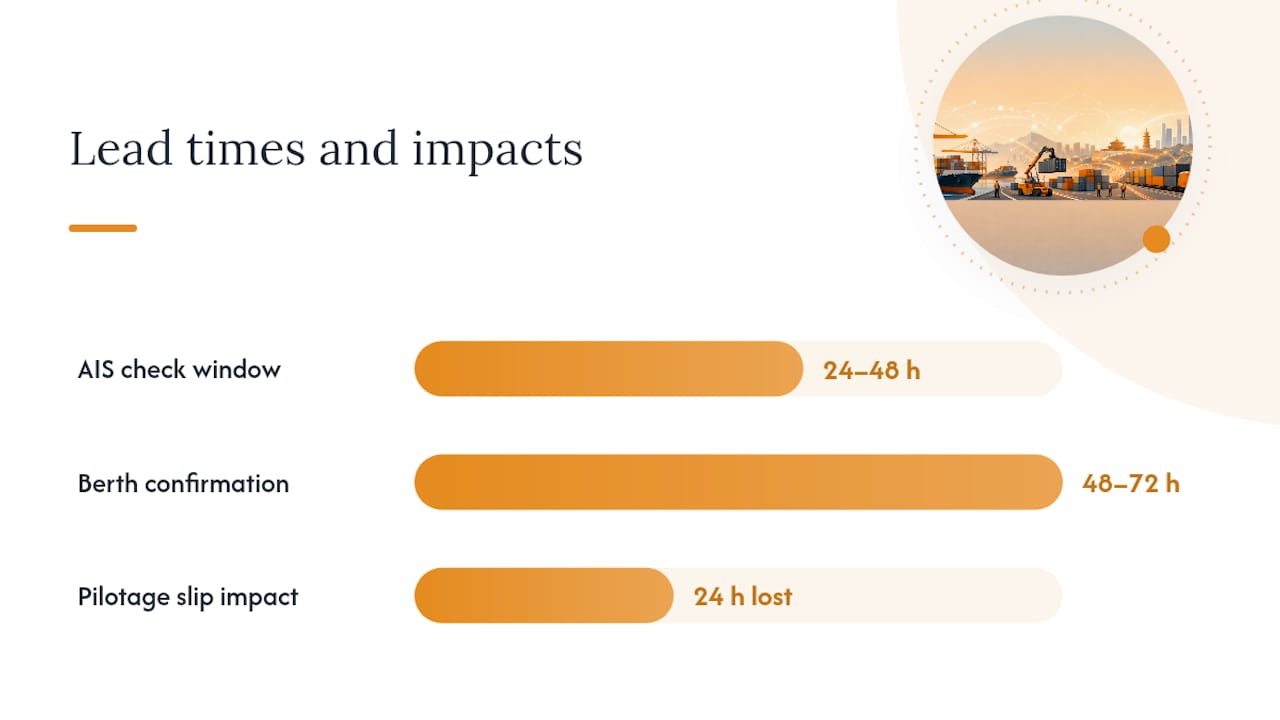
3. Berth booking confirmation and buffer time. Terminal operators allocate berth windows in advance, but those windows shift constantly based on vessel bunching, weather, and tidal restrictions in the approach channel. Confirming your berth slot directly with terminal operations 48 to 72 hours ahead of arrival, rather than trusting the original carrier schedule, catches most last-minute changes.
A few operational realities worth building into your planning:
- Night and weekend berthing can carry restrictions or reduced staffing at certain terminal zones, so factor that into time-sensitive bookings.
- Weather-related channel closures, particularly during typhoon season further south, can still ripple northward through carrier schedules even though Xingang itself sits outside the typhoon belt.
- Pilotage requests submitted late in the queue get bumped behind vessels that booked earlier, so last-minute schedule changes on your end can cost you your slot.
Pro Tip: Don’t rely solely on your carrier’s published ETA. Cross-check it against live AIS data 24 to 48 hours before arrival, and flag any discrepancy to your forwarder immediately. A half-day slip at the pilotage stage can cascade into a full day of lost berth time if the next available slot is already booked.
What Documents and Customs Steps Does Xingang Cargo Require?
Import and export cargo moving through Xingang follows China’s standard customs framework, but a few details specific to this port’s terminal structure are worth knowing before you file.
Standard documentation set:
- Commercial invoice and packing list, matched line-for-line with the bill of lading
- Bill of lading naming the correct terminal and the UN/LOCODE CNTXG, not a generic “Tianjin” reference
- Certificate of origin, particularly relevant for goods claiming preferential tariff treatment
- Export customs declaration filed through China’s customs system, referencing the correct port of loading code
- Import customs entry on the receiving end, which for US-bound cargo means matching CBP requirements once the shipment lands stateside
The China Customs English portal publishes current procedural guidance, useful background if you’re coordinating directly with a customs broker rather than working entirely through a freight forwarder.
Inspection and quarantine flow. Cargo subject to inspection, certain agricultural products, chemicals, or goods flagged for random compliance checks, moves through a separate quarantine and inspection queue before final customs release. This step is where dwell time most often stretches beyond plan, since inspection scheduling depends on inspector availability rather than vessel schedule. Goods correctly documented and properly classified under the right Harmonized System code clear this stage fastest; misclassified cargo gets pulled for manual review far more often.
DDP versus DDU for US-bound cargo. If your shipment is heading to a US fulfillment center, the choice between Delivered Duty Paid and Delivered Duty Unpaid terms changes who’s responsible for US customs clearance and duty payment on arrival. Under DDU, you or your US-side broker handle that clearance separately, adding a coordination step and a point where miscommunication can stall a shipment at the US port. Under DDP, that responsibility sits with your forwarder as one continuous workflow from Xingang to your fulfillment center door, which is why most small and mid-sized Amazon sellers lean toward DDP for FBA-bound freight. Understanding US customs clearance in detail before your first shipment saves you from discovering the gaps mid-transit.
Appointing a China-based agent to handle export-side documentation, rather than managing it remotely, catches classification errors and paperwork mismatches before they reach the customs queue. That single step prevents more delays than any amount of downstream troubleshooting.
How Should Shippers Plan a Shipment Timeline Through Xingang?
A realistic Xingang shipment breaks into five stages, and knowing where delays typically cluster helps you build a booking timeline that actually holds.
- Supplier pickup and consolidation. Your goods leave the factory floor and move to a consolidation warehouse, where multiple suppliers’ cargo often combines into a single container. This stage typically takes three to seven days depending on how many suppliers you’re coordinating.
- Export documentation and terminal delivery. Commercial invoices, packing lists, and export declarations get finalized, and the container moves to the correct Xingang terminal, Beijiang, Nanjiang, or Dongjiang, based on cargo type.
- Vessel loading and departure. The container joins its booked sailing, subject to the pilotage and berth scheduling realities covered above.
- Ocean transit. Transpacific transit runs roughly two to six weeks depending on destination coast, as outlined earlier.
- US arrival, customs clearance, and last-mile delivery. Under a DDP arrangement, this stage is a single coordinated handoff rather than a series of separate broker and trucking bookings.
A dedicated account manager, the model ForwarderOne builds its service around, changes how much friction shows up at each of these five stages. Instead of chasing five separate vendors for pickup, documentation, and clearance status, you get one point of contact tracking the shipment end to end, which is where most of the dwell-time savings actually come from.
Peak-season planning matters more at Xingang than almost anywhere else in northern China, given how tightly factory output compresses around Chinese New Year. A few concrete steps protect your inventory timeline:
- Book ocean freight capacity at least four to six weeks ahead of your target sailing during September through November, ahead of the US holiday shipping surge.
- Cross-check your supplier’s production schedule against the factory holiday and cargo cutoff calendar before committing to a delivery date with your own customers.
- Build a contingency buffer of at least one to two weeks into any FBA replenishment plan tied to a Xingang departure during peak months.
Pro Tip: If your FBA stock levels are tight heading into Q4, don’t wait for a confirmed sailing before starting export documentation. Parallel-track your paperwork with your consolidation timeline so the container is ready to move the moment a vessel slot opens.
When Should You Route Through Xingang Instead of Another Chinese Port?
The decision usually comes down to geography first, cost and frequency second.
Choose Xingang when:
- Your factories or suppliers sit in Hebei, Shandong, or the broader Bohai Bay region, minimizing pre-carriage trucking distance to the port
- Your inland US distribution plan benefits from the port’s northern positioning relative to transpacific great-circle routes
- Your cargo includes bulk, chemical, or heavy industrial goods tied to the Tianjin/Hebei manufacturing base
Consider an alternative southern or eastern port when:
- Your suppliers cluster around the Pearl River Delta or the Yangtze River Delta, where trucking cargo north to Xingang would add days and cost with no transit-time benefit
- You need higher sailing frequency on a specific trade lane that a port like Shanghai or Shenzhen services more densely
- Your priority is absolute lowest transit time to US destinations, where southern port great-circle geometry sometimes edges out a Bohai Bay departure
The practical decision test is simple: map your supplier locations first, then check which gateway port sits closest to that cluster with adequate sailing frequency on your target lane. For northern-origin cargo, that answer is almost always Xingang. For southern or eastern origin cargo, forcing it north to save on Beijing proximity rarely pencils out once you add the extra trucking leg.
Visitor, Terminal Access, and Trucker Notes
Anyone arranging a physical visit or drayage pickup at Xingang needs to plan around standard port security protocols. Visitors and drivers need valid identification and, in most cases, advance registration tied to a specific booking or appointment before terminal gates grant access. Gate hours vary by terminal area and tighten around weekends and public holidays, so confirm operating hours directly with the terminal rather than assuming standard business hours apply. For live arrival schedules and terminal notices, AIS trackers and the port authority’s own bulletins are more reliable than secondhand carrier updates.
A Forwarder’s View on Common Xingang Routing Mistakes
The single most common error is naming “Tianjin” generically on a booking when the cargo is actually moving through a specific Nanjiang or Dongjiang berth. It seems minor until a customs discrepancy notice lands and nobody can trace which terminal actually handled the container. The second most common mistake is booking too close to a sailing date during peak season and assuming berth and crane availability will simply be there. Proactive confirmation, checking terminal capacity, pilotage windows, and documentation accuracy days before departure rather than after, catches nearly every delay before it becomes a real problem.
Get Your Xingang Shipment Moving With ForwarderOne
ForwarderOne is the alternative to juggling separate vendors for every leg of a Xingang shipment, one coordinated workflow instead of five disconnected handoffs between your China agent, terminal operator, customs broker, and US trucker.
If you’re sourcing from suppliers near Tianjin, Hebei, or the broader Bohai Bay region, ForwarderOne’s service covers the full route: China-based agent coordination for supplier pickup and consolidation, export documentation, ocean freight booking through Xingang’s terminals, DDP customs clearance, and final delivery to your US fulfillment center.
That single point of contact is what actually prevents the kind of documentation mismatch and terminal confusion covered earlier in this guide. If you’re planning inventory around a peak shipping season and need a Xingang route that won’t stall at customs, request a quote from ForwarderOne and get a timeline built around your actual sailing date.
Frequently Asked Questions
What does UN/LOCODE CNTXG actually refer to? CNTXG is the official United Nations location code for Tianjin Xingang, the core deep-water seaport area within the larger Port of Tianjin jurisdiction. Use this exact code, not a generic “Tianjin” reference, on bills of lading and customs filings.
Is Xingang the same thing as the Port of Tianjin? Not exactly. The Port of Tianjin is the full administrative jurisdiction, covering roughly 470 square kilometers, while Xingang refers specifically to the main seaport zone made up of the Beijiang, Nanjiang, and Dongjiang terminal areas.
Which terminal handles container cargo at Xingang? Beijiang handles the largest share of container traffic, though Dongjiang also processes containers alongside its ro-ro and project cargo operations. Nanjiang is oriented mainly toward dry and liquid bulk.
How long does ocean transit take from Xingang to the US? Transpacific transit to the US West Coast typically runs two to three weeks, while all-water routings to the East Coast often take five to six weeks. Actual timing depends on carrier scheduling and seasonal congestion.
Why would I choose Xingang over a southern Chinese port? Xingang makes the most sense when your suppliers are based in Hebei, Shandong, or the Bohai Bay region, or when your inland US distribution benefits from a northern departure point. Southern-origin cargo usually ships more efficiently through a port closer to that supplier base.
Does ForwarderOne handle shipments specifically through Xingang? Yes. ForwarderOne coordinates China-based supplier pickup, consolidation, and DDP customs clearance for shipments moving through Xingang and other major Chinese ports, with a dedicated account manager overseeing the full route to US fulfillment centers.
Sources
- Port of Tianjin — Wikipedia
- Port of Tianjin Xingang Pt (CNTXG) | MarineRadar
- Port of Xingang | Ocean Freight & Container Shipping — iContainers
- UNECE LOCODE listings
Routing cargo through Xingang?
ForwarderOne coordinates China pickup, consolidation, ocean freight booking, customs clearance, duty payment, and final US delivery through one managed workflow.