Freight tracking systems are defined as technology platforms that deliver real-time location and status updates for shipments across every stage of the supply chain. The role of freight tracking systems extends far beyond simple package location. Using GPS, RFID, and IoT sensors, these platforms give businesses and e-commerce sellers complete supply chain oversight that transforms reactive shipping into proactive logistics management. For Amazon sellers moving inventory from China to US fulfillment centers, that visibility is the difference between stocking out during peak season and arriving on time, every time.
How freight tracking systems improve supply chain visibility
The role of freight tracking systems in supply chain visibility is to close the information gap that exists between the moment a shipment leaves a warehouse and the moment it arrives at its destination. Live tracking gives all supply chain parties a real-time picture of location and delivery status, which directly improves the speed and quality of operational decisions. Without that data, your team can only react after a problem has already cost you time or money.
Freight visibility systems deliver several concrete operational improvements:
- Route optimization: Tracking platforms flag inefficient routes and suggest alternatives when delays appear, reducing transit time and fuel costs.
- Early delay detection: Automated exception alerts notify your team the moment a shipment misses a checkpoint, so you can reroute or notify customers before the situation escalates.
- Inventory planning: Knowing exactly when inbound stock will arrive lets you schedule warehouse labor, avoid stockouts, and reduce holding costs.
- Reduced manual work: Automated tracking event updates replace manual status checks, cutting administrative hours and human error from your workflow.
Integration with transportation management systems (TMS) and enterprise resource planning (ERP) platforms multiplies these gains. When your freight tracking software feeds directly into your order management system, every department from purchasing to customer service operates from the same data set.
Pro Tip: Set up automated exception alerts for border crossings and customs holds specifically. Automated border crossing updates let you respond to customs issues within hours rather than days, protecting your on-time delivery rate.
What technologies power freight tracking systems?
Freight tracking technology is not a single tool. It is a stack of complementary systems, each solving a specific visibility problem. Understanding what each layer does helps you evaluate which logistics tracking solutions actually fit your operation.
| Technology | Primary function | Best use case |
|---|---|---|
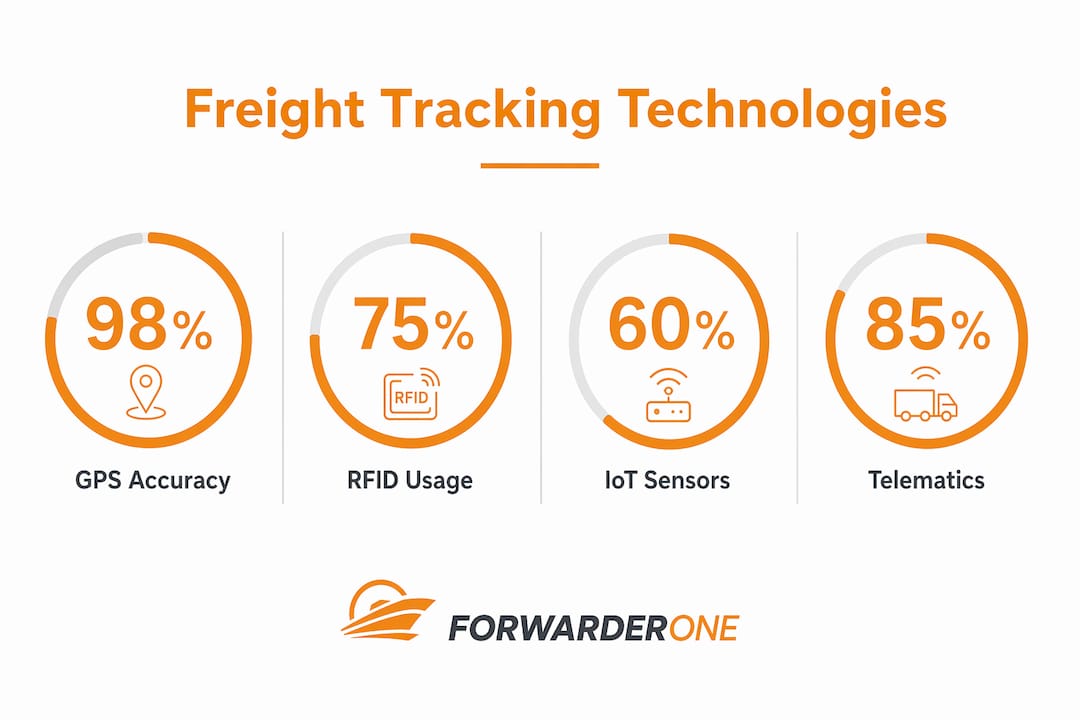
| GPS and telematics | Live vehicle location and route data | Long-haul trucking, ocean container tracking |
| RFID sensing | Automatic package detection without manual scans | Warehouse receiving, last-mile delivery |
| IoT sensors | Environmental monitoring (temperature, humidity, shock) | Pharmaceuticals, electronics, perishables |
| Barcode scanning | Event-based status updates at scan points | Parcel carriers, fulfillment centers |
| Data integration platforms | Unified visibility across multiple carriers and modes | Multi-leg international shipments |
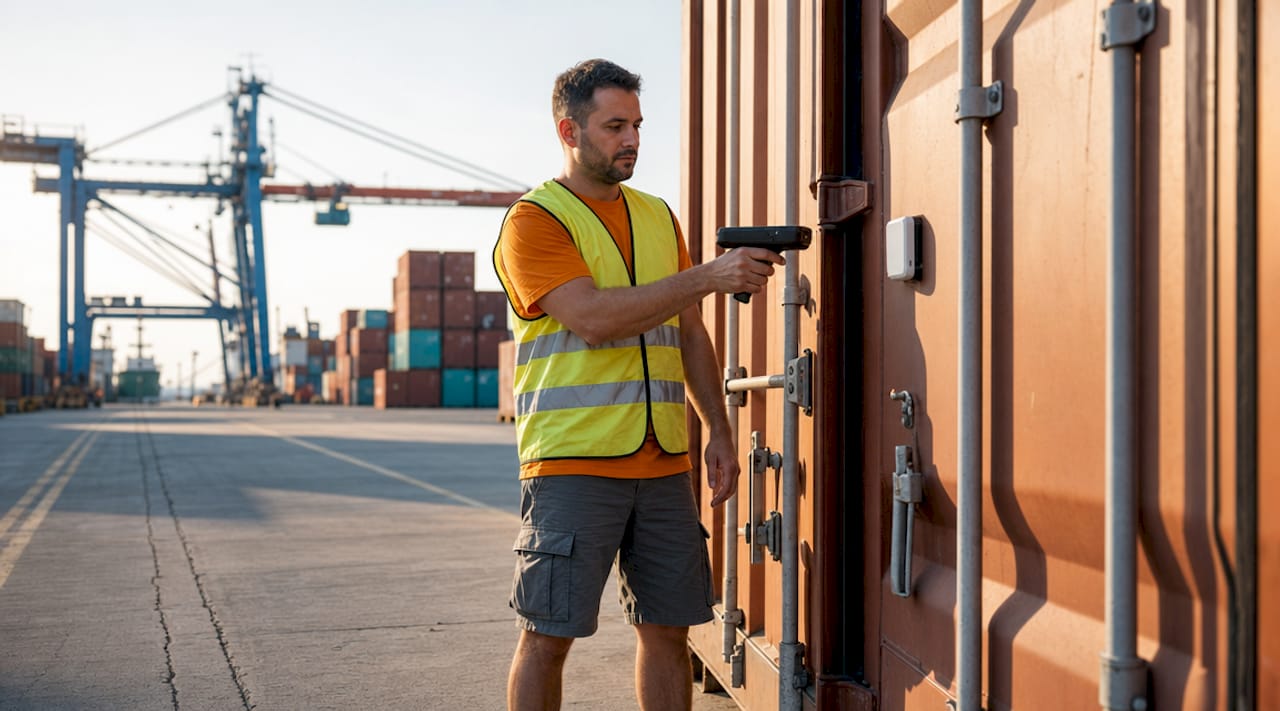
RFID represents the most significant recent advance in freight tracking technology. UPS invested over $100 million to embed RFID in labels and vehicles, enabling automatic sensing at every touchpoint from pickup to delivery without requiring a human to scan each package. The practical result is fewer missed scans, more accurate estimated delivery times, and a dramatic reduction in "where is my package" inquiries. UPS leadership has stated that automating sensing events within workflows is critical to both tracking accuracy and customer satisfaction.
IoT sensors add a dimension that GPS and RFID cannot: condition monitoring. For e-commerce sellers shipping electronics or temperature-sensitive goods from Asia, an IoT-enabled shipment records whether your cargo was exposed to excessive heat or humidity during the ocean leg. That data supports insurance claims and supplier accountability conversations. Technologies like barcodes, RFID, IoT sensors, and blockchain together provide item-level supply chain transparency that was simply not achievable a decade ago.
Pro Tip: When evaluating freight tracking software, ask whether the platform aggregates data from multiple carriers into a single dashboard. Multi-carrier visibility is far more useful for international e-commerce than a single-carrier portal, especially when your shipment moves across ocean, customs, and last-mile delivery legs.
What are the real benefits of freight tracking for e-commerce sellers?
The benefits of tracking systems are most tangible when measured against the specific pain points that businesses and e-commerce sellers face: lost shipments, angry customers, unexpected fees, and inventory gaps. Here is how freight visibility systems address each of those directly.
- 1. Reduced risk of loss and theft. Real-time location data creates a continuous audit trail for every shipment. If a container goes silent or deviates from its expected route, your team receives an alert immediately rather than discovering the problem at delivery.
- 2. Proactive customer communication. Customers who receive automatic status updates before they think to ask generate fewer support tickets. Customer self-service tracking portals reduce inbound inquiries by 30 to 50%, which directly lowers your customer service workload. For a growing Amazon seller, that is hours of team time recovered every week.
- 3. Detention and demurrage cost avoidance. Container free-time windows are short, and the fees for exceeding them are steep. Freight tracking systems that monitor free-time utilization and trigger alerts before charges accrue turn detention and demurrage management from a reactive billing dispute into a proactive cost control process. AI-driven prediction models now flag containers approaching their free-time limit automatically, giving your team a window to act.
- 4. Better inbound scheduling. Knowing your exact arrival window lets you book warehouse appointments, allocate labor, and prepare receiving docks in advance. For Amazon FBA sellers, accurate inbound scheduling directly protects your inventory performance metrics.
- 5. Improved supplier accountability. When tracking data shows a shipment left the origin port three days late, you have documented evidence for supplier conversations. That specificity changes the nature of those discussions entirely.
The impact of tracking on logistics compounds over time. Each shipment generates data that reveals patterns: which routes run late, which carriers miss scan events, which origin ports create customs delays. That pattern data is the foundation of continuous logistics improvement.
How to implement freight tracking in your logistics operations
Successful implementation of freight tracking technology follows a clear sequence. Skipping steps, especially the integration and training phases, is the most common reason tracking investments underperform.
- Assess your operational needs first. A small Amazon seller shipping one container per month has different requirements than a mid-sized retailer managing 50 LTL shipments weekly. Define which shipment types, modes, and geographies you need to cover before evaluating platforms.
- Prioritize TMS and ERP integration. Tracking data sitting in a separate portal that nobody checks delivers almost no value. Integrating tracking with TMS and ERP systems is what converts raw location data into operational decisions. Confirm API availability before committing to any platform.
- Establish alert workflows before go-live. Decide in advance who receives which alerts and what action each alert triggers. A delay notification that goes to an inbox nobody monitors is the same as no notification at all.
- Train your team on exception management, not just the dashboard. Most of the value in freight tracking software comes from responding to exceptions quickly. Train staff on the specific workflows for customs holds, missed checkpoints, and detention alerts rather than just how to look up a tracking number.
- Use analytics for continuous improvement. Review carrier performance data monthly. Platforms that surface on-time rates, transit time variance, and exception frequency by carrier and lane give you the leverage to renegotiate rates and switch underperforming partners. For smarter shipment management, analytics are what separate tracking as a reactive tool from tracking as a strategic asset.
A common pitfall is treating freight tracking as a customer-facing feature rather than an operational system. The customer portal is valuable, but the internal workflow automation and analytics are where the real ROI lives.
Key takeaways
Freight tracking systems deliver their greatest value when integrated directly into operational workflows, not used as standalone lookup tools.
| Point | Details |
|---|---|
| Real-time visibility closes information gaps | Live tracking enables proactive decisions instead of reactive responses to delays and disruptions. |
| RFID and IoT extend tracking beyond location | Condition monitoring and automatic sensing add accuracy and accountability that GPS alone cannot provide. |
| Customer portals reduce support workload | Self-service tracking cuts inbound inquiries by 30 to 50%, recovering significant team time each week. |
| D&D alerts prevent avoidable fees | Automated free-time monitoring turns detention and demurrage from a surprise cost into a managed expense. |
| Integration determines ROI | Connecting tracking data to TMS and ERP systems is what converts visibility into operational and financial gains. |
Why I think most sellers underestimate what tracking data can actually do
Most e-commerce sellers I talk to think of freight tracking as a customer service tool. They set up a portal so buyers can check their order status, and they consider the job done. That framing leaves most of the value on the table.
The real payoff from freight visibility systems is internal. When your tracking platform feeds exception data into your operations workflow, your team stops spending hours chasing carrier updates and starts spending that time on decisions that actually move the business forward. I have seen sellers cut their logistics-related customer service volume in half simply by setting up proactive delay notifications. The customers who would have emailed never needed to, because they already knew.
The other underestimated area is detention and demurrage. Most sellers treat D&D fees as an unavoidable cost of doing international business. They are not. AI-driven D&D prediction and automated dispute handling now make it possible to avoid the majority of these charges entirely, but only if your tracking system is connected to carrier tariff data and terminal rules in real time. That is a solvable problem in 2026, not a cost of doing business.
Looking ahead, 5G-enhanced tracking and AI-driven analytics will make continuous visibility the baseline expectation rather than a premium feature. Sellers who build their logistics operations around tracking data now will have a structural advantage when those capabilities become standard. The ones who treat tracking as an afterthought will be playing catch-up.
— Keven
How ForwarderOne keeps your shipments visible from China to your FBA warehouse
ForwarderOne builds shipment visibility directly into every freight forwarding engagement for Amazon sellers. You get real-time status updates across the full journey from Chinese factories to US fulfillment centers, with a dedicated account manager who monitors exceptions and communicates proactively before delays become problems.
The all-inclusive DDP service handles customs, duties, and delivery in a single workflow, eliminating the coordination gaps where visibility typically breaks down. For small Amazon FBA sellers who need reliable inbound scheduling and over 99% on-time delivery, ForwarderOne's freight forwarding services provide the operational foundation that keeps your inventory levels stable through peak seasons and beyond. Use the shipping cost calculator to get an instant estimate for your next shipment.
FAQ
What is the role of freight tracking systems in logistics?
Freight tracking systems provide real-time location and status updates for shipments across the supply chain, enabling businesses to make proactive decisions, reduce delays, and improve customer communication. They use GPS, RFID, IoT sensors, and data integration platforms to deliver continuous visibility from origin to destination.
How does real-time freight tracking reduce costs?
Real-time tracking reduces costs by enabling route optimization, early delay intervention, and automated detention and demurrage alerts that prevent avoidable container fees. Customer self-service portals also cut support workload, which lowers operational overhead.
What technologies are used in freight tracking systems?
The main technologies are GPS for live location data, RFID for automatic package sensing without manual scans, IoT sensors for condition monitoring, barcode scanning for event-based updates, and data integration platforms that unify multi-carrier visibility into a single dashboard.
How do freight tracking systems benefit e-commerce sellers specifically?
E-commerce sellers gain accurate inbound scheduling for FBA warehouses, proactive customer notifications that reduce support inquiries by 30 to 50%, documented shipment data for supplier accountability, and automated alerts that prevent detention and demurrage charges on international containers.
What should I look for when choosing freight tracking software?
Prioritize platforms that integrate with your existing TMS or ERP, support multiple carriers and shipping modes, and provide automated exception alerts rather than just passive tracking. Analytics features that surface carrier performance trends are what convert tracking from a lookup tool into a continuous improvement resource.
Need shipment visibility from pickup to FBA delivery?
Send your supplier city, shipment mode, carton details and Amazon destination. ForwarderOne will plan the DDP route, monitor exceptions and keep your inbound schedule visible.