Cargo insurance is defined as a policy that protects importers against financial loss from damage, theft, or total loss of goods during international transit. The standard industry term is “marine cargo insurance,” which applies to ocean, air, and ground shipments alike. The three core coverage tiers under the Institute Cargo Clauses (ICC) are All Risks (ICC A), Named Perils (ICC B), and Limited Risks (ICC C). Understanding which cargo insurance types for importers fit your shipment profile is the single most important decision you make before goods leave the factory floor.
1. What are the main cargo insurance coverage types for importers?
The ICC framework defines three tiers of marine cargo coverage, and each one carries a different risk profile and price point.

ICC (A): All Risks coverage
ICC (A) is the broadest available protection. It covers theft, mishandling, wetting, contamination, and virtually any accidental loss unless specifically excluded. 59% of exporters and importers choose ICC (A) as their primary policy. That preference reflects the reality that most cargo claims come from exactly the risks ICC (A) covers: rough handling, moisture damage, and pilferage.
- Covers theft, physical damage, wetting, and contamination
- Best suited for electronics, apparel, pharmaceuticals, and any high-value goods
- Highest premium among the three tiers, but the most complete claim recovery
ICC (B): Named Perils coverage
ICC (B) covers a defined list of risks: fire, explosion, vessel sinking, collision, earthquake, and washing overboard. It does not cover theft or mishandling. 25% of shippers use ICC (B) as a cost-effective middle ground for goods that are durable and low-theft-risk.
- Named perils only, no open-ended “all risks” protection
- Suitable for industrial machinery, steel, or bulk raw materials
- Lower premium than ICC (A), higher than ICC C
ICC C: Limited Risks coverage
ICC C covers only major catastrophic events: fire, explosion, vessel sinking, and stranding. It excludes theft, wetting, and handling damage entirely. 16% of shippers use ICC C, typically for low-value bulk commodities where the cost of broader coverage exceeds the risk.
- Minimum viable coverage for low-value or bulk cargo
- Not recommended for finished goods or anything susceptible to handling damage
- Lowest premium, but significant gaps in protection
Pro Tip: If you import finished consumer goods into the US from China, ICC (A) is the only tier that covers the full range of risks you actually face. ICC C may look affordable, but a single theft or moisture claim will cost far more than the premium savings.
2. How policy types and shipping frequency shape your coverage choice
The coverage tier you choose is only half the decision. The policy structure, meaning how often it renews and what it automatically covers, determines how well your insurance fits your actual shipping pattern.
Single-trip policies
A single-trip policy covers one shipment from origin to destination. It requires a new application, quote, and premium payment for every shipment. This structure suits importers who ship occasionally, perhaps two or three times per year. The administrative cost per shipment is high, and there is no continuity of coverage between shipments.
Annual open policies
An annual open policy provides continuous coverage for all declared shipments within a 12-month period. Every shipment you declare is automatically covered under the same terms. Regular importers benefit from lower per-shipment premiums, simplified claims handling, and no gaps between shipments.
Annual policies also integrate directly into financial planning. You know your insurance cost for the year upfront, which makes budgeting predictable. Claims are processed under a single policy number, which reduces paperwork significantly.
The practical steps for choosing between the two:
- Count your shipments per year. If you ship more than six times annually, an annual open policy almost always costs less per shipment.
- Calculate your total cargo value per year. Higher aggregate value strengthens the case for annual coverage.
- Review declaration accuracy requirements. Annual policies require you to declare each shipment promptly and accurately. Undeclared shipments may not be covered.
- Check usage limits. Some annual policies cap total insured value per year. Confirm the cap exceeds your projected annual cargo value.
- Confirm automatic coverage triggers. The best annual policies cover shipments the moment they are declared, with no waiting period.
Pro Tip: Ask your insurer whether the annual policy includes automatic coverage for shipments declared after business hours. Some policies require same-day declaration, which creates gaps for importers working across time zones with Chinese suppliers.
3. What factors affect cargo insurance premiums and how to manage costs
Cargo insurance premiums range from 0.10% to 1.50% of insured value depending on transport mode, commodity type, and route risk. That range is wide enough to make premium management a real financial lever for importers.
| Transport Mode | Typical Premium Range | Best For |
|---|---|---|
| Ocean freight | 0.10%–0.60% | High-volume, lower-urgency goods |
| Air freight | 0.20%–1.00% | High-value, time-sensitive cargo |
| Ground freight | Up to 1.50%+ | Domestic legs, cross-border trucking |
Several factors push premiums toward the higher end of each range:
- Commodity type: Electronics, jewelry, and pharmaceuticals attract higher rates due to theft risk and fragility.
- Shipping lane: Routes through high-piracy zones or politically unstable regions carry surcharges.
- Packaging quality: Poor packaging increases the likelihood of a claim and raises your rate at renewal.
- Claims history: A history of frequent claims signals higher risk to underwriters.
The most common and costly mistake importers make is insuring only the invoice value. Insuring to full landed cost means including the invoice, freight charges, import duties, customs fees, and a 10%–15% margin for expected profit. Insuring only the invoice value creates a shortfall in a total loss scenario. You recover the cost of goods but not the duties you already paid or the profit you expected to earn.
Pro Tip: Request an itemized premium breakdown from your insurer. If theft risk is driving your rate up, improving packaging and using tamper-evident seals can reduce your premium at renewal. Insurers reward documented risk reduction.
4. Common misconceptions about cargo insurance that cost importers money
The most expensive misconception in import logistics is that carrier liability provides adequate protection. Carrier liability caps payouts at $2 per kilogram or less under standard maritime conventions. For a 500 kg shipment of electronics worth $50,000, that cap means a maximum carrier payout of $1,000. That is 2% of the cargo’s value.
A second misconception involves Incoterms. When a seller ships under CIF (Cost, Insurance, and Freight) terms, they are required to provide insurance. However, CIF only mandates ICC C coverage, the most limited tier. ICC C excludes theft, wetting, and handling damage. Most importers receiving CIF shipments assume they are fully covered. They are not.
Importers who rely on seller-provided or Incoterm-based insurance often discover the gap only after a claim is denied. The seller’s insurer has no obligation to protect the buyer’s profit margin or cover duties already paid. Arranging your own All Risks policy is the only way to control both the coverage terms and the claims process.
Best practices that directly improve claim outcomes:
- Take timestamped photos of all packaging and sealing before shipment. Without photographic evidence, claims are frequently denied under the “inherent vice” or “poor packing” exclusion.
- Document cargo condition at origin and destination. A survey report from a licensed marine surveyor strengthens any disputed claim.
- Include full landed cost in the insured value, not just the purchase price.
- Review policy exclusions before binding coverage. Common exclusions include delay, market loss, and gradual deterioration.
- Understand General Average. If a vessel suffers a major incident, all cargo owners must contribute to shared losses. All Risks cargo insurance handles General Average bonds promptly, protecting your cash flow while the claim resolves.
5. Additional coverage options importers should consider
Standard ICC coverage protects cargo in transit. A complete import risk management program extends protection beyond the shipping lane into storage, liability, and product safety.
Key add-on coverages worth evaluating:
- War and strikes risk insurance: Standard ICC policies exclude war, strikes, riots, and civil commotion. War risk coverage is purchased separately and is particularly relevant for shipments through the Red Sea, Strait of Hormuz, or other conflict-adjacent trade lanes.
- Warehouse-to-warehouse coverage: This extends protection from the moment goods leave the seller’s warehouse until they arrive at your fulfillment center or storage facility. Standard port-to-port terms leave gaps during inland transit and temporary storage.
- Product liability insurance: Protects you if imported goods cause injury or property damage after delivery. This is especially relevant for Amazon sellers, where a single product liability claim can result in account suspension and legal costs.
- Product recall insurance: Covers the cost of recalling defective goods from the market, including logistics, communication, and replacement costs.
Aligning your coverage scope with your Incoterms is critical. Under EXW (Ex Works) terms, you bear risk from the factory door. Under DDP (Delivered Duty Paid) terms, the seller or freight forwarder carries risk until delivery. Knowing exactly where your risk begins determines which coverages you need and which you can skip.
Pro Tip: If you import consumer goods sold on Amazon, product liability insurance is not optional. Amazon’s seller policies increasingly require proof of coverage above a minimum threshold. Check the current requirements before your next shipment.
Key Takeaways
The most effective cargo insurance program for importers combines ICC (A) All Risks coverage, full landed cost valuation, and an annual open policy that matches shipment frequency.
| Point | Details |
|---|---|
| ICC (A) is the standard for importers | All Risks coverage protects against theft, mishandling, and wetting, the most common claim causes. |
| Annual policies reduce cost and admin | Frequent importers save on premiums and paperwork by consolidating coverage under one annual policy. |
| Carrier liability is not enough | Carrier payouts cap at $2/kg or less, covering only a fraction of most shipments’ commercial value. |
| Insure full landed cost | Include invoice, freight, duties, and a 10%–15% profit margin to avoid a shortfall on total loss claims. |
| Add-ons complete the program | War risk, warehouse-to-warehouse, and product liability coverage close gaps that standard ICC policies leave open. |
What I’ve learned about cargo insurance after years in import logistics
The importers who get burned by cargo insurance are almost never the ones who skipped it entirely. They are the ones who bought the cheapest policy available and assumed it covered everything.
I have seen CIF shipments arrive damaged, and the buyer discovers too late that the seller’s ICC C policy excludes the exact cause of loss. I have seen electronics shipments where the importer insured only the invoice value, then faced a total loss and could not recover the $8,000 in duties already paid. These are not edge cases. They are predictable outcomes of predictable decisions.
The shift in thinking that changes everything is treating cargo insurance as an operational cost, not a contingency expense. When you budget for it the same way you budget for freight, you stop looking for the cheapest option and start looking for the right one. Annual open policies with ICC (A) coverage are not a luxury for large importers. They are the baseline for anyone shipping more than a few times per year.
One more thing most articles skip: insurer reputation matters as much as policy terms. A policy that pays claims quickly and without dispute is worth more than a marginally cheaper policy from an insurer known for delays. Ask your freight forwarder which insurers they have seen perform well on claims. That conversation is worth more than reading a dozen policy documents.
— Keven
ForwarderOne makes cargo insurance part of your freight workflow
Choosing the right coverage tier and policy structure is complex enough without managing it separately from your freight operations. ForwarderOne integrates cargo insurance directly into its freight forwarding workflow for importers shipping from China, Korea, and Mexico to US fulfillment centers.
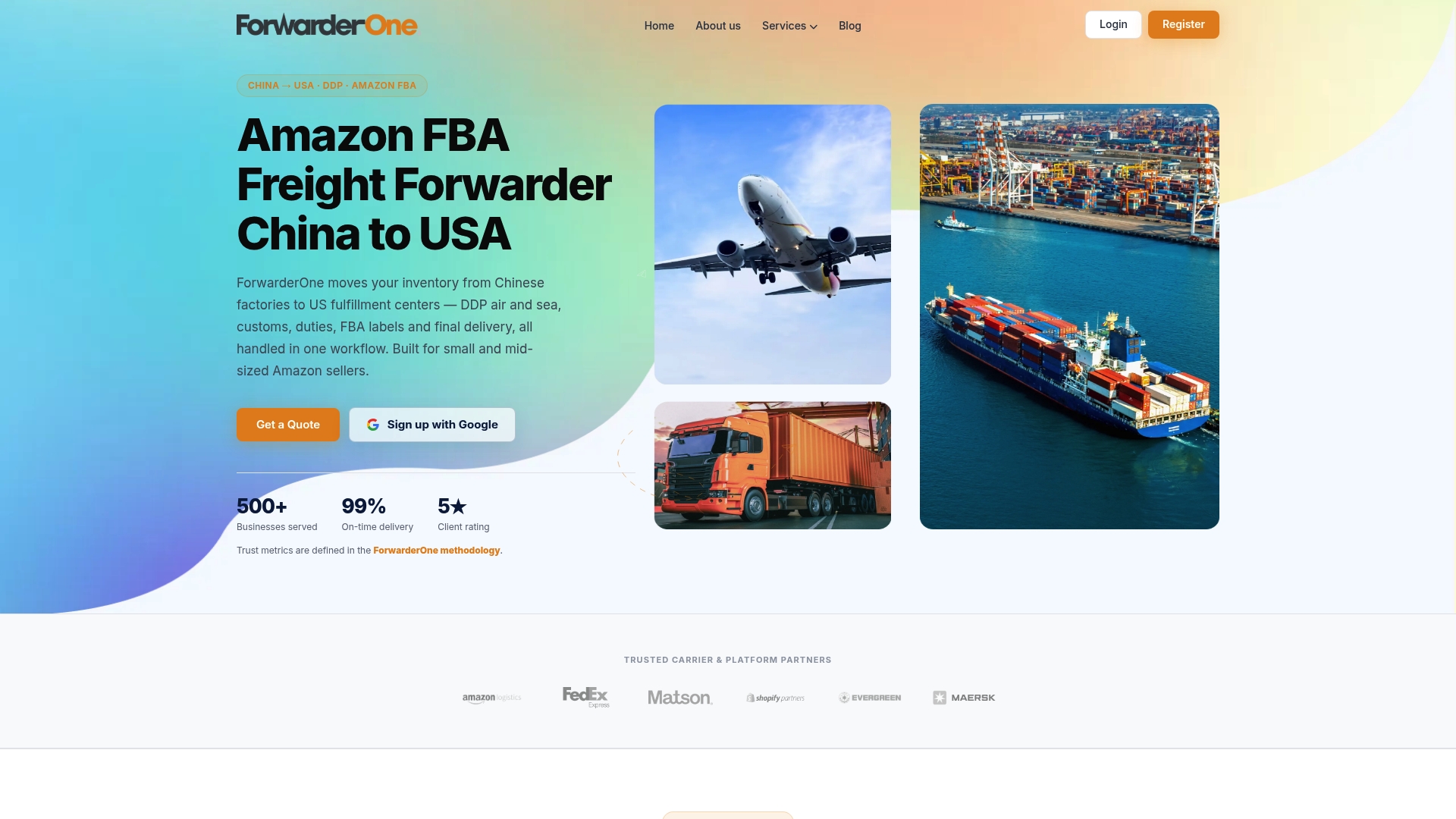
With ForwarderOne’s DDP freight forwarding services, customs, duties, and delivery are handled in a single workflow, and cargo insurance requirements can be reviewed alongside your shipment details from the start. That means coverage questions, packaging records, declared value, and handoff documentation are addressed before pickup instead of after a claim. For Amazon sellers who need consistent stock availability, that kind of coordination is what keeps inventory moving. See how freight forwarding from China works with insurance built in.
FAQ
What is the best cargo insurance for importers?
ICC (A) All Risks coverage is the best option for most importers. It covers theft, mishandling, and wetting, which are the most common causes of cargo claims.
How much does import cargo insurance cost?
Premiums range from 0.10% to 1.50% of insured value depending on transport mode and commodity type. Ocean freight typically falls between 0.10% and 0.60%.
Does carrier liability replace cargo insurance?
No. Carrier liability caps at $2 per kilogram or less, which covers only a small fraction of most shipments’ commercial value. Dedicated cargo insurance covers full landed cost and profit margin.
What is the difference between a single-trip and an annual open policy?
A single-trip policy covers one shipment and requires a new application each time. An annual open policy automatically covers all declared shipments for 12 months, with lower per-shipment premiums and simpler claims handling.
Does CIF shipping mean I have full cargo insurance?
No. CIF terms only require the seller to provide ICC C coverage, which excludes theft, wetting, and handling damage. Importers should arrange their own All Risks policy to maintain full control over coverage terms and claims.
Need cargo insurance planned with your shipment?
Send product value, carton count, route, Incoterms, and delivery target. ForwarderOne can align pickup photos, declared value, customs paperwork, and DDP delivery steps with your coverage requirements.