The China to Amazon FBA process is a coordinated logistics and compliance workflow that moves products from Chinese suppliers directly into Amazon fulfillment centers while meeting Amazon’s strict packaging, labeling, and customs requirements. Sellers who treat this as a single, connected system rather than a series of disconnected tasks avoid the most expensive mistakes. The workflow spans Seller Central shipment plan creation, freight coordination, Importer Security Filing (ISF), FNSKU labeling, and final carrier delivery. Getting each step right protects your inventory, your account health, and your margins.
What are the essential steps to prepare a shipment from China to Amazon FBA?
The China to Amazon FBA process follows a fixed sequence. Skipping or reordering steps causes rejections, delays, and fees that compound fast.
-
Create a shipment plan in Seller Central. Log into Amazon Seller Central, select your SKUs and quantities, and let Amazon assign fulfillment center destinations. Amazon may split your inventory across multiple warehouses. Accept the assignments before moving forward.
-
Generate FNSKU labels. Each unit needs a scannable FNSKU barcode tied to your specific ASIN and seller account. Amazon’s labeling service costs approximately $0.55 per unit. Self-labeling saves money but requires your supplier to apply labels correctly before shipment.
-
Confirm packaging and prep requirements. Amazon’s product packaging requirements cover unit prep, poly bagging, bubble wrap, and carton specs. Each carton must not exceed 50 lbs and must display a box content label that matches your shipment plan exactly.
-
Coordinate with your supplier and freight forwarder. Send your supplier a detailed packing list that includes SKU quantities per carton, carton dimensions, and gross weight. Your freight forwarder needs this data to prepare the commercial invoice, packing list, and ISF filing.
-
Schedule your freight and print carrier labels. Once your shipment plan is confirmed, print the Amazon shipping labels and send them to your freight forwarder. For last-mile delivery inside the US, you can use Amazon Partnered Carrier options directly through Seller Central.
-
Verify box contents match your shipment plan. Before your supplier seals the cartons, confirm that quantities and SKU assignments match what you declared in Seller Central. Discrepancies between box labels and actual contents trigger manual inspections and delays at the fulfillment center.
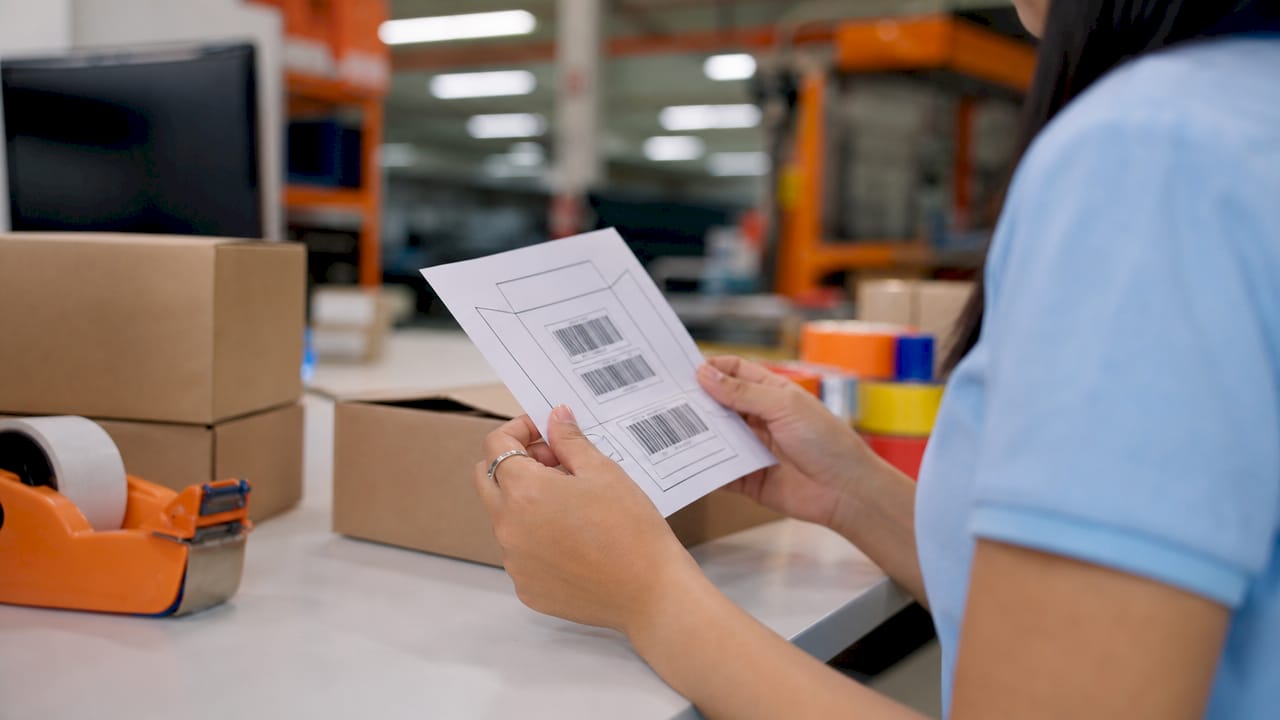
Pro Tip: Send your supplier a printed label placement diagram, not just a written description. Visual instructions cut mislabeling errors significantly, especially when working across language barriers.
What shipping options exist for moving products from China to Amazon FBA?
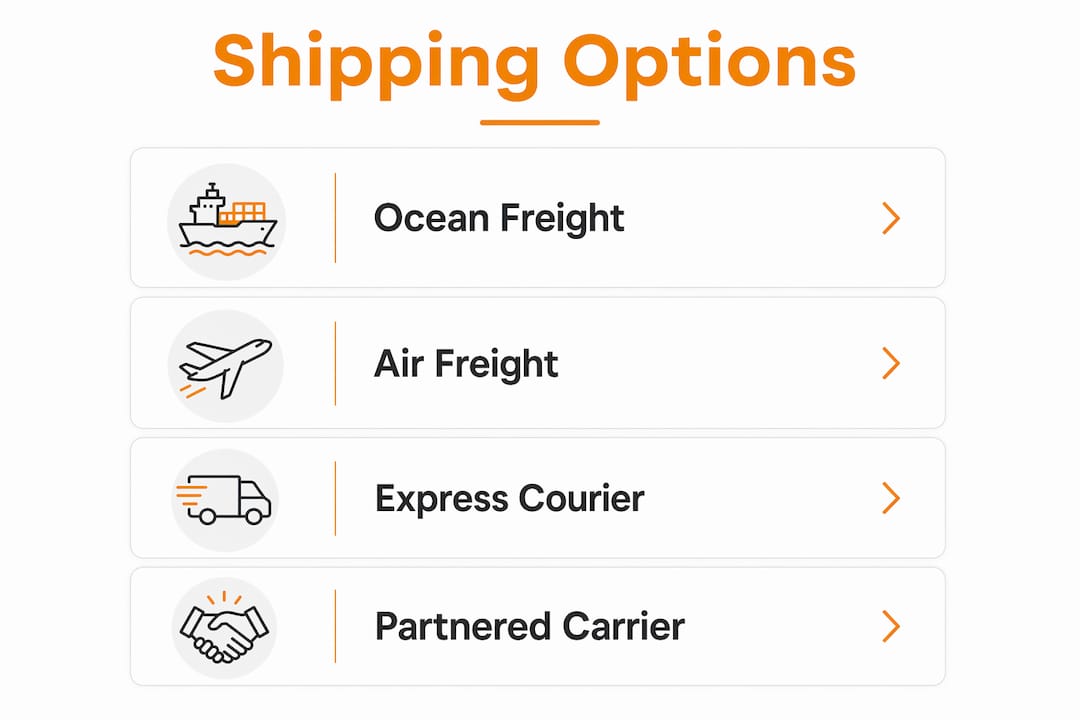
FBA shipping from China falls into three main categories: ocean freight, air freight, and express courier. Each fits a different cost and speed profile.
| Method | Transit Time | Cost Level | Best For |
|---|---|---|---|
| Ocean FCL (Full Container Load) | 25–35 days | Lowest per unit | Large, heavy shipments over 500 kg |
| Ocean LCL (Less than Container Load) | 30–40 days | Low to medium | Mid-size shipments sharing container space |
| Air freight | 5–10 days | High | Time-sensitive or lightweight products |
| Express courier (DHL, FedEx, UPS) | 3–7 days | Highest | Small parcels under 150 kg |
Ocean freight is the default choice for most Amazon sellers because the per-unit cost is the lowest available. LCL works well when your shipment does not fill a full container. FCL becomes cost-effective once your cargo exceeds roughly 15 cubic meters.
Air freight costs three to five times more than ocean per kilogram, but it cuts transit time from weeks to days. Sellers use air freight for product launches, stockouts, or high-value items where carrying cost justifies the premium.
Amazon Partnered Carrier is worth calling out separately. For last-mile delivery from a US port or warehouse to an Amazon fulfillment center, Amazon Partnered Carrier rates run 50–70% below retail UPS and LTL rates. The trade-off is that you must schedule pickups through Seller Central and follow their carrier’s requirements.
The Delivered Duty Paid (DDP) incoterm is the cleanest option for most sellers. Under DDP, your freight forwarder handles customs clearance, import duties, and delivery to the fulfillment center. The alternative, Delivered Duty Unpaid (DDU), leaves customs and duty payments to the importer at destination, which creates delays and unexpected costs.
Pro Tip: Always request a freight quote that includes ISF filing, customs clearance, and drayage fees. A low base rate that excludes these charges often ends up more expensive than a higher all-in DDP quote.
How to meet Amazon FBA prep and labeling requirements when shipping from China?
Labeling is where most new sellers lose money. Amazon’s fulfillment centers run on barcode scanning, and a single incorrect or missing label can hold an entire shipment.
The core requirements are:
- FNSKU on every unit. The FNSKU barcode must cover any manufacturer barcode completely. Amazon scanners will reject units that show both barcodes. Your supplier must apply the FNSKU label before the product goes into its carton.
- Box content labels on every carton. Each carton needs a label that lists the SKUs and quantities inside. This label must match your Seller Central shipment plan exactly.
- “Made in China” marking on every unit. US Customs requires country of origin marking on all imported goods. Missing this marking can cause customs holds before your freight even reaches the fulfillment center.
- No exposed supplier barcodes. Cover or remove any EAN, UPC, or manufacturer barcode that is not the FNSKU. Exposed supplier barcodes cause scanning errors and fulfillment center rejections.
- Legible, undamaged labels. Labels must survive the freight journey. Use label stock rated for the temperature and humidity conditions of ocean or air transit.
FNSKU generation is a system task, not just a print job. The barcode is tied to your specific ASIN and seller account. Generating it requires logging into Seller Central, navigating to your inventory, and downloading the label file in the correct format. Sending your supplier a generic barcode image instead of the Seller Central-generated file is a common and costly mistake.
For sellers who want to avoid the risk of supplier mislabeling, Amazon’s labeling service applies FNSKU labels at the fulfillment center for approximately $0.55 per unit. That cost adds up on large shipments, but it removes the risk entirely. Review the full FBA packaging requirements before your first shipment to understand every carton and unit rule in one place.
What are common compliance and customs considerations when shipping from China to Amazon FBA?
US Customs compliance is non-negotiable for ocean freight. Missing a filing or submitting incorrect data can stop your shipment at the port.
The most critical filing is the Importer Security Filing, known as ISF or “10+2.” CBP requires ISF submission at least 24 hours before the vessel loads at the origin port in China. Missing this window carries penalties of up to $5,000 per violation. That is not a fine you recover from easily on a thin-margin product.
ISF requires ten data elements from the importer side, including:
- Seller name and address
- Buyer name and address
- Importer of record number (your EIN or CBP-assigned number)
- Consignee number
- Manufacturer name and address
- Ship-to name and address
- Country of origin
- HTS (Harmonized Tariff Schedule) codes for each product
Critical timing note: ISF data must be collected and submitted before your supplier stuffs the container. Waiting until the cargo departs China is too late. Build ISF preparation into your purchase order timeline, not your shipping timeline.
For LCL shipments, the stuffing location data differs from FCL because cargo consolidates at a freight station rather than at the factory. ISF data requirements shift slightly depending on whether you are shipping FCL or LCL, so confirm this with your freight forwarder before filing.
Experienced freight forwarders handle ISF filing, customs clearance, and carrier coordination as part of their service. This reduces your risk significantly, especially when you are importing from China for the first time or scaling to higher volumes.
Key Takeaways
Importing from China to Amazon FBA requires a precise, sequential workflow where labeling accuracy, ISF timing, and shipment plan matching all carry direct financial consequences.
| Point | Details |
|---|---|
| Create the shipment plan first | Build your Seller Central shipment plan before coordinating with your supplier or freight forwarder. |
| FNSKU covers every unit | Generate FNSKU labels from Seller Central and confirm they cover all manufacturer barcodes completely. |
| ISF must be filed 24 hours early | Submit ISF at least 24 hours before vessel loading to avoid CBP penalties up to $5,000 per violation. |
| DDP simplifies customs | A DDP incoterm shifts customs, duties, and delivery responsibility to your freight forwarder. |
| Box contents must match the plan | Any mismatch between carton labels and Seller Central declarations triggers manual inspections and delays. |
What I’ve learned from watching sellers get this wrong
After seeing hundreds of China-to-FBA shipments move through the logistics chain, the pattern is consistent. Sellers who struggle are not failing on the big decisions. They fail on coordination timing.
The most common mistake I see is treating ISF filing as a shipping task rather than a purchasing task. By the time a seller thinks about ISF, the cargo is already at the port. At that point, you are either paying a penalty or scrambling to file in time. The fix is simple: add ISF data collection to your purchase order checklist, not your freight checklist.
The second mistake is assuming your supplier understands Amazon’s labeling rules. They do not, unless you train them. A supplier who has shipped to Walmart or Target has no frame of reference for FNSKU requirements. Send a written labeling guide with photos, and ask for pre-shipment photos of labeled units before the cartons are sealed.
The third mistake is underestimating the value of Amazon Partnered Carrier for last-mile delivery. Sellers spend weeks negotiating ocean freight rates and then pay full retail for the final truck delivery to the fulfillment center. Partnered Carrier rates are significantly lower and the booking process through Seller Central is straightforward.
The China to Amazon FBA process rewards sellers who build checklists and enforce them with their suppliers and forwarders. The sellers who treat each shipment as a one-off project are the ones who pay for it.
— Keven
ForwarderOne’s freight forwarding services for Amazon FBA sellers
Sellers who want the China to Amazon FBA process handled end to end without managing each piece separately have a direct option.
ForwarderOne provides DDP shipping from China to the US built specifically for Amazon FBA sellers. The service covers ISF filing, customs clearance, import duties, and delivery to your assigned fulfillment centers in a single workflow. ForwarderOne reports over 99% on-time delivery and assigns a dedicated account manager to each seller, which matters most during peak periods like Q4 when fulfillment center receiving windows tighten. Small and mid-sized sellers can review the full freight forwarding service options to find the right fit for their shipment volume and timeline.
FAQ
What is the China to Amazon FBA process?
The China to Amazon FBA process is the end-to-end logistics workflow that moves products from Chinese manufacturers into Amazon fulfillment centers. It includes shipment plan creation in Seller Central, freight coordination, ISF filing, FNSKU labeling, customs clearance, and final carrier delivery.
How long does shipping from China to Amazon FBA take?
Ocean freight from China to US Amazon fulfillment centers typically takes 25–40 days depending on FCL or LCL. Air freight cuts that to 5–10 days at a significantly higher cost per kilogram.
What is ISF and why does it matter for FBA sellers?
ISF (Importer Security Filing) is a US Customs requirement for all ocean freight shipments. It must be submitted at least 24 hours before vessel loading, and late or missing filings carry penalties up to $5,000 per violation.
What is the difference between DDP and DDU shipping?
Under DDP (Delivered Duty Paid), your freight forwarder handles customs, duties, and delivery to the fulfillment center. Under DDU (Delivered Duty Unpaid), those costs and responsibilities fall to you at the destination port, which creates delays and unpredictable fees.
Do I need a freight forwarder to ship from China to Amazon FBA?
A freight forwarder is not legally required, but experienced FBA freight forwarders handle ISF filing, customs clearance, and carrier coordination, which reduces risk and cost for most sellers importing from China.
Ready to move inventory from China to Amazon FBA?
Share your shipment plan, supplier location, carton data, SKU mix and assigned fulfillment centers. ForwarderOne will map labels, customs, DDP freight and delivery appointments into one workflow.