The four main types of Amazon FBA shipping methods are Small Parcel Delivery (SPD), Less-Than-Truckload (LTL), Full Truckload (FTL), and Amazon Global Logistics, each designed for a specific shipment size and operational profile. Choosing the wrong method costs you money, delays your inventory, and can trigger compliance failures at the fulfillment center dock. As of 2026, FBA prep policy changes have shifted labeling and packaging responsibilities entirely to sellers, making method selection even more consequential. This guide breaks down every FBA shipping option with cost benchmarks, compliance requirements, and practical recommendations so you can match the right method to your volume.
1. Types of Amazon FBA shipping methods at a glance
The three core US inbound categories are SPD, LTL, and FTL, with Amazon Global Logistics added for cross-border shipments. Each method differs by shipment size, fulfillment center routing complexity, and the level of coordination required from the seller. SPD suits individual boxes and new sellers. LTL fits palletized mid-volume loads. FTL handles full trailer freight. Amazon Global Logistics covers door-to-door international delivery. Understanding where your shipment falls on that spectrum is the first decision you make before booking anything in Seller Central.
2. Small Parcel Delivery (SPD): best for small shipments
SPD is the default method for sellers shipping fewer than 10 boxes or under roughly 150 lbs total, using parcel carriers like UPS or FedEx to deliver individual cartons directly to Amazon fulfillment centers. It is the fastest and simplest option, with no dock appointment required and transit times that typically beat palletized freight. For new sellers or those testing a new product, SPD removes operational friction and gets inventory checked in quickly.
Cost-wise, SPD through the Amazon Partnered Carrier program runs approximately $0.30 to $0.80 per unit, which is competitive for small quantities but becomes expensive at scale. Non-partnered rates can run two to three times higher depending on the carrier and lane. The per-unit math shifts against SPD once you are regularly shipping more than a few hundred units per box.
The 2026 prep policy changes hit SPD sellers directly. Amazon stopped most U.S. FBA prep and labeling services on January 1, 2026, meaning FNSKU labeling, polybagging, and protective packaging are now your responsibility before the shipment leaves your supplier or prep center. Review the FBA packaging requirements before you book your next SPD shipment to avoid receiving exceptions.
Key SPD advantages and limitations:
- No dock appointment needed, which speeds up fulfillment center check-in
- Partnered Carrier rates available through Seller Central for significant savings
- Per-unit costs rise sharply as shipment volume grows
- All labeling and prep must be completed upstream as of January 2026
- Best suited for shipments under 150 lbs or 10 cartons
Pro Tip: Book SPD shipments through the Amazon Partnered Carrier program in Seller Central. The discounted rates can be up to 50% lower than booking directly with UPS or FedEx, and the tracking integrates automatically with your shipment workflow.
3. Less-Than-Truckload (LTL): scaling up with palletized freight
LTL shipping handles palletized freight for sellers moving between one and six pallets per shipment, sharing truck space with other shippers to reduce cost per unit compared to SPD at higher volumes. LTL transit times average five to seven days, and the method requires scheduling a delivery appointment at the Amazon fulfillment center before the truck arrives. Missing that appointment or arriving without confirmation can result in refusal at the dock.
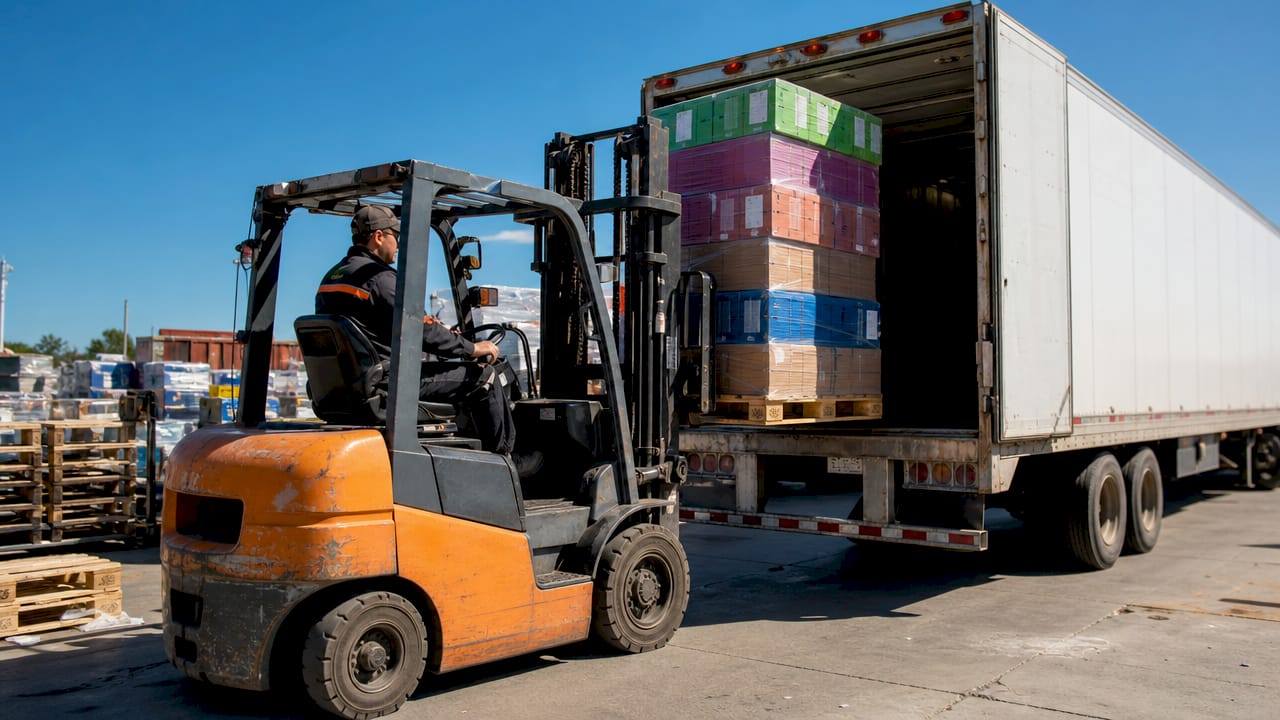
Partnered Carrier LTL rates run approximately $0.15 to $0.40 per unit, making it meaningfully cheaper than SPD once your shipment density justifies palletization. That cost advantage comes with added complexity: pallet labeling, carton counts, and shipment IDs must all match the paperwork exactly. Accurate pallet and carton labeling is the single most effective way to reduce receiving exceptions and speed up dock check-in.
LTL vs. SPD: quick comparison
| Factor | SPD | LTL |
|---|---|---|
| Shipment size | Under 150 lbs or 10 boxes | 1 to 6 pallets |
| Dock appointment | Not required | Required |
| Partnered cost per unit | $0.30 to $0.80 | $0.15 to $0.40 |
| Transit time | 2 to 4 days | 5 to 7 days |
| Prep complexity | Moderate | Higher |
Common LTL failures include missing labels, data mismatches between the shipment plan and physical cartons, and improper palletization. Each of these triggers delays and potential fees. Standardizing your prep process before you book your first LTL shipment saves significant time downstream.
Pro Tip: Verify Partnered Carrier LTL availability directly in Seller Central before committing to a carrier. Amazon's UI sometimes shows inconsistent options depending on your SKU category and lane, so check availability in Seller Central rather than assuming the program applies to your shipment.
4. Full Truckload (FTL): high-volume freight with fewer touchpoints
FTL is the right choice when your shipment fills 12 or more pallets or exceeds roughly 10,000 lbs, giving you exclusive use of a trailer from origin to the Amazon fulfillment center. FTL offers faster, more controlled delivery with fewer handling touchpoints than LTL, which directly reduces the risk of damage, lost cartons, and receiving discrepancies. For fragile products, high-value inventory, or urgent restocks ahead of peak sales periods, FTL is worth the higher upfront cost.
The per-unit economics of FTL improve significantly at scale. While the total freight bill is larger than LTL, the cost per unit drops when you are moving thousands of units in a single load. The tradeoff is operational discipline: FTL requires strict appointment scheduling at the fulfillment center, and missed or improper scheduling causes refusals and delays that can derail your restock timeline.
When FTL makes sense for your operation:
- Shipments of 12 or more pallets or over 10,000 lbs
- High-value or fragile products where damage risk justifies the cost premium
- Urgent restocks where transit speed and direct routing matter
- Sellers who have established appointment scheduling discipline with their logistics team
- Situations where reducing handling touchpoints protects inventory integrity
Amazon Partnered Carrier availability for FTL is more limited than for SPD or LTL. Check Seller Central for your specific lane and SKU category. For sellers shipping from China, integrating FTL with an international freight forwarder that handles the full door-to-door leg simplifies coordination considerably.
5. Amazon Global Logistics for international FBA shipping
Amazon Global Logistics is a door-to-door service that combines ocean or air freight from origin countries with final delivery to US Amazon fulfillment centers, handling customs clearance and documentation within a single booking workflow. It is designed for eligible sellers who want to reduce the complexity of managing separate international freight and domestic inbound legs. The service integrates directly with Seller Central, which simplifies shipment tracking and reduces the number of vendors you coordinate with.
The practical limitation is eligibility. Amazon Global Logistics is not available to all sellers or all product categories, and marketplace restrictions apply. Before building your logistics plan around it, confirm your eligibility in Seller Central. For sellers who qualify, the timeline benefits over independent freight forwarders can be meaningful, particularly when Amazon's network prioritizes its own logistics traffic.
Cost considerations are real. Amazon Global Logistics rates are not always the lowest available, and independent freight forwarding services often provide more flexibility on routing, consolidation, and DDP pricing. Sellers shipping from China in particular frequently find that a specialized freight forwarder delivers better per-unit economics and more personalized service than the Amazon-native option.
Pro Tip: If you ship from China and do not qualify for Amazon Global Logistics, a DDP freight forwarder handles customs, duties, and final delivery in one workflow. This replicates the simplicity of Global Logistics while giving you more control over cost and routing.
6. Comparing FBA shipping methods: cost, speed, and compliance
Selecting the best FBA shipping method requires weighing cost per unit, transit speed, compliance burden, and operational complexity together, not in isolation. The choice between LTL and FTL is not purely a cost calculation. Handling touches, damage risk, and appointment management all factor into the real cost of a shipment.
Full method comparison
| Method | Best for | Cost per unit | Transit time | Appointment needed |
|---|---|---|---|---|
| SPD | Under 10 boxes or 150 lbs | $0.30 to $0.80 | 2 to 4 days | No |
| LTL | 1 to 6 pallets | $0.15 to $0.40 | 5 to 7 days | Yes |
| FTL | 12+ pallets or 10,000+ lbs | Lowest per unit at scale | 3 to 5 days | Yes |
| Amazon Global Logistics | International door-to-door | Varies by lane | 20 to 40 days (ocean) | Managed by Amazon |
The 2026 prep policy shift is the most significant compliance change affecting all four methods. With Amazon no longer offering most US prep and labeling services, FNSKU labeling, polybagging, and protective packaging must be completed before your shipment reaches the carrier. Review the FNSKU labeling requirements for your product category and build prep into your supplier or freight forwarder workflow.
The Amazon Partnered Carrier program offers discounts of up to 50% on SPD and select LTL shipments booked through Seller Central. Partnered Carrier eligibility expanded for dangerous goods categories by April 30, 2026, but availability still varies by SKU and lane. Always verify in Seller Central before assuming the discount applies to your shipment.
For sellers deciding between methods, start with SPD for low-volume shipments and graduate to LTL once your shipment frequency and unit volume justify the added coordination. Use the FBA shipping cost calculator to run the per-unit math before committing to a method change.
Key takeaways
The most cost-effective FBA shipping method is determined by shipment volume, with SPD for small loads, LTL for palletized mid-volume freight, and FTL for large-scale shipments requiring fewer handling touchpoints.
| Point | Details |
|---|---|
| Match method to volume | Use SPD under 150 lbs, LTL for 1 to 6 pallets, and FTL for 12 or more pallets. |
| Prep is now your responsibility | As of January 2026, all FNSKU labeling and packaging must be completed upstream before shipment. |
| Partnered Carrier saves money | Amazon Partnered Carrier rates are up to 50% lower for SPD and select LTL shipments booked in Seller Central. |
| Appointments are non-negotiable | LTL and FTL shipments require confirmed dock appointments; missed scheduling causes refusals and delays. |
| Verify eligibility before booking | Partnered Carrier availability and Amazon Global Logistics access vary by SKU category and lane. |
Why I think most sellers switch shipping methods too late
Most sellers I work with stay on SPD longer than they should. The simplicity is real, and the lack of dock appointments feels like a genuine advantage when you are managing a growing catalog. But the per-unit cost gap between SPD and LTL becomes significant once you are shipping more than 300 to 400 units per shipment. Sellers often do not run the actual math until they are already losing margin.
The 2026 prep policy change is the part that catches people off guard. Sellers who relied on Amazon's prep services as a safety net now need that process locked in at the supplier or freight forwarder level. This is not a minor adjustment. It changes how you evaluate your freight forwarding partner and whether they can handle FNSKU labeling and packaging at origin.
My honest recommendation: treat shipping method selection as a quarterly decision, not a one-time setup. Your volume changes, your product mix changes, and Amazon's policies change. The sellers who stay ahead of their logistics costs are the ones who revisit this decision regularly and use actual cost data to drive it.
— Keven
How ForwarderOne helps you ship smarter to Amazon FBA
ForwarderOne is built specifically for small and mid-sized Amazon sellers shipping inventory from China to US fulfillment centers. The all-inclusive DDP shipping service handles customs, duties, FNSKU labeling, and final delivery in a single workflow, which removes the coordination overhead that trips up most sellers managing international inbound logistics.
With over 99% on-time delivery and a dedicated account manager for every account, ForwarderOne gives you the reliability you need during peak sales periods. Whether you are moving your first pallet or scaling to full container loads, the small seller freight service is designed to grow with your volume. Use the shipping cost calculator to compare your current inbound costs against ForwarderOne's rates before your next shipment.
FAQ
What are the main types of Amazon FBA shipping methods?
The four main FBA shipping methods are Small Parcel Delivery (SPD), Less-Than-Truckload (LTL), Full Truckload (FTL), and Amazon Global Logistics. Each method is suited to a different shipment size, from individual boxes to full trailer loads.
Which FBA shipping method is cheapest per unit?
LTL through the Amazon Partnered Carrier program costs approximately $0.15 to $0.40 per unit, making it the most cost-effective option for palletized shipments. FTL delivers the lowest per-unit cost at very high volumes, while SPD runs $0.30 to $0.80 per unit for smaller loads.
Do I need a dock appointment for all FBA shipments?
SPD shipments do not require a dock appointment and are delivered directly by parcel carriers like UPS or FedEx. LTL and FTL shipments require a confirmed delivery appointment at the Amazon fulfillment center, and missed appointments can result in dock refusals.
How did Amazon's 2026 prep policy change affect shipping methods?
Amazon stopped most US FBA prep and labeling services on January 1, 2026, requiring sellers to complete all FNSKU labeling, polybagging, and protective packaging before the shipment reaches the carrier. This change applies to all inbound shipping methods and makes upstream prep coordination a critical part of your logistics workflow.
Can I use the Amazon Partnered Carrier program for LTL and FTL?
The Partnered Carrier program is available for SPD and select LTL shipments booked through Seller Central, with discounts of up to 50% compared to standard carrier rates. FTL availability is more limited, and eligibility varies by SKU category and lane, so verify directly in Seller Central before booking.
Need help choosing the right FBA shipping method?
Share your carton count, pallet plan, supplier city, Amazon destination and inventory deadline. ForwarderOne will compare SPD, LTL, FTL, air and DDP sea options against your real restock window.