Amazon seller freight cost factors are determined by six core variables: shipping mode, chargeable weight, route surcharges, packaging density, Incoterms, and seasonal demand. Each one affects your landed cost in a different way, and ignoring any single factor leads to margin erosion that compounds across every shipment. Starting April 17, 2026, Amazon added a 3.5% fuel and logistics surcharge to FBA fulfillment fees in the US and Canada, averaging about $0.17 per unit. That change alone makes 2026 the year to rebuild your freight cost model from scratch.
1. How shipping mode drives freight costs for Amazon sellers
Shipping mode is the single biggest lever in Amazon seller freight cost factors. Air freight, ocean freight (LCL and FCL), and rail each carry different pricing structures, transit times, and risk profiles. Choosing the wrong mode for your product type can cost you far more than the rate difference suggests.
Air freight charges by chargeable weight, which is the greater of actual weight or dimensional weight. It is fast, typically 5–10 days from China to the US, but it is the most expensive option per kilogram. Air works best for high-value, low-volume products where speed justifies the premium.
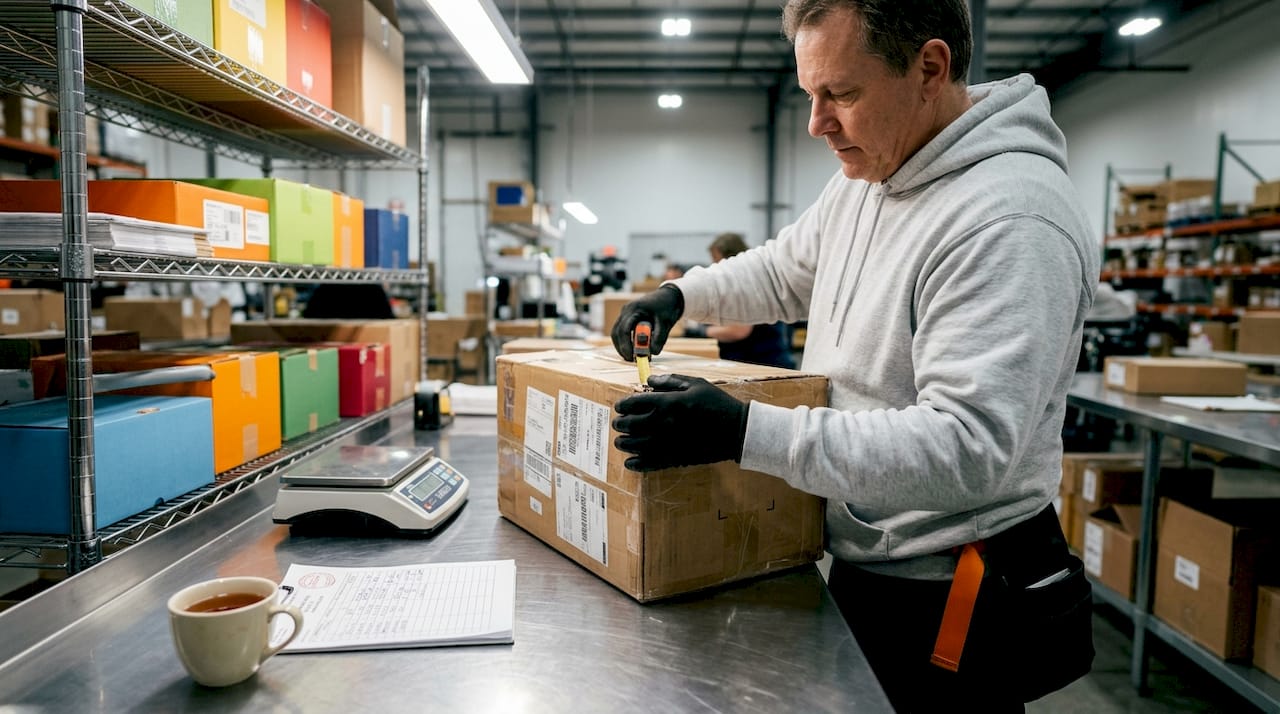
Ocean freight prices by cubic meter (CBM) for LCL shipments or by container for FCL. It is significantly cheaper for bulk inventory but adds 25–40 days of transit time. Ocean LCL pricing uses a break-even density around 1,000 kg per CBM, so dense, heavy products benefit most from sea freight.
Rail freight from China to Europe or Central Asia offers a middle ground on cost and speed. For US-bound Amazon sellers, it is rarely the primary mode but can serve as a regional leg in multimodal shipments.
- Air: fastest, highest cost per kg, best for lightweight high-value goods
- Ocean LCL: volume-based pricing, cost-effective for moderate shipments
- Ocean FCL: lowest per-unit cost at full container loads, best for large volumes
- Rail: regional option, limited relevance for China-to-US FBA routes
Pro Tip: Match your mode to product density. Dense, heavy goods almost always ship cheaper by sea. Bulky, lightweight products can be surprisingly expensive by air due to dimensional weight billing. Run the numbers on both before committing to a purchase order.
2. Chargeable weight: actual weight vs. dimensional weight
Chargeable weight is the billing unit carriers use, and it is not always what your scale reads. Carriers bill the greater of gross weight and volumetric weight. For bulky, lightweight products, volumetric weight almost always wins, and that difference can double your freight bill.
Air freight uses the IATA dimensional weight divisor of 6,000 cm³ per kg. The formula is straightforward: multiply length by width by height in centimeters, then divide by 6,000. The result is your volumetric weight in kilograms. Compare that number to your actual scale weight. Whichever is higher is what you pay for.
Here is a worked example:
- A carton measures 60 cm × 50 cm × 40 cm = 120,000 cm³
- Divide by 6,000: volumetric weight = 20 kg
- Actual scale weight = 8 kg
- Chargeable weight = 20 kg (volumetric wins)
- You pay for 20 kg, not 8 kg
Couriers like FedEx and UPS often use a divisor of 5,000 instead of 6,000. European road groupage uses 3,000. Those differences in divisors change your chargeable weight significantly and affect which carrier or mode offers the best rate for your specific product.
Pro Tip: Calculate volumetric weight for every SKU before you finalize packaging with your supplier. A small reduction in box height can shift billing from volumetric to actual weight and cut your air freight cost per unit noticeably.
3. Route and timing surcharges that inflate freight fees
Route and timing factors add layers of cost on top of base freight rates. Fuel surcharges, peak season premiums, and terminal handling fees stack unpredictably, and sellers who rely on a single quoted rate without buffers regularly face unexpected bills.
The most common surcharges affecting Amazon seller shipping costs include:
- BAF/FSC (Bunker Adjustment Factor / Fuel Surcharge): Typically 10–25% of the base rate, adjusted monthly or quarterly by carriers
- Peak season surcharge (PSS): Applied during high-demand periods, especially july through october ahead of Q4
- Terminal handling charges (THC): Port-specific fees at origin and destination
- Congestion surcharges: Applied when major ports like Los Angeles or Long Beach face backlogs
- Emergency rate increases (GRI): General rate increases that ocean carriers announce with short notice
Amazon’s 3.5% fuel and logistics surcharge on FBA fulfillment fees, effective April 17, 2026, is separate from carrier-level fuel surcharges. Sellers now face fuel-related costs at both the freight and fulfillment stages. Factor both into your landed cost model.
Lane competitiveness also matters. The China-to-US West Coast lane is one of the most traded in the world, which keeps base rates relatively competitive. Less-served lanes, such as China to secondary US ports, carry higher base rates and fewer carrier options. Flexibility in your routing can reduce costs when primary lanes are congested.
4. Packaging and cartonization strategies to control freight charges
Packaging is one of the most underused cost controls in Amazon seller logistics costs. Packaging density and volume often impact freight cost more than actual weight, which means sellers can directly reduce bills through smarter carton design.
The core principle is simple: every cubic centimeter of empty space inside a carton is space you are paying to ship. For LCL ocean freight, you pay per CBM. For air freight, you pay by volumetric weight. Both pricing models penalize wasted space.
Practical steps to reduce freight charges through packaging:
- Reduce carton height by even 2–3 cm where product stacking allows
- Eliminate unnecessary void fill and switch to form-fitting inserts
- Consolidate multiple SKUs into single master cartons when Amazon receiving allows
- Standardize carton sizes across your product line to simplify palletization and reduce wasted pallet space
- Review packaging with your supplier before each purchase order, not after production
Improved cartonization enables smarter mode selection too. A product that ships by air at current dimensions might qualify for ocean freight after a packaging redesign, cutting cost per unit dramatically.
5. Incoterms and their impact on total landed cost
Incoterms define who pays for what, and choosing the wrong term creates cash flow problems and clearance delays that inflate your effective shipping expenses on Amazon. The two terms most relevant to Amazon sellers importing from China are DDP and DAP.
| Term | Who pays import duties | Who handles customs clearance | Risk transfer point |
|---|---|---|---|
| DDP (Delivered Duty Paid) | Seller | Seller’s freight forwarder | Buyer’s door |
| DAP (Delivered at Place) | Buyer | Buyer (importer of record) | Named destination |
DDP simplifies landed cost predictability because the seller pays duties upfront and delivers fully cleared goods. For Amazon FBA shipments, this means your freight forwarder handles customs, and your inventory arrives at the fulfillment center without you managing import paperwork. ForwarderOne’s DDP shipping service is built specifically for this workflow.
DAP shifts duty payment to the buyer at arrival. That sounds appealing because you defer the cash outlay, but it creates risk. If duties are not paid promptly, shipments sit in customs and your FBA stock runs out. For most Amazon sellers, DDP is the lower-risk choice despite the upfront cost. When comparing quotes, always request duty and importer of record assumptions explicitly, since these affect total landed cost in ways that are easy to miss in a standard rate sheet.
6. Seasonal demand and market disruptions as cost multipliers
Seasonal demand is a predictable cost multiplier that still catches sellers off guard every year. Freight rates on the China-to-US lane spike reliably from july through september as sellers rush inventory ahead of Q4. Booking early and locking in rates before the peak window opens is the most effective way to avoid premium pricing.
Freight cost volatility arises from stacked rate components, and without frequent re-quoting and cost buffers, sellers face unexpected spikes. The COVID-era container shortage showed how quickly rates can multiply. While that extreme is behind us, the structural lesson holds: static freight quotes expire fast.
Supply chain disruptions, including port strikes, canal closures, and geopolitical events, add unpredictable surcharges on short notice. Sellers who treat freight cost estimation as a dynamic model rather than a one-time calculation absorb these shocks better. Build a 10–15% buffer into your freight cost assumptions and re-quote every 60–90 days on active lanes.
Pro Tip: Book your Q4 inventory shipments by June at the latest. Rates on the transpacific lane typically rise 20–40% between july and september. Early booking is the cheapest hedge against peak season surcharges.
Key takeaways
Amazon seller freight costs are controlled by six factors: shipping mode, chargeable weight, route surcharges, packaging density, Incoterms, and seasonal timing. Sellers who actively manage all six pay significantly less per unit than those who treat freight as a fixed cost.
| Point | Details |
|---|---|
| Mode selection drives base cost | Match shipping mode to product density and lead time needs before committing to a purchase order. |
| Volumetric weight is often the real bill | Use the IATA 6,000 cm³/kg divisor to calculate air freight chargeable weight before finalizing packaging. |
| Surcharges stack fast in 2026 | Amazon’s 3.5% FBA surcharge adds to carrier-level fuel fees; model both in your landed cost calculation. |
| DDP reduces clearance risk | DDP Incoterms shift duty payment and customs handling to your forwarder, protecting FBA stock levels. |
| Packaging is a direct cost lever | Reducing carton dimensions and void space lowers volumetric weight and can shift optimal shipping mode. |
What I have learned managing freight for Amazon sellers
The biggest mistake I see Amazon sellers make is treating freight as a line item they check once per quarter. Freight is a live variable. Surcharges change monthly. Carrier divisors differ by mode. Amazon just added a new fee layer in 2026 that most sellers have not yet built into their models.
The sellers who consistently protect margins do three things differently. First, they review carton dimensions before every purchase order, not after goods are packed. A 3 cm reduction in box height sounds trivial until you realize it drops your air freight chargeable weight by 15% across 500 cartons. Second, they re-quote freight every 60–90 days on active lanes rather than relying on a rate locked six months ago. Third, they work with freight forwarders who understand Amazon FBA specifics, including FBA receiving requirements, labeling rules, and the difference between DDP and DAP in an Amazon context.
The 2026 Amazon fuel surcharge is not going away. Sellers should factor this recurring surcharge into all profitability models going forward, not treat it as a temporary line item. The sellers who adjust now will have cleaner margin data than those who absorb the surprise later.
One more thing: do not ignore the shipping methods available for FBA inbound shipments. Most sellers default to air or FCL without running the numbers on LCL. For mid-sized shipments in the 2–10 CBM range, LCL often beats both on a cost-per-unit basis.
— Keven
ForwarderOne handles the freight complexity so you can focus on selling
Freight cost management for Amazon FBA sellers involves more moving parts than most sellers expect when they start importing from China, Korea, or Mexico. Chargeable weight calculations, DDP clearance, surcharge buffers, and Amazon-specific receiving requirements all need to work together.
ForwarderOne specializes in FBA freight forwarding from China, Korea, and Mexico, with all-inclusive DDP pricing that covers customs, duties, and delivery in one predictable cost. Over 99% on-time delivery and a dedicated account manager mean your inventory arrives when your listings need it. Whether you are a small seller managing your first container or a mid-sized brand shipping multiple lanes, ForwarderOne’s China to USA DDP shipping removes the guesswork from landed cost planning. Get a freight quote tailored to your product dimensions and shipping lane today.
FAQ
What are the main factors affecting freight fees for Amazon sellers?
The main factors are shipping mode, chargeable weight versus dimensional weight, route-specific surcharges, packaging density, Incoterms, and seasonal demand. Each factor affects your per-unit landed cost independently, and they compound when mismanaged.
How do I calculate dimensional weight for air freight?
Multiply carton length by width by height in centimeters, then divide by 6,000. Compare that result to your actual scale weight. The higher number is your chargeable weight and the basis for your air freight bill.
What is the 2026 Amazon FBA fuel surcharge?
Amazon added a 3.5% fuel and logistics surcharge to FBA fulfillment fees starting April 17, 2026, averaging about $0.17 per unit. This fee applies on top of standard fulfillment fees and affects all US and Canada FBA sellers.
Is DDP or DAP better for Amazon FBA shipments from China?
DDP is better for most Amazon FBA sellers because the freight forwarder handles customs clearance and duty payment, reducing the risk of shipments sitting in customs and depleting your FBA stock. DAP defers duty costs but adds clearance risk.
How can I reduce my Amazon seller shipping costs without changing suppliers?
Optimize carton dimensions to reduce volumetric weight, re-quote freight every 60–90 days to capture current rates, book peak season shipments early, and use LCL ocean freight for mid-sized shipments in the 2–10 CBM range where it often beats air on cost per unit.
Ready to price your next FBA shipment?
Share carton dimensions, weight, supplier city, destination warehouse, cargo value and target arrival date. ForwarderOne will compare DDP air, LCL and sea freight so your landed cost is clear before pickup.