Use HTS codes for anything you import into the United States and Schedule B numbers for anything you export. HTS codes live in the USITC’s searchable database and determine duty rates and import controls; Schedule B numbers live in the Census Bureau’s Schedule B search tool and feed U.S. export statistics. Both share the same first six digits from the international Harmonized System, but the final four digits diverge. Check the right database every time, because guessing costs you at customs or gets your export filing bounced.
TL;DR:
- Using the correct 10-digit HTS or Schedule B code is essential to avoid duty miscalculations, rejection of filings, and shipment delays.
- HTS codes focus on import duties and are enforced by Customs, while Schedule B codes track exports for statistical purposes and are maintained separately by the Census Bureau.
- Verifying codes involves searching the product description in the respective official databases and checking for special notes or restrictions to prevent classification errors.
- Exporters can temporarily use an HTS code for filing if a Schedule B number is unavailable, but only with caution and after checking the invalidity list to prevent rejections.
- Regular re-verification before every shipment, maintaining supportive documentation, and avoiding outdated or vague classifications help streamline customs clearance and avoid operational disruptions.
HTS vs Schedule B: A Side-by-Side Comparison
The confusion between these two systems makes sense once you see how similar they look on paper. Both are 10-digit numbers. Both start with the same six-digit international code. But they answer two completely different government questions, and mixing them up in the wrong filing creates real problems.
HTS codes exist to calculate what you owe the U.S. government when goods cross the border into the country. The U.S. International Trade Commission administers the Harmonized Tariff Schedule, and U.S. Customs and Border Protection enforces it at the port. Schedule B numbers exist purely to track what leaves the country, for statistical reporting. The Census Bureau owns that system, and it has nothing to do with duty collection because exports generally aren’t taxed on the way out.
Here’s where the structural overlap and the practical differences line up:
| Factor | HTS | Schedule B |
|---|---|---|
| Purpose | Import duty and regulation | Export statistics |
| Administering agency | USITC (rates), enforced by CBP | U.S. Census Bureau |
| When you use it | Import entries | Export filings (AES/EEI) |
| Shared structure | First 6 digits (HS root) | First 6 digits (HS root) |
| Final 4 digits | U.S.-specific, more granular | U.S.-specific, statistics-focused |
| Wrong code consequence | Duty miscalculation, CBP delays | AES rejection, filing errors |
The granularity gap matters more than most sellers realize. There are thousands more 10-digit HTS entries than Schedule B numbers, because import duty calculations often need finer distinctions than export statistics do. That’s also why multiple HTS codes can collapse into a single Schedule B number, but never the reverse.
HTS Codes: How Importers Verify Them
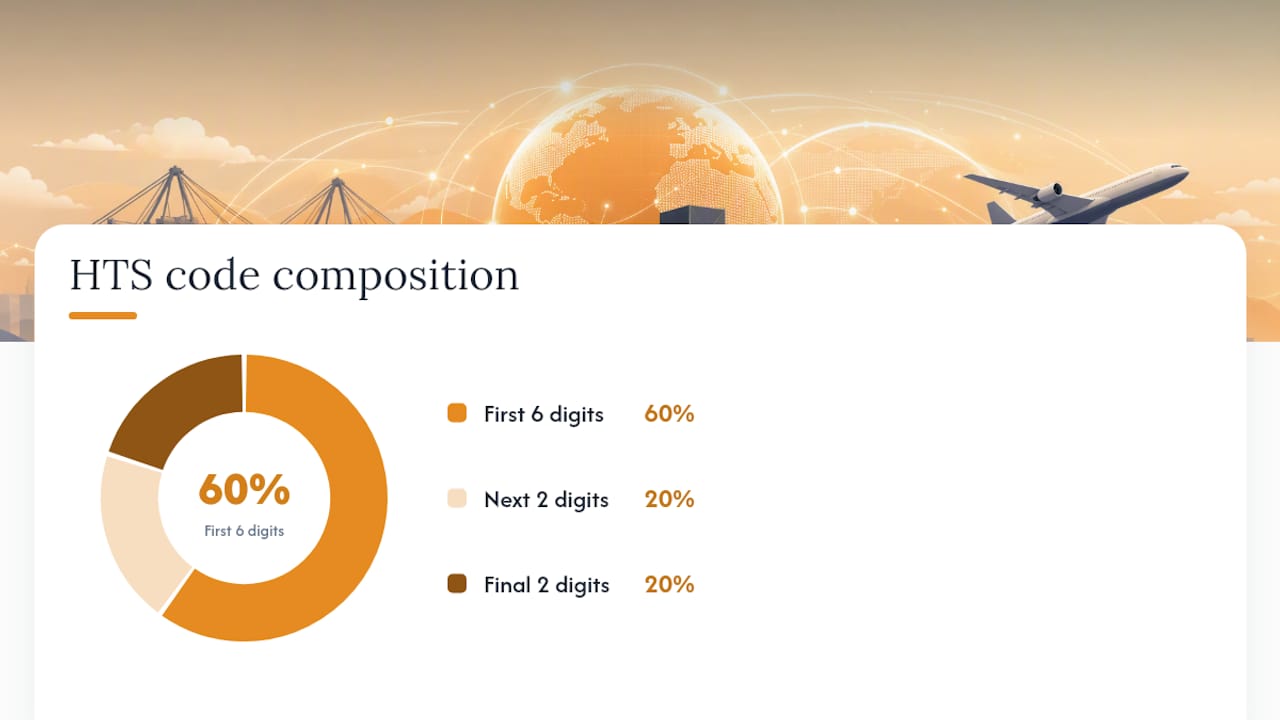
Every HTS code runs 10 digits. The first six come straight from the international Harmonized System, shared by virtually every trading country. The next two digits are U.S.-specific subheadings, and the final two are statistical suffixes that the USITC uses for import monitoring. Together, that string of numbers tells CBP exactly what duty rate applies and whether your product triggers any additional import controls, like antidumping orders or quota restrictions.
Verifying your code isn’t complicated, but skipping the step is where most classification errors start.
- Search your product description directly in the USITC’s HTS database rather than guessing from memory or an old invoice.
- Read the chapter and heading notes above your candidate code. They often exclude products that look like an obvious match.
- Check for special program indicators (like Section 301 exclusions or trade preference eligibility) that change the actual duty owed, which matters a lot if you’re tracking Section 301 tariff exposure on China-sourced inventory.
- Watch for prefix symbols attached to certain HTS entries. Those flag special import tariff treatment and should never be copied onto anything outside an import entry.
Pro Tip: If two HTS candidates seem equally plausible, the general chapter notes at the top of that HTS chapter almost always break the tie. Read them before you file, not after CBP flags the entry.
Schedule B Numbers: What Exporters Need to File
Schedule B numbers also run 10 digits, but the Census Bureau builds and maintains the entire list separately from the USITC’s import schedule. The structure mirrors HTS in its first six digits, then diverges to serve export statistics rather than duty calculation.
You need a Schedule B number, reported as Electronic Export Information through the Automated Export System, whenever a single export shipment exceeds $2,500 in value per Schedule B classification, or whenever the shipment requires an export license regardless of value. Below that threshold, many shipments are exempt from filing, but the exemption doesn’t apply once a license requirement kicks in.
- Look up your product in the Census Bureau’s Schedule B search tool rather than assuming your HTS code carries over.
- Check Chapter 98 for special export provisions before defaulting to a standard product code. It covers unusual export scenarios, like returned goods or specific low-value shipment categories, that exporters frequently overlook.
- Confirm the AES filing threshold and license requirements apply to your specific transaction, since a low-value shipment can still trigger a mandatory filing.
- Re-verify the classification each time you file, since Schedule B numbers get revised periodically along with the broader Harmonized System.
Can You Use an HTS Code for an Export Filing?
Sometimes, yes. If you genuinely cannot locate a matching Schedule B number, Census guidance allows reporting an HTS number on an export filing as a fallback. But that exception has real limits, and treating it as a default habit is how AES rejections happen.
- Check the Census “Notice to Exporters” and the list of HTS codes marked invalid for AES before you file. Some HTS entries simply don’t carry the statistical detail Census requires.
- Strip out any import-specific prefix symbols if you do use an HTS number for an export. Those symbols only apply to special import tariff treatment and mean nothing on an export filing.
- Treat a Schedule B match as the default search, and the HTS fallback as the exception, never the other way around.
The Verification Workflow Before You File Anything
Start with the product description, not the code. Write down exactly what the item is made of, what it does, and how it’s packaged, because that description drives everything downstream.
From there, the sequence is straightforward: confirm the six-digit HS root first, since that part rarely changes regardless of direction. Then branch. Importing means finishing the lookup in the USITC’s HTS database. Exporting means finishing it in the Census Schedule B search tool. If you’re filing an export and can’t find a Schedule B match, check the “not valid for AES” list before falling back to an HTS number.
- Confirm the shared 6-digit HS root applies to your product category.
- Complete the final 4 digits in the correct database for your direction of travel.
- Cross-check any HTS-for-export fallback against the AES invalidity list.
- Document your product specs, photos, and manufacturer part numbers to support the classification.
- Re-verify before every shipment, not just the first one.
Pro Tip: Keep a short verification packet on file for each SKU, spec sheet, product photo, manufacturer part number, and it becomes your fastest answer if AES flags a filing or CBP requests supporting documentation. This is also exactly the kind of documentation a forwarder handling your customs clearance will ask for upfront.
Classification Mistakes That Cause Delays
The costliest mistakes are almost always avoidable, and they tend to repeat across sellers who skip the verification step above.
- Copying a 10-digit HTS code straight into an export filing without checking the AES invalidity list first, which triggers an outright rejection.
- Reusing an old spreadsheet of codes without rechecking for periodic Harmonized System revisions, since both HTS and Schedule B lists get updated on a recurring cycle.
- Writing vague product descriptions that don’t match the classification detail level, which causes AES validation errors and slows down CBP rulings requests.
- Ignoring an AES rejection code instead of comparing your HTS and Schedule B lookup results side by side, adding descriptive fields, and resubmitting through your carrier or forwarder before escalating to a binding ruling request.
Why Correct Classification Is an Operational Issue, Not Just a Paperwork One
Getting the code right isn’t a compliance formality. It’s the difference between a shipment that clears in a day and one that sits in a bonded warehouse while you scramble to fix a rejected filing. A misclassified HTS entry can mean paying the wrong duty rate for months before anyone catches it. A rejected AES filing can hold an export shipment at the port entirely.
That’s the operational reality behind ForwarderOne’s compliance support: checking codes, managing AES filings, and keeping documentation organized so sellers aren’t the ones untangling a rejection notice at 11 p.m. before a container misses its vessel cutoff.
— Keven
How ForwarderOne Handles Classification and Filing for You
Sellers moving inventory from China or Korea to U.S. fulfillment centers don’t need to become customs experts. They need shipments that clear without drama, which is exactly what ForwarderOne’s DDP service is built to deliver: customs clearance, duty payment, and delivery handled as one workflow instead of five separate headaches.

If you’re a small or mid-sized Amazon seller trying to verify HTS codes on your own between restocks, that’s time you’re not spending on sourcing or listings. ForwarderOne’s dedicated account managers handle classification checks, AES filing support where exports are involved, and documentation management, backed by a track record of over 99% on-time delivery into FBA fulfillment centers. That reliability matters most during peak season, when a single classification error can mean missing the shelf-stocking window entirely.
Check your current shipping setup against ForwarderOne’s full service menu and get a quote before your next inventory run leaves the factory.
Where to Verify These Codes Yourself
- USITC HTS search for current import tariff codes and duty rates.
Bookmark all three, and recheck them before every shipment rather than trusting last quarter’s answer.
FAQ
How do I find my Schedule B or HTS number?
Search your product description in the USITC’s HTS database for imports, or the Census Bureau’s Schedule B search tool for exports; both let you search by keyword or browse by chapter.
What is an HTS code in the United States?
An HTS code is a 10-digit number administered by the USITC that determines the duty rate and import controls applying to a product entering the United States.
What is Schedule B in U.S. trade?
Schedule B is a 10-digit export classification system administered by the Census Bureau, used to compile U.S. export statistics and required for AES filings above certain value or licensing thresholds.
What does Schedule B mean in shipping?
In shipping documentation, a Schedule B number identifies exactly what’s being exported for statistical reporting purposes, separate from any duty or tariff calculation, which only applies to imports.
Can I use my HTS code instead of looking up a Schedule B number?
Sometimes, but only after checking the Census “Notice to Exporters” list of HTS codes invalid for AES; when in doubt, a forwarder handling your export filing support can confirm which number applies.
Need classification reviewed before filing?
ForwarderOne helps sellers organize HTS checks, customs documents, broker handoffs, and DDP cost planning before inventory leaves the factory.