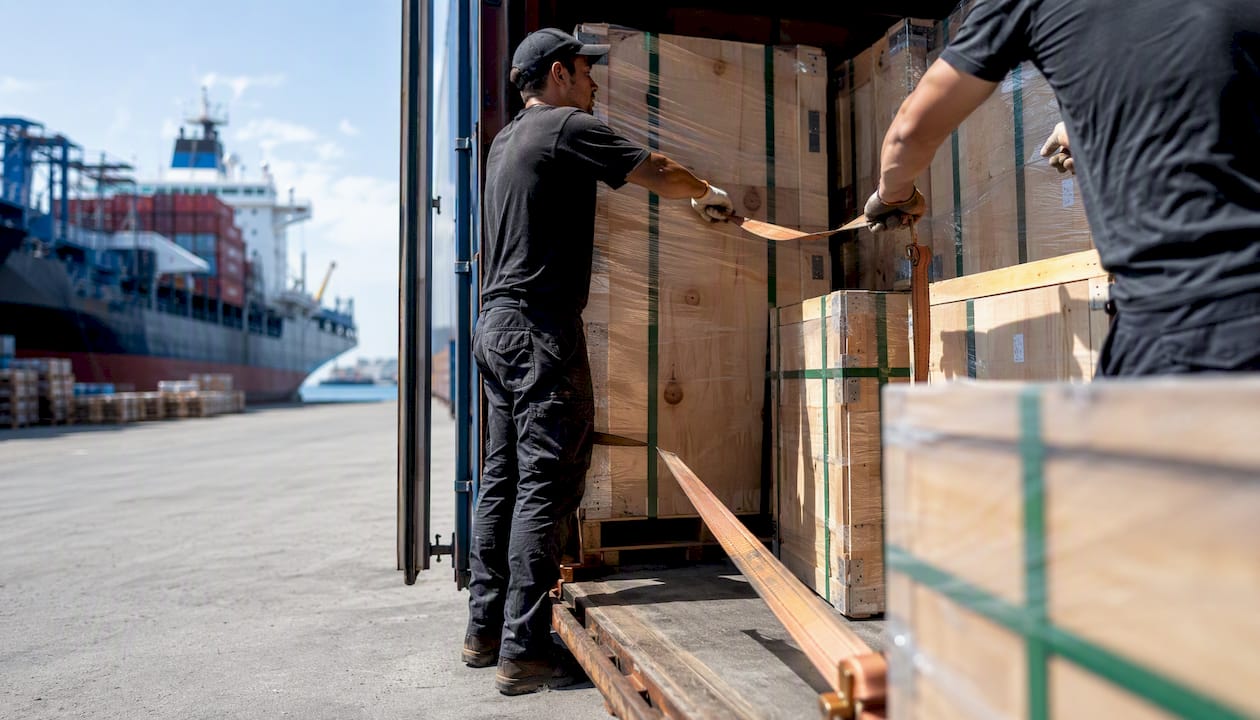
Yes, you can import furniture from China profitably, but only if you treat the factory as a partner, build full landed cost into your pricing before you place a deposit, and hand the shipping to a forwarder who actually knows how to stuff a container with dining chairs without cracking a leg. The math works. China exported $36.4 billion worth of furniture in 2024, roughly 30.8% of everything the world buys, and that scale is why FOB prices on a solid-wood console table can still beat a domestic factory by half. The risk isn’t sourcing. It’s tariff stacking, wood-import compliance, and freight damage catching you off guard after you’ve already wired a deposit.
Here’s what to do this week, in order:
- Lock your spec sheet first. Define exact dimensions, wood species, foam density, hardware brand, and your target landed cost per unit before you message a single supplier.
- Request three quotes on the identical spec sheet. Never compare a quote for “similar” pieces. Send the same PDF to three factories and compare apples to apples.
- Book a landed-cost quote from a furniture-savvy forwarder before you order. A DDP quote from a forwarder who ships furniture regularly will surface duty exposure and container-fit issues before they become expensive surprises.
Miss any of these and your “profitable” shipment turns into a demurrage bill sitting at the port.
Key Takeaways
Importing furniture from China works reliably when you price against landed cost instead of FOB, verify suppliers before you pay a deposit, and route shipping through a forwarder who understands furniture-specific handling and documentation.
| Point | Details |
|---|---|
| Specs before quotes | Lock dimensions, materials, and hardware specs before requesting supplier pricing. |
| Landed cost, not FOB | Price your product against total landed cost, which often runs significantly above FOB. |
| Verify before you pay | Check NECIPS business licenses and commission a third-party audit for larger orders. |
| Samples before deposit | Approve a paid sample against a written checklist before committing to full production. |
| PSI before loading | Inspect goods before container stuffing, not after the shipment departs China. |
What Are the Steps to Import Furniture From China?
Importing furniture from China follows a predictable sequence, and knowing where the critical path sits saves you from booking a container before your samples have even shipped. Most first-time importers underestimate how much slack to build around production and pre-shipment inspection, the two steps most likely to blow your calendar.
- Define your product spec and landed-cost target. Write down materials, dimensions, finish, hardware, and the maximum unit cost you can pay and still hit your margin.
- Shortlist three to five suppliers. Pull candidates from Alibaba, Global Sources, or a Foshan sourcing trip, and screen for furniture-specific experience, not just general manufacturing.
- Request a paid sample. Expect 2 to 4 weeks for sample production on furniture, longer for upholstered or custom-finish pieces.
- Negotiate contract terms and payment structure. Settle MOQ, tooling costs, payment split, and delivery timeline in writing before production starts.
- Place a deposit and confirm production schedule. Typical furniture production runs can take several weeks to a couple of months depending on order size and finish complexity.
- Commission a pre-shipment inspection (PSI). A third-party inspector checks the goods against your spec sheet before the container gets loaded, not after.
- Book your shipping mode. Choose FCL, LCL, or air based on cargo volume and how fast you need inventory.
- File customs documentation and clear entry. Your broker submits the commercial invoice, packing list, and any required certificates ahead of vessel arrival.
- Arrange last-mile delivery. Inland trucking gets the container from port to your warehouse or FBA fulfillment center.
- Inspect on arrival and reconcile against your PO. Confirm quantities and condition before you sign off with your forwarder.
If you’re building out inland delivery on the U.S. side after port clearance, this guide to freight and trucking services is useful background on regional trucking capacity and scheduling.
Sourcing and sampling are flexible. Production and pre-shipment inspection are your critical path, because a factory delay here pushes every downstream date. That’s also where third-party checks belong: an audit before you commit to a supplier, a PSI before the container closes, and an Importer Security Filing (ISF) submitted at least 24 hours before the vessel loads at a Chinese port. If any of that sounds like more moving parts than your team can track solo, that’s exactly the gap a customs broker or a DDP-focused forwarder is built to close.
Where Do You Find Reliable Furniture Suppliers in China?
Three channels dominate furniture sourcing, and each fits a different order size and customization need. Alibaba is the default starting point for most SMB importers: huge supplier pool, built-in messaging, and Trade Assurance for payment protection on smaller test orders. Global Sources skews toward more established manufacturers with lower spam and stronger export documentation, which matters once your order values climb past a few thousand dollars. Made-in-China sits somewhere between the two, useful mainly as a cross-check when you want a third quote on the same spec.
Then there’s going in person. Foshan, in Guangdong province, is China’s furniture capital, and buyers who visit its wholesale malls, Lecong among them, along with showroom complexes like Louvre and Red Star Macalline, report pricing 30% to 50% below local retail once freight and consolidator fees are factored in, according to buyer accounts from Qanvast. Plan two to four days on-site if you go, because that’s roughly what it takes to walk enough showrooms to negotiate seriously rather than just browse. The Canton Fair, held twice yearly in nearby Guangzhou, is the other in-person option worth your calendar. It’s less about walk-in bargains and more about meeting export-grade manufacturers who already understand container loading, fumigation certificates, and US compliance paperwork, which saves you months of back-and-forth education later.
Before you message anyone, on any platform, prepare a sourcing brief with these fields filled in:
- Exact dimensions (length, width, height, and packed carton size)
- Wood species and kiln-dried moisture content target
- Foam density for upholstered pieces
- Hardware brand or equivalent spec
- Finish type and fire-safety rating
- Target AQL (acceptable quality limit) for inspection
- Packaging requirements (carton material, palletization, moisture barrier)
| Sourcing channel | Best for | Typical MOQ | Verification difficulty |
|---|---|---|---|
| Alibaba | First-time buyers, small test orders | Low to moderate | Moderate, verify independently |
| Global Sources | Established manufacturers, larger orders | Moderate to high | Lower, stronger vetting upfront |
| Foshan trade markets / Canton Fair | Custom finishes, relationship-based sourcing | Varies by vendor | Requires on-site diligence |
None of these channels replace verification. They just determine how much legwork you do before you get there.
How Does Material Choice Affect Tariffs and Compliance?
Furniture isn’t one product category to US Customs. It’s several, and the material you choose changes your duty exposure, your paperwork burden, and your damage risk in transit. Solid wood furniture carries the most compliance overhead: Lacey Act declarations on species and origin, plus phytosanitary or fumigation certificates when raw wood components cross the border. Upholstered furniture brings fire-safety finish requirements and foam density specs that vary by destination state, California among the strictest. Metal-frame furniture is the category most exposed to Section 232 duties, since that tariff targets metal content specifically. Composite wood products, think MDF or particleboard cores, fall under TSCA Title VI and CARB formaldehyde-emission rules, which means your factory needs to supply compliance documentation, not just a finish sample.
Build these checks into your spec sheet before production starts, not after:
- Wood species declared by scientific name, not just “hardwood”
- Kiln-dried (KD) moisture content, typically 6% to 8% for furniture-grade lumber
- Foam density in pounds per cubic foot for cushions and upholstery
- Fire-safe finish certification where required
- CARB Phase 2 or TSCA Title VI compliance documentation for any composite wood component
- A fumigation certificate or phytosanitary certificate for solid wood pieces, requested in writing before shipment
Missing a fumigation or phytosanitary certificate on solid wood components is one of the most common ways a shipment gets held at a US port, triggering mandatory treatment and accumulating demurrage charges that can erode a season’s margin in a matter of days. It’s a document your factory should produce as a matter of course, but you have to ask for it explicitly and confirm it before the container leaves China, not after it’s already at sea.
How Do You Vet a Chinese Furniture Factory Before Ordering?
Verification starts with paperwork, not a gut feeling from a WeChat conversation. Every legitimate Chinese manufacturer has a business license registered in the National Enterprise Credit Information Publicity System (NECIPS), and checking it there takes minutes and confirms the company legally exists and matches the name on your invoice. From there, Jade Ant’s supplier guide recommends requesting PDF copies of any certifications the factory claims, export history for similar products, and photos or video walkthroughs of the actual production floor, not stock images pulled from a catalog. For orders above a few thousand dollars, commissioning a third-party audit from a firm like SGS, Bureau Veritas, or V-Trust is worth the few hundred dollars it costs, because it confirms the factory that quoted you is the factory that will actually produce your goods.
Samples come next, and they serve a purpose beyond “does it look right.” A paid sample order, small but non-trivial, lets you lock tolerances on dimensions, confirm hardware fit, and test the actual packaging the factory intends to use for the full run. Inspect the sample against a checklist, not a glance:
- Dimensions match the spec sheet within agreed tolerance
- Hardware installs and operates as intended (drawer slides, hinges, leg attachments)
- Finish color and sheen match your approved reference, not just “close enough”
- Packaging survives a basic drop test without visible carton or corner damage
Pre-shipment inspection (PSI) is where most furniture-specific quality problems get caught, and it needs to happen before the container gets loaded, not after it arrives stateside. A solid PSI checklist covers moisture testing on wood components, since industry guidance recommends inspecting roughly 10% of the finished run as a workable sample size for catching defects before full-container loading. Add carton edge-crush strength testing, a torque check on hardware, and a physical cross-check of carton dimensions against your packing list.
| PSI checklist item | Why it matters |
|---|---|
| Wood moisture content | Prevents warping and cracking during ocean transit |
| Carton edge-crush strength | Predicts whether packaging survives stacking and handling |
| Hardware torque test | Confirms drawer slides, hinges, and legs are properly fastened |
| Carton dimensions vs. packing list | Avoids DIM weight surprises and customs discrepancies |
| Photo documentation of 10% sample | Creates a paper trail if a damage claim arises later |
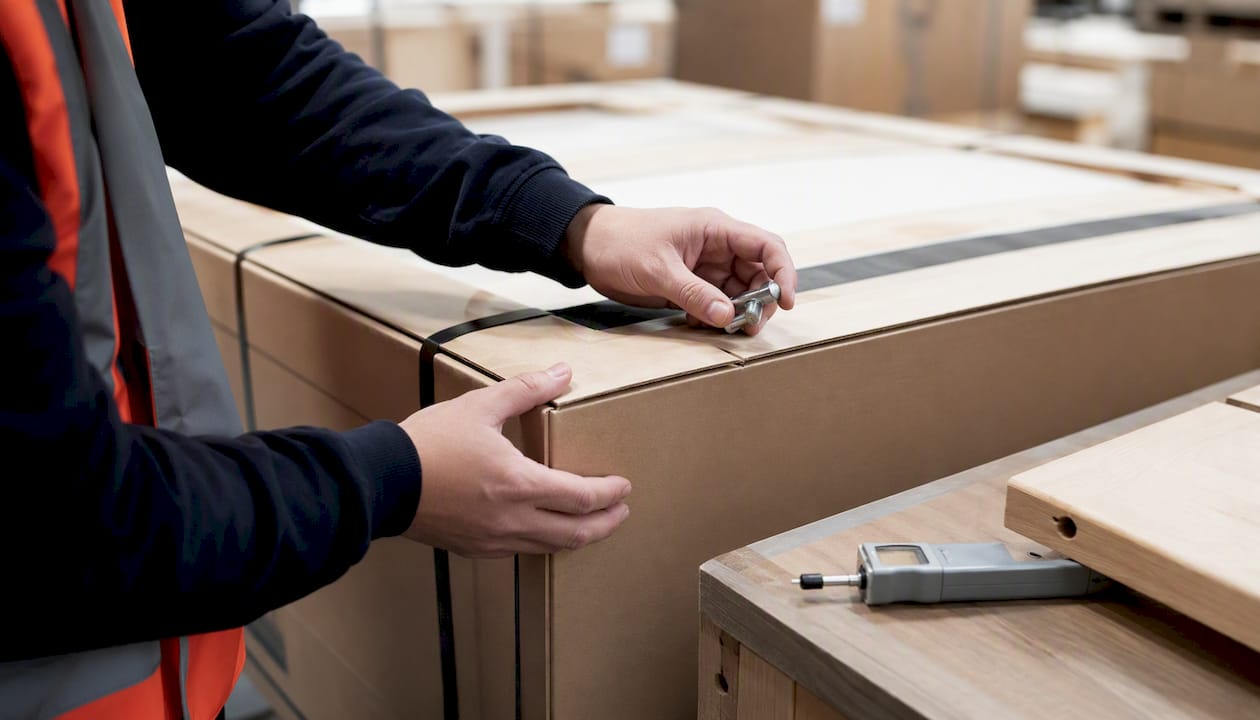
Skip PSI to save a few hundred dollars, and you risk finding out about a defect only after the container’s already on the water.
How Do Chinese Furniture Factories Quote and Get Paid?
Factory quotes almost always come in one of three pricing terms, and knowing the difference matters more than most first-time buyers realize. EXW (Ex Works) means the price covers only goods at the factory door; you own every cost from there, including inland trucking to the port. FOB (Free on Board) shifts responsibility to the factory up through loading onto the vessel at a Chinese port, which is the most common term for SMB furniture orders. CIF (Cost, Insurance, Freight) bundles ocean freight and basic insurance into the quoted price, convenient on paper but often more expensive than arranging your own freight once you compare rates.
Whichever term you’re quoted, ask what’s excluded. Packaging upgrades, export documentation fees, and inland trucking within China are the three hidden costs that most often show up as surprise line items after you’ve already agreed to a “final” price.
Payment structure is your main risk-management lever here:
- T/T 30/70 (30% deposit, 70% before shipment) is the industry standard for established relationships and carries moderate risk if you’ve verified the supplier.
- Letter of Credit (LC) adds bank-level payment protection but comes with more paperwork and is generally reserved for larger, recurring orders.
- Trade Assurance or platform escrow (available through Alibaba) holds payment until you confirm receipt, useful for first orders with unverified suppliers.
- Third-party payment providers like Wise let you pay in the supplier’s local currency at a transparent exchange rate, which avoids the markup many suppliers quietly build into wire transfer instructions.
Negotiation works best when you’re not just haggling over unit price. MOQ, sample costs, tooling fees for custom molds, staggered production milestones tied to partial payments, and warranty terms on defects after delivery are all levers that move more total cost than shaving a dollar off the per-unit quote.
Which Incoterms and Packaging Standards Protect Your Shipment?
Incoterms decide who’s holding the risk and the cost at each stage of the journey, and getting this wrong is how first-time importers end up owning a problem they didn’t budget for. EXW puts everything on you starting at the factory door. FOB shifts risk to the supplier through vessel loading, then it’s yours. CIF extends the seller’s responsibility through ocean freight and basic insurance, though you’re still on the hook for customs and delivery at destination. DDP (Delivered Duty Paid) puts the entire chain — freight, duties, customs clearance, and final delivery — on the seller or your forwarder. This is why it’s the term most first-time furniture importers gravitate toward once they understand the alternative.
Packaging is where furniture punishes shortcuts harder than almost any other product category. Bulky, often fragile, frequently veneered or upholstered, furniture damages easily and its billable dimensional weight (DIM) is a real cost driver, not just a protection issue. Packaging engineering, tighter cartons, smarter palletization, is a lever on your freight bill, not only insurance against breakage.
Build these into your packaging spec:
- Moisture barrier wrap on any wood component, especially for ocean transit through humid climates
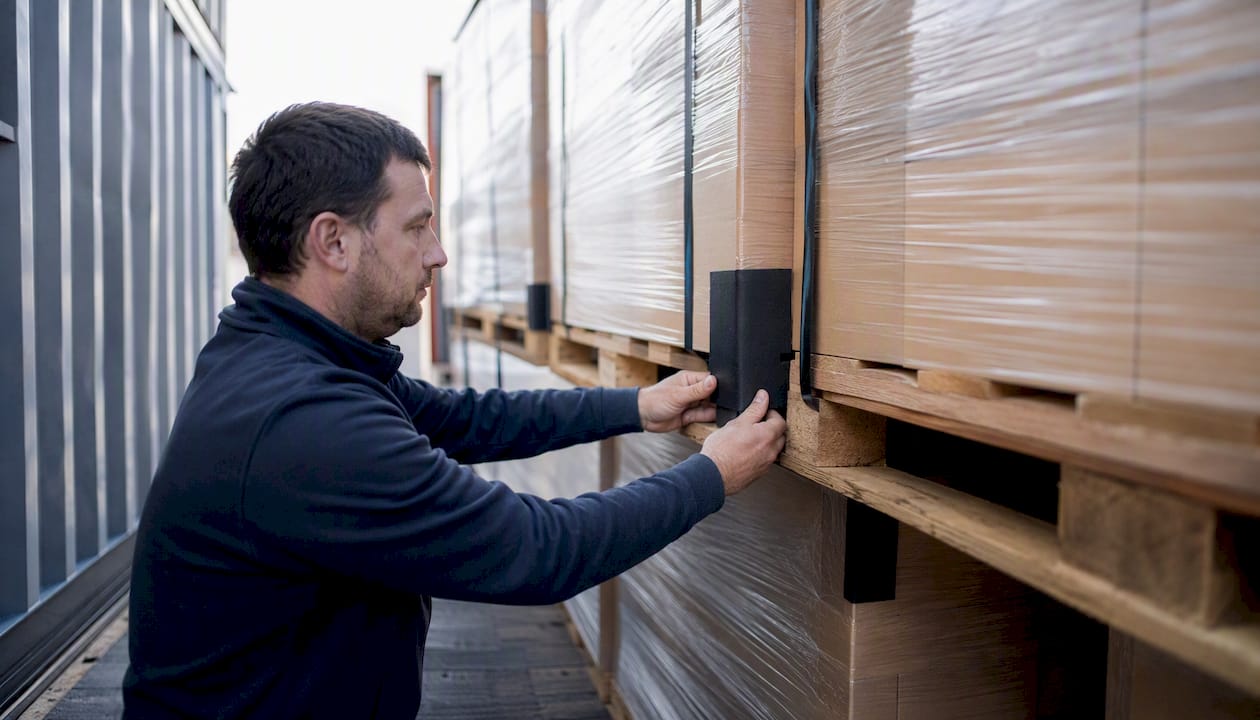
- Corner protectors on all edges, foam or molded plastic depending on weight
- Reinforced double-wall cartons rated for the actual product weight
- Shrink-wrap and proper palletization to prevent shifting inside the container
- Clear SKU and HTS code printed on every carton’s packing label
- Carton dimensions and weight per carton listed on the packing list, matching what’s physically on the box
- Fragile and handling instructions printed in both English and Chinese
A resource like this guide to protective packaging for fragile items is worth reviewing if you’re specifying materials for the first time. Get the packaging spec locked before your sample order, not after, because retrofitting packaging on a production run already underway rarely goes well.
Should You Ship Furniture by FCL, LCL, or Air?
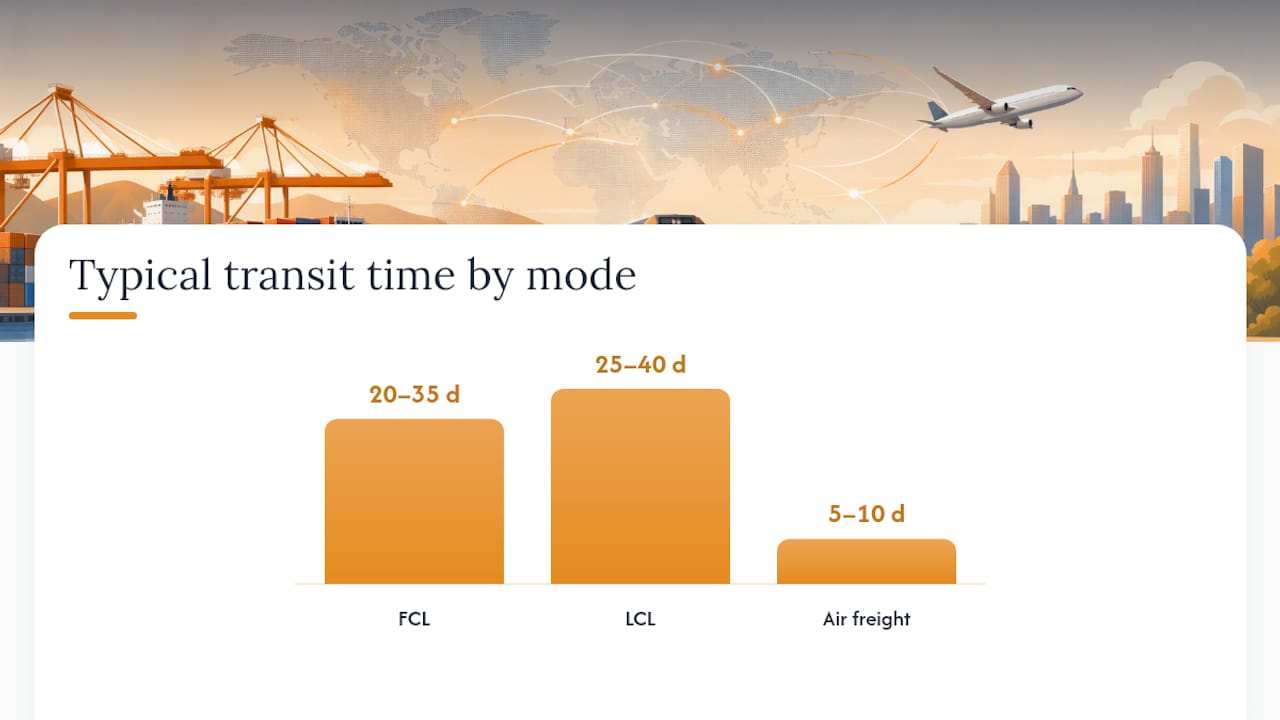
Cargo volume decides this question more than price sensitivity does. Full container load (FCL) makes sense once your order fills roughly 15 or more cubic meters (CBM), since you’re paying for the container regardless of how full it is. A 40-foot high-cube container holds roughly 65 to 72 CBM, and ocean freight to the US West Coast in this range commonly runs $2,800 to $4,200 depending on carrier and season. Less than container load (LCL) works for smaller test orders, but per-CBM cost climbs fast once you factor in consolidator handling fees and the higher damage risk from sharing container space with other shippers’ cargo. Air freight is rarely the default for furniture given its weight and volume, but it earns its cost for small, high-value pieces or when a stockout is more expensive than the freight premium; our air freight guide breaks down when that math actually works in your favor.
| Shipping mode | Best for | Typical transit time | Damage risk |
|---|---|---|---|
| FCL | Orders above ~15 CBM | 20 to 35 days ocean transit | Lowest, exclusive container use |
| LCL | Smaller test orders | 25 to 40 days including consolidation | Higher, shared container handling |
| Air freight | Small, high-value, urgent SKUs | 5 to 10 days | Low, but cost scales with weight fast |
Whichever mode you choose, a furniture-specialist forwarder needs to handle a few things a general cargo forwarder often gets wrong: proper container stuffing sequence so weight distributes evenly, palletization that prevents shifting on rough seas, moisture management for wood components during transit, and enough advance booking notice to avoid scrambling during peak season. Before you brief a forwarder, have this ready: total CBM and weight, carton count and dimensions, Incoterm you’re working under, target delivery date, and whether you need cargo insurance quoted separately or bundled into the freight rate. On insurance specifically, confirm the claims process before you need it: what documentation triggers a payout, what the deductible looks like, and how long claims typically take to settle.
What Tariffs and HTS Codes Apply to Furniture Imports?
Every furniture item entering the US needs a Harmonized Tariff Schedule (HTS) code, and getting it wrong doesn’t just risk a fine, it risks a retroactive duty bill months after your shipment already cleared. Start with the official HTS search tool to identify the candidate code for your product category, then have a licensed customs broker confirm it before you finalize your PO. Composite wood furniture, in particular, tends to sit in gray areas between HTS classifications, which is exactly where misclassification risk concentrates.
Here’s where the real cost surprise hides. As of late 2025, furniture imported from China typically stacks three separate duty layers: an MFN base rate that varies by HTS code, commonly 0% to 7.5%, plus a Section 301 tariff of 25% on top, plus Section 232 duties of 25% specifically on furniture containing metal components.
This isn’t static. Tariff notices tied to Section 301 and Section 232 have shifted multiple times through 2025, and importers need to check current rates before finalizing pricing on any new SKU rather than relying on last year’s number. For high-value or ambiguous product lines, request a binding tariff ruling or a written classification opinion from your broker. It costs a bit of time upfront, but it protects you from a retroactive duty assessment on an entire shipment months after the fact.
How Do You Calculate the True Landed Cost of Imported Furniture?
Landed cost is the number that actually determines whether an import order makes money, and it’s almost never close to the FOB price a factory quotes you. The full formula looks like this:
Landed cost = FOB/EXW price + inland China trucking + export packing + ocean or air freight + cargo insurance + duties (MFN base + Section 301 + Section 232 where applicable) + Merchandise Processing Fee (MPF) + customs broker fees + port/terminal handling + demurrage risk buffer + domestic delivery to your warehouse or FBA center.
Buyers who’ve run this math find that landed cost commonly exceeds the original FOB price by a substantial margin once every fee is accounted for, sometimes higher on metal-frame pieces hit by Section 232. Here’s what that looks like on a sample SKU:
| Cost layer | What to confirm before deposit |
|---|---|
| Factory price | FOB or EXW unit cost, packaging upgrades, sample credits, tooling, and payment split. |
| Origin logistics | Factory pickup, inland trucking, export documents, and container loading or LCL handling. |
| International freight | FCL/LCL or air rate, cargo insurance, peak-season surcharges, and dimensional-weight impact. |
| US import costs | HTS duty, Section 301 exposure, Section 232 exposure for metal components, MPF, and broker fees. |
| Final delivery | Port drayage, warehouse delivery, FBA appointment delivery, demurrage buffer, and damage-claim process. |
How Long Does Importing Furniture From China Take?
Budget 90 to 150 days from your first sample request to inventory sitting in your warehouse, and treat anything faster as a pleasant surprise rather than the plan. Samples typically take a few weeks to produce and ship, longer for custom upholstery or finish work. Production runs 30 to 60 days depending on order size, with larger orders or complex finishes pushing toward the higher end. Ocean transit adds another 20 to 35 days for FCL to the US West Coast, more for East Coast destinations routed through the Panama Canal. Customs clearance itself is usually fast, a few days, assuming your paperwork is complete and correct.
The delays that actually blow calendars almost always trace back to a handful of causes:
- Production rework after a failed pre-shipment inspection, which can add two to four weeks
- Port congestion during peak shipping season (typically August through October ahead of holiday retail)
- Missing or incomplete documentation, especially a late Importer Security Filing (ISF) or missing certificate of origin
- Fumigation holds triggered by missing phytosanitary paperwork on solid wood components
- Demurrage triggers when a container sits at port past the free storage window because customs entry wasn’t filed in time
How Do You Choose a Freight Forwarder for Furniture Imports?
Not every forwarder that handles general cargo understands furniture, and the gap shows up in cracked frames and rejected FBA shipments. A forwarder worth hiring for furniture specifically needs demonstrated experience with bulky, fragile cargo, a clear container-stuffing process that prevents shifting during transit, a track record on claims (ask how they’ve handled a damage claim in the last year, not just whether they offer insurance), documented experience handling fumigation certificates for solid wood, and FBA prep or DDP services if you’re selling on Amazon. Our guide to choosing a freight forwarder from China walks through the full vetting checklist in more depth if you’re comparing multiple quotes.
The DDP versus FOB decision comes down to volume and experience level, not just cost per unit:
- Choose DDP if you’re a first-time importer, shipping smaller volumes, or feeding Amazon FBA, where customs delays directly threaten your inventory availability during peak sales windows.
- Choose FOB with an in-country customs broker once you’re shipping consistent volume and have the internal bandwidth to manage broker relationships and tariff classification yourself, since the cost savings at scale can outweigh the convenience premium of DDP.
Pro Tip: Before signing with any forwarder, get a service-level clause in writing that specifies demurrage thresholds and inspection windows, not just a transit-time estimate. A forwarder that won’t commit to specific terms on delay accountability is telling you something about how they’ll handle it when a shipment actually runs late.
What Templates Should You Prepare Before Contacting a Supplier?
Two documents separate importers who move fast from importers who spend three months in email back-and-forth over specs that should’ve been settled on day one.
Your supplier brief needs these fields filled in before you send a single message: product category and reference photos, exact dimensions and materials, target FOB price range, order quantity, required certifications (CARB, fire-safety, Lacey Act declaration if solid wood), packaging specification, and your target production timeline.
Your sample approval checklist should cover: dimension tolerance (typically plus or minus 3 to 5 millimeters for furniture), color and finish match against an approved reference swatch, hardware function test, packaging survival after a basic drop test, and a written sign-off from whoever on your team has final approval authority, so there’s no ambiguity about who greenlit production.
Documentation for customs clearance needs to be complete before your container leaves China, not assembled after it arrives:
| Document | Purpose |
|---|---|
| Commercial invoice | States value and terms for customs valuation |
| Packing list | Details carton count, weight, and dimensions per unit |
| Bill of Lading (B/L) or Air Waybill (AWB) | Proof of shipment and carrier contract |
| Certificate of Origin (CO) | Confirms country of manufacture for duty purposes |
| CARB/TSCA declaration | Required for composite wood content |
| Lacey Act declaration | Required for solid wood species and origin |
| ISF filing confirmation | Required 24+ hours before ocean vessel departure |
| Fumigation certificate | Required for solid wood components entering the US |
Once your first sample is approved and your documentation checklist is staged, the next move is simple: request a landed-cost quote from a forwarder using your actual packing list and carton dimensions, not a generic estimate. That single number, not the FOB price your factory quoted, is what tells you whether the order actually pencils out.
A Freight Forwarder’s Perspective on Furniture Imports
The mistake I see most often isn’t a bad supplier. It’s a good supplier paired with a buyer who negotiated hard on unit price and never once modeled landed cost before placing the order. By the time the Section 301 tariff, the Section 232 metal surcharge, and the demurrage fees from a missing fumigation certificate show up, the margin that looked healthy on the factory quote has evaporated. Furniture punishes that kind of shortcut harder than almost any other product category, because it’s bulky, it’s fragile, and it carries more compliance paperwork than a lot of importers expect going in.
The buyers who do well treat sourcing and logistics as one continuous decision, not two separate problems solved by two separate people. That’s the gap ForwarderOne was built to close. If you’re moving toward your first furniture order, or your third one that finally has the volume to justify full DDP service, the next right move is simple: send us a sample SKU and a packing list, and get a real landed-cost quote before you commit to production.
Furniture Import FAQ
Is it cheaper to import furniture from China than buy domestically?
Often yes, particularly on solid wood and upholstered pieces, but only after full landed cost, not just FOB price, is factored in.
What’s the minimum order quantity for furniture imports from China?
MOQs vary widely by supplier and product complexity, from as low as a handful of units on Alibaba-sourced test orders to several hundred units for custom-tooled pieces. Foshan trade market vendors often negotiate lower MOQs than large export-focused factories, especially for buyers willing to visit in person.
Do I need a customs broker to import furniture from China?
Not legally required for every shipment, but strongly advisable given how often furniture HTS codes sit in gray areas and how costly a misclassification penalty can be. A broker also handles your Importer Security Filing and confirms duty calculations before your goods arrive.
What’s the difference between DDP and FOB for a first-time furniture importer?
DDP means your forwarder or supplier handles freight, duties, and customs clearance as one bundled service, which removes most of the operational risk for buyers new to importing. FOB shifts that responsibility to you once goods are loaded onto the vessel, which can save money at scale but requires your own broker relationship and tariff expertise.
How do I know if my furniture shipment will face Section 232 duties?
Section 232 applies specifically to furniture containing metal components, so any piece with a metal frame, metal hardware beyond incidental fasteners, or metal structural elements is at risk. Confirm exposure with your customs broker using your product’s actual HTS classification before finalizing pricing.
This article provides general guidance on importing furniture from China and is not a substitute for advice from a licensed customs broker or trade attorney. Tariff rates, HTS classifications, and compliance requirements change; confirm current rules with official sources or a qualified professional before finalizing any shipment.
Import furniture from China without surprise landed costs
ForwarderOne coordinates supplier pickup, DDP customs clearance, cargo insurance planning, container loading, and final delivery for bulky furniture shipments from China to U.S. warehouses or FBA destinations.