Freight agent startups are defined as independent contractor businesses that connect shippers with carriers under a sponsoring freight broker’s FMCSA authority, without holding their own operating license. The role of freight agent startups sits at the intersection of entrepreneurship and logistics, giving small business owners a lower-cost entry point into freight brokerage. Unlike traditional brokers, agents operate as 1099 contractors under broker authority, avoiding the $75,000 surety bond and $10,000–$30,000 startup costs that full broker licensing requires. That cost gap is the single biggest reason entrepreneurs are choosing the agent model over launching an independent brokerage. AI tools are accelerating this shift by automating the repetitive tasks that once demanded large back-office teams.
What is the role of freight agent startups in logistics?
Freight agent startups function as lean, sales-focused intermediaries. Their core job is to find shippers who need to move freight, match those shippers with reliable carriers, and manage the relationship on both sides. The sponsoring broker handles compliance, billing, payments, and insurance. That division of labor is what makes the model work for entrepreneurs who want ownership without the full regulatory burden.

The standard industry term for this model is “freight brokerage agency,” though the startup community often shortens it to “freight agent startup” to emphasize its entrepreneurial character. Both terms describe the same structure: an agent earns commission on loads booked, while the broker absorbs back-office complexity.
This model also creates a clear growth path. An agent who builds a strong shipper base can eventually transition to a full broker license, or simply scale revenue by adding more carrier relationships and booking higher-value loads. The entry point is low; the ceiling is high.
How freight agent startups operate day-to-day
The daily workflow of a freight agent startup looks nothing like a traditional brokerage office. There are no large compliance teams or internal pricing desks slowing decisions down.
A typical agent day includes:
- Prospecting and quoting: Calling or emailing shippers to offer rates on upcoming loads
- Carrier sourcing: Finding available trucks through load boards like DAT or direct carrier relationships
- Load booking: Confirming pickup and delivery details, generating rate confirmations
- Relationship management: Following up with shippers on delivery status and resolving service issues
- Exception handling: Managing late pickups, damaged freight, or carrier no-shows
The sponsoring broker runs payables, receivables, and carrier compliance checks in the background. This lets the agent stay focused on revenue-generating activity instead of paperwork.
Pro Tip: Before signing with a sponsoring broker, ask specifically what back-office tasks they cover. Some brokers handle carrier vetting and claims; others leave those tasks to the agent. Knowing the split upfront prevents surprises at 6 AM on a Monday when a carrier goes dark.
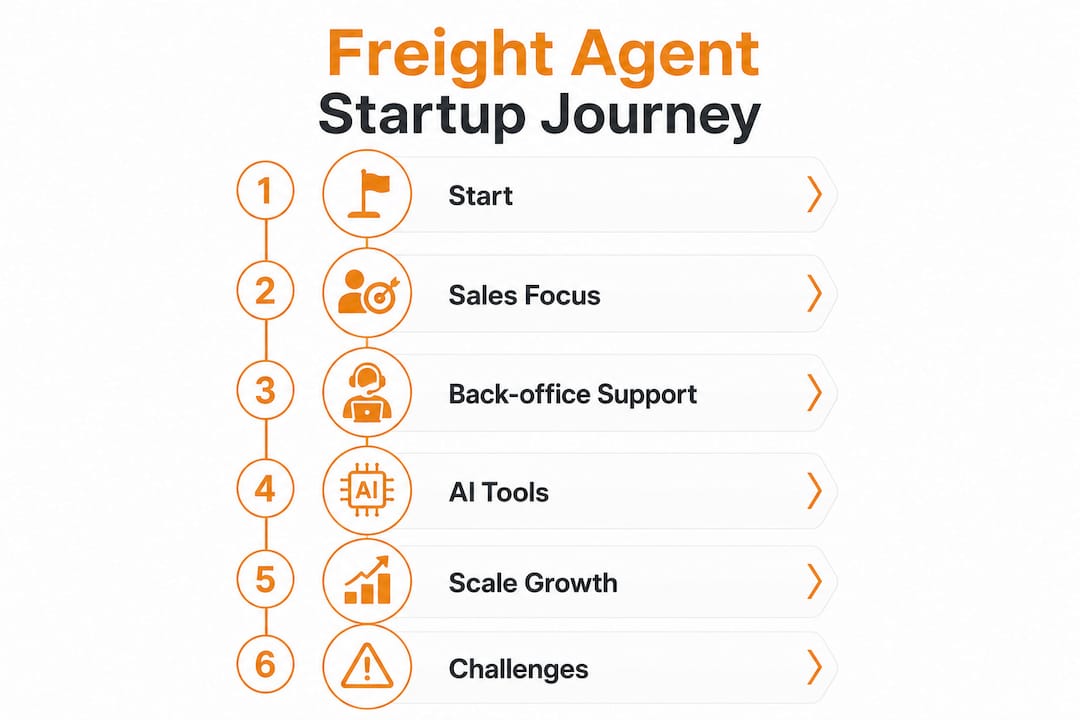
The lean structure also means lower fixed costs. An agent working from a home office with a laptop, a phone, and a load board subscription can run a real freight business. That accessibility is a defining feature of the freight forwarding startup model.
How does AI change the way freight agent startups work?
AI is the most significant operational shift in freight brokerage since the load board went digital. For agent startups, the impact is direct and practical.
AI tools automate carrier outreach, rate negotiation within set guardrails, and document processing. Tasks that once took an agent 30 minutes per load now take seconds. That frees the agent to focus on complex shipments, high-value accounts, and relationship-building that no algorithm can replace.
“The goal isn’t to replace the freight agent. It’s to give them an ‘Iron Man suit.’ AI handles the routine; the human handles the judgment calls. That combination is what makes a startup competitive against a 200-person brokerage.”
The future of freight brokerage involves augmented intelligence, blending AI digital workers with human operators to improve workflows without eliminating people. For a startup with one or two agents, this is a genuine competitive equalizer.
Specific areas where AI delivers measurable gains for freight agent startups include:
- Carrier matching: AI scans load boards and carrier databases to find the best available truck faster than manual searching
- Rate benchmarking: Automated tools pull market rate data so agents quote competitively without spending time on research
- Document processing: AI reads and extracts data from bills of lading, rate confirmations, and proof of delivery documents
- Exception alerts: Automated tracking flags late shipments before the shipper calls to complain
The role of freight tracking systems in this workflow is critical. Real-time visibility tools give agents the data they need to communicate proactively, which is the single biggest driver of shipper retention.
Successful freight startups focus on augmenting brokers with technology rather than seeking full automation. The agents who win are the ones who use AI to handle volume while keeping human judgment at the center of complex freight decisions.
What are the benefits of freight agent startups for entrepreneurs?
The freight agent model offers entrepreneurs something rare: a real business with low startup costs, no inventory, and income that scales with effort rather than headcount.
- Low barrier to entry. No FMCSA authority, no surety bond, and no large capital requirement. An agent can launch under a sponsoring broker for a fraction of what a full brokerage costs.
- Ownership of client relationships. Independent agents build equity in personal shipper and carrier relationships that a salaried broker employee never owns.
- Income that scales. Commission-based pay means there is no ceiling. An agent who books more loads earns more, without waiting for a performance review.
- Speed advantage in tight markets. Independent freight agents thrive in volatile markets by delivering faster, more personal service than large brokerages slowed by internal approval layers.
- Flexible work model. Most agent startups operate remotely, with schedules that fit around other business commitments.
The speed advantage deserves more attention than it typically gets. When spot truckload rates spike and shippers need a truck today, a one-person agent startup can make a decision in two minutes. A corporate brokerage routes the same request through a pricing desk, a compliance check, and a manager approval. The agent wins the load.
Pro Tip: Build your carrier network before you need it. The agents who thrive in tight markets are the ones who already have direct relationships with 50 to 100 reliable carriers. Cold-calling a carrier at 4 PM on a Friday for a hot load is a losing strategy.
The logistics job market is also generating new roles that feed directly into the agent model, from independent dispatchers to carrier relationship managers. Entrepreneurs who understand these emerging roles can build teams around them.
What challenges do freight agent startups face?
The agent model is not as simple as it looks from the outside. The low startup cost is real, but the daily workload is heavier than most new agents expect.
Common challenges include:
- Hidden administrative tasks. Carrier vetting, OS&D claims, and real-time shipment visibility management add hours to every week that do not show up in commission checks.
- No legal ownership of shipper contracts. Freight agents generate revenue but do not legally own shipper contracts, which means a sponsoring broker restructuring could absorb those client relationships.
- Long runway to profitability. Building a freight book of business typically takes 12–24 months before income becomes reliable. Agents who underestimate this timeline run out of runway before they hit their stride.
- Sales skills are non-negotiable. The agent model is fundamentally a sales business. Agents who are strong operators but weak salespeople stall out quickly.
- Tech without process fails. Many freight startups invest in software before they have a working human workflow. AI tools amplify good processes; they do not fix broken ones.
The contract ownership issue is the one most agents ignore until it hurts them. The best protection is direct, transparent communication with shippers. When a shipper trusts the agent personally, not just the brokerage brand, that relationship is far harder to absorb. Why startups need freight forwarders is a related question worth understanding, because the answer clarifies where agent startups fit in the broader logistics chain and what gaps they need to fill.
Key Takeaways
Freight agent startups succeed by combining low-cost entry, AI-driven efficiency, and high-touch client relationships that large brokerages cannot replicate at speed.
| Point | Details |
|---|---|
| Low-cost entry model | Agents avoid the $75,000 surety bond and high startup costs required for full broker licensing. |
| AI amplifies agent output | Automation handles carrier outreach and document processing, freeing agents for complex loads. |
| Speed beats size in tight markets | Independent agents make faster decisions than corporate brokerages, winning loads in volatile conditions. |
| Contract ownership is a real risk | Agents do not legally own shipper contracts, so relationship depth is the only reliable protection. |
| Profitability takes time | Most agents need 12–24 months to build a reliable book of business and stable income. |
The freight agent model is more durable than the hype suggests
I have watched a lot of entrepreneurs enter the freight agent space expecting a passive income business. They buy a course, sign with a sponsoring broker, and assume the loads will follow. They are usually wrong, and usually broke within six months.
The agents I have seen build real businesses share one trait: they treat it like a sales career first and a logistics operation second. They call shippers before they have a carrier network. They build carrier relationships before they have a load to offer. They invest in communication tools before they invest in automation. That sequence matters.
The AI conversation is real, but it is also overhyped in one specific direction. AI does not make a bad agent good. It makes a good agent faster. If you do not already know how to quote a load, manage a carrier relationship, and handle a service failure, no software fixes that gap. The technology reward goes to agents who have already built the human foundation.
The most durable advantage in this business is relationship depth. Shippers stay with agents who call them before problems escalate, not after. Carriers prioritize agents who pay on time and communicate clearly. Those behaviors cost nothing and compound over years. That is the actual competitive moat in freight agent startups, not the tech stack.
If you are an entrepreneur evaluating this model, the question is not whether the opportunity is real. It is. The question is whether you are willing to do 18 months of hard sales work before the income feels stable. If the answer is yes, the upside is genuine.
— Keven
How ForwarderOne supports entrepreneurs in freight logistics
Entrepreneurs entering freight logistics need more than a business model. They need a reliable execution partner who handles the complexity of international shipping so they can focus on growth.
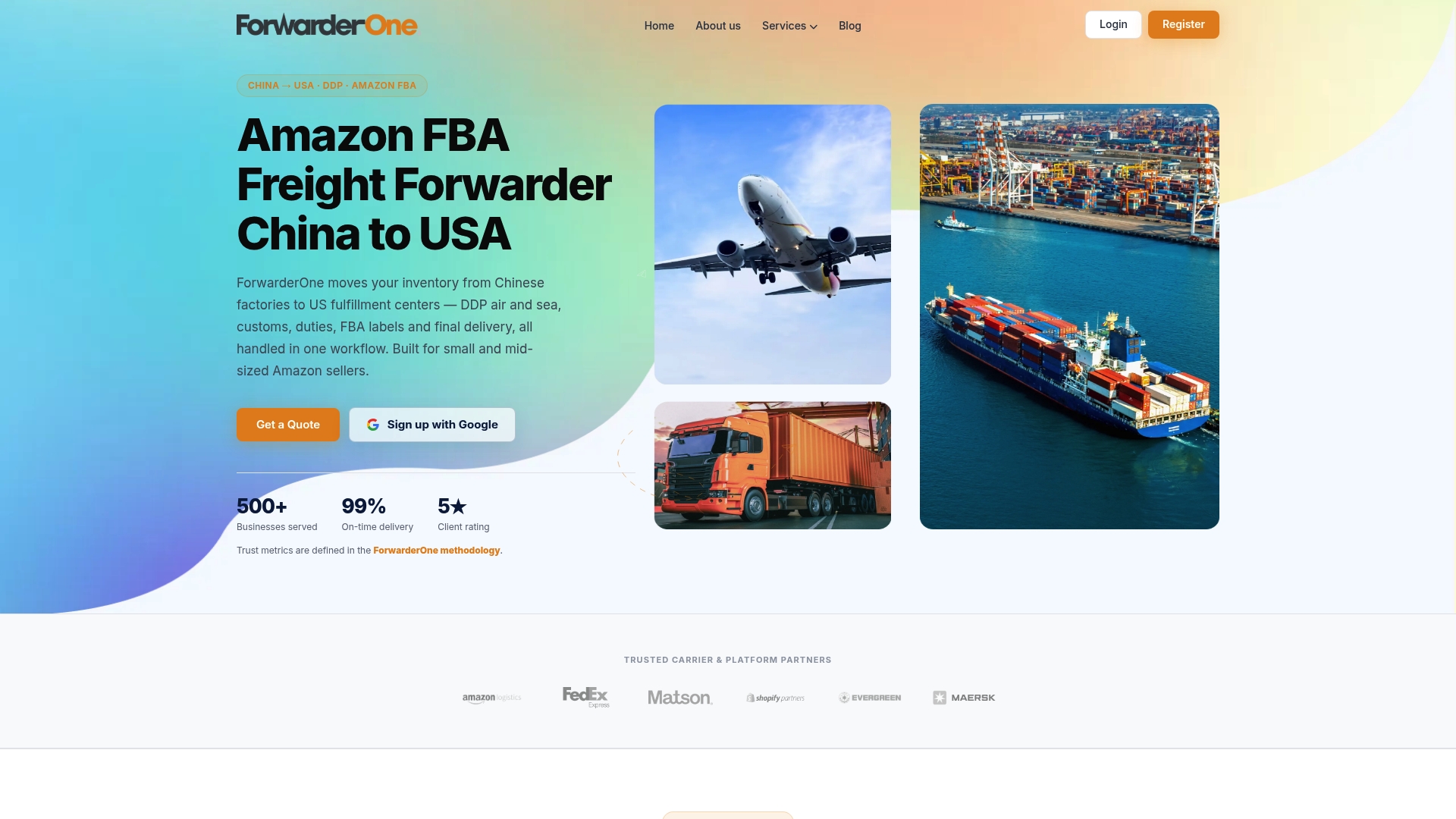
ForwarderOne specializes in DDP freight forwarding services for small and mid-sized businesses moving inventory from China, Korea, and Mexico to US fulfillment centers. The all-inclusive DDP model covers customs, duties, and delivery in a single workflow, removing the compliance burden that slows most new logistics operators down. With over 99% on-time delivery and a dedicated account manager for every client, ForwarderOne gives entrepreneurs the execution reliability they need to build shipper trust from day one. For businesses sourcing from China specifically, the China shipping agent service handles supplier pickup and consolidation directly.
FAQ
What is a freight agent startup?
A freight agent startup is an independent contractor business that books freight loads and manages shipper and carrier relationships under a sponsoring broker’s FMCSA authority. Agents avoid the high licensing costs of full brokers by operating as 1099 contractors.
How do freight agents make money?
Freight agents earn a commission on each load they book, typically a percentage of the gross margin between the rate charged to the shipper and the rate paid to the carrier. Income scales directly with the volume and value of loads booked.
What are the biggest challenges for freight agent startups?
The main challenges are the long runway to profitability (typically 12–24 months), hidden administrative workloads, and the fact that agents do not legally own shipper contracts. Strong sales skills and proactive communication are the most reliable ways to manage these risks.
How does AI help freight agent startups compete?
AI automates carrier outreach, rate benchmarking, and document processing, allowing a small agent startup to handle load volumes that previously required a larger team. The key is using AI to amplify human judgment, not replace it.
Do freight agent startups need their own FMCSA authority?
No. Freight agents operate under their sponsoring broker’s FMCSA authority as 1099 independent contractors. This is the primary regulatory and financial difference between agents and full freight brokers.
Need an execution partner behind your freight workflow?
ForwarderOne gives ecommerce operators a dedicated account manager, DDP freight execution and shipment visibility across China, Korea, Mexico and US fulfillment routes.