
If you're sourcing Wayfindr.io alternatives, the right replacement depends entirely on what job you need done. For FBA-centric sellers moving inventory from China to the US, a dedicated freight forwarder with DDP capability (like ForwarderOne) is the sharpest fit. For high-volume domestic fulfillment, marketplace-integrated networks like Fulfillment by Amazon or ShipBob handle the execution layer. For enterprise-grade multi-carrier orchestration, neutral 4PL platforms are the right category. And for fast DTC fulfillment, lightweight regional 3PLs cover the basics without the overhead.
TL;DR by use case:
- China to US FBA / DDP shipping: ForwarderOne handles customs, duties, labeling, and delivery in a single DDP workflow with a dedicated account manager and over 99% on-time delivery.
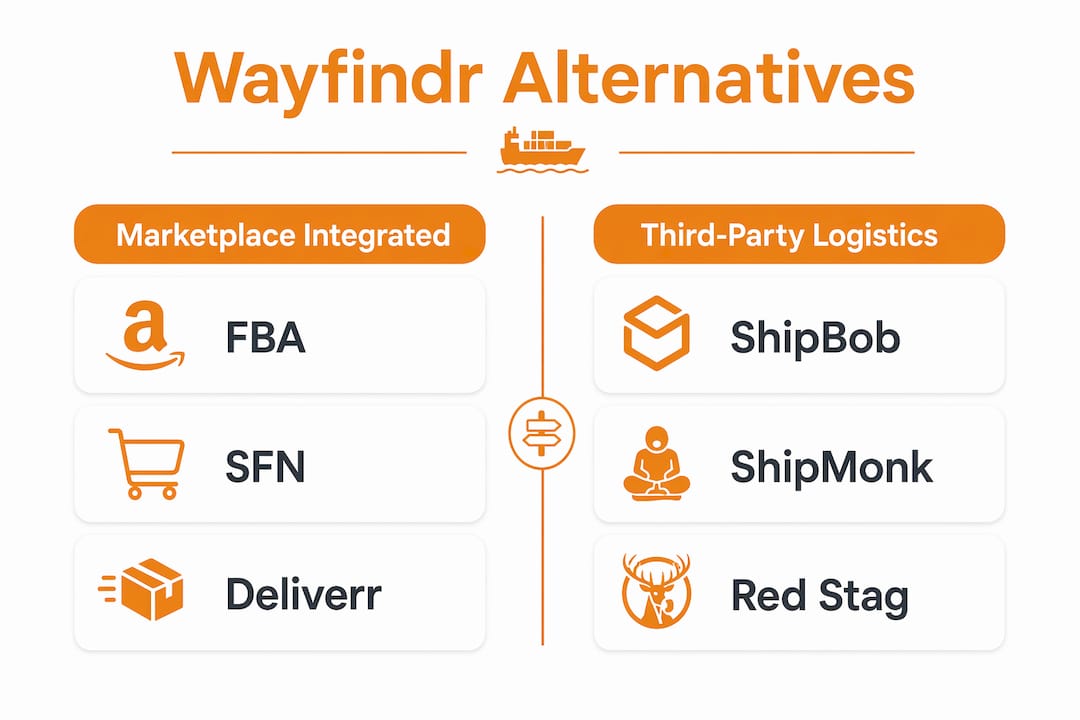
- Marketplace-integrated fulfillment (Amazon, Shopify): Fulfillment by Amazon (FBA), Shopify Fulfillment Network (SFN), and Deliverr plug directly into marketplace ecosystems for fast domestic fulfillment.
- DTC / mid-market fulfillment: ShipBob and ShipMonk offer distributed US warehouse networks with published SLAs and transparent per-unit pricing.
- Heavy/oversized goods: Red Stag Fulfillment specializes in high-value, large-format inventory with strong accuracy guarantees.
- Enterprise 4PL orchestration: Neutral 4PL alternatives with control-tower software suit complex omnichannel brands managing multiple carriers and markets.
Start with the decision checklist in Section 3, then request standardized RFP quotes with sample invoices before contracting.
How do the top Wayfindr.io alternatives compare side by side?
Before reading the table, one clarification: "Wayfindr" appears in searches for both UX wayfinding software (indoor navigation, signage tools) and logistics 4PL platforms. This article covers logistics and fulfillment alternatives only. Confirm any vendor's core job-to-be-done before adding them to a technical RFP.
Gartner Peer Insights and RFP.wiki both flag integration depth and visibility (APIs, dashboards, control-tower features) as the two axes that separate strong logistics partners from adequate ones. Keep those columns in focus as you scan.
| Provider | Best for | Core services | FBA / marketplace integration | Pricing model | US coverage | SLA / speed | Minimums & onboarding |
|---|---|---|---|---|---|---|---|
| ForwarderOne | Small/mid Amazon sellers, China to US DDP | Freight forwarding, DDP, customs clearance, FBA labeling, air/sea/express | FBA-specialist; direct to fulfillment centers | Per-shipment, transactional; no long-term contract | China/Korea to US, Mexico | 99%+ on-time delivery | Low minimums; dedicated account manager from day one |
| Fulfillment by Amazon (FBA) | Amazon-first sellers | Warehousing, pick/pack, Prime shipping, returns | Native Amazon integration | Storage + per-unit fulfillment fees; long-term storage surcharges | Nationwide US | Prime 2-day | No formal minimum; self-service onboarding |
| Shopify Fulfillment Network (SFN) | Shopify-native DTC brands | Warehousing, pick/pack, 2-day delivery, returns | Shopify-native; limited multi-channel | Per-order fulfillment; storage fees | Select US markets | 2-day delivery | Shopify store required; moderate onboarding |
| ShipBob | Mid-market DTC, multi-channel | Warehousing, pick/pack, returns, freight, B2B | Shopify, Amazon, WooCommerce, Magento, EDI | Per-order + storage; transparent published rates | 10+ US fulfillment centers | 2-day from distributed nodes | Low minimums; 2–4 week onboarding |
| ShipMonk | Growing DTC brands, subscription boxes | Warehousing, pick/pack, kitting, returns | Shopify, Amazon, WooCommerce, BigCommerce | Per-pick pricing; storage fees | Multiple US locations | Standard 2–5 day | Low minimums; self-serve onboarding portal |
| Red Stag Fulfillment | Heavy, oversized, high-value goods | Warehousing, pick/pack, returns, freight | Shopify, Amazon, WooCommerce | Per-unit + storage; published rate card | 2 US fulfillment centers | 2-day from East/West nodes | Moderate minimums; 1–2 week onboarding |
| Deliverr | Fast marketplace fulfillment, Walmart/Amazon | Pick/pack, 2-day fulfillment, returns | Amazon, Walmart, eBay, Shopify | Per-unit fulfillment; storage fees | Distributed US network | 2-day badge-eligible | Low minimums; fast onboarding |
What to watch in each column:
- Pricing model: Per-unit and storage fees look simple but accessorial charges (returns, labeling, non-standard dimensions) drive real cost variance. Always request a sample invoice.
- FBA integration: "Supports Amazon" ranges from a basic API connection to a full FBA-prep and labeling workflow. Ask for specifics.
- SLA transparency: Published OTIF (On-Time In-Full) metrics are a trust signal. Vague "fast shipping" language is not.
How do you pick the right Wayfindr.io alternative for your operation?
The top alternative categories span enterprise 4PLs, marketplace-integrated fulfillment networks, and regional DTC providers. Narrowing the shortlist means matching your primary operational trigger to the right model.
Prioritized selection criteria:
- Neutral orchestration / control-tower capability — Does the provider select carriers and warehouses by performance and cost, or do they steer volume toward captive assets? Neutral carrier governance is a core 4PL differentiator; ask for a written neutrality policy and a carrier-scoring scorecard.
- FBA and marketplace integration depth — Request the specific API endpoints and integration methods, not just a logo grid.
- DDP and customs experience — For China to US flows, ask how many shipments they've cleared through US Customs and Border Protection, and whether they handle ISF filing, HTS classification, and Section 301 tariff management in-house.
- SLA transparency — Ask for actual OTIF numbers from the last 90 days, not marketing copy.
- Implementation risk and cost drivers — Consulting-led 4PL onboarding can run 3–9 months and carry surprise fees. Get a line-item project plan.
- Data interoperability — Confirm ERP, WMS, and TMS integration methods (EDI, REST API, flat file) before signing.
Questions to ask every vendor in discovery:
- What are your specific API endpoints for order management and inventory sync?
- Can you share OTIF or on-time delivery metrics from the last quarter?
- How do you handle damaged returns, and who absorbs the cost?
- How are accessorial charges (re-labeling, non-standard dimensions, hazmat) attributed on invoices?
- What are the termination notice period and data-handover procedures?
- Do you have a written neutrality policy for carrier and warehouse selection?
- Can you provide a sample invoice from a comparable account?
Red flags in proposals:
- Opaque or bundled pricing with no line-item breakdown
- No published SLAs or OTIF data
- Captive-asset bias (the provider owns the warehouses and carriers they recommend)
- Consulting fees that appear only after contract signature
- Vague integration claims with no technical documentation
Pro Tip: When normalizing competing 4PL quotes, strip out implementation fees and model a 12-month TCO that includes recurring management fees, per-shipment pass-throughs, and accessorial estimates based on your actual SKU mix. That single exercise usually surfaces a 20–40% cost gap that headline rates hide.
What does each alternative actually do, and where does it fit?
Leading alternatives for logistics-focused buyers generally fall into three categories: marketplace-integrated ecosystems, neutral 4PL orchestration platforms, and lightweight DTC-focused fulfillment providers. Here's what each named entrant actually delivers.
Fulfillment by Amazon (FBA)
Amazon's own fulfillment network. You send inventory to Amazon's warehouses; they pick, pack, ship, and handle returns under Prime SLAs. The integration is unmatched for Amazon-first sellers, but operational costs including damaged-return charges and long-term storage fees can erode margin if inventory doesn't move. FBA doesn't solve inbound freight or customs, which is where a freight forwarder like ForwarderOne fills the gap.
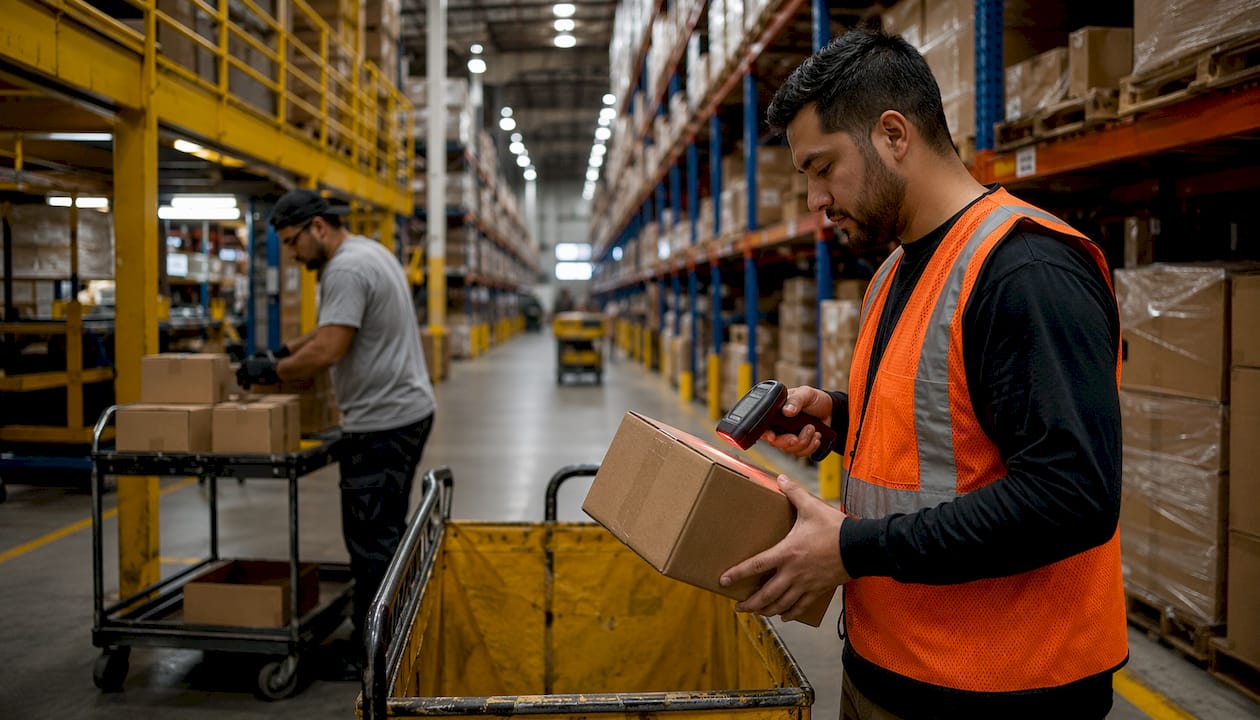
Strengths: Prime badge, nationwide US coverage, returns handled, no separate carrier management. Limits: Amazon-centric; limited multi-channel; inbound freight and customs are your problem.
Shopify Fulfillment Network (SFN)
Built for Shopify merchants who want 2-day delivery without managing a 3PL relationship. SFN handles warehousing, pick/pack, and returns inside the Shopify ecosystem. Coverage is still expanding and multi-channel support is limited, so it's best for brands whose primary channel is their Shopify store.
Strengths: Native Shopify integration, 2-day delivery, simple setup. Limits: Limited to Shopify ecosystem; geographic coverage not yet nationwide.
ShipBob
A distributed fulfillment network with 10+ US centers, transparent published pricing, and integrations across Shopify, Amazon, WooCommerce, Magento, and EDI for B2B. ShipBob's control-tower dashboard gives real-time inventory visibility across nodes. Onboarding typically runs 2–4 weeks.
Strengths: Multi-channel, published rates, distributed US network, strong API coverage. Limits: Per-order pricing can climb for low-AOV SKUs; international coverage is limited.
ShipMonk
Strong for subscription box brands and DTC sellers with kitting or assembly needs. Per-pick pricing is predictable at scale, and the self-serve onboarding portal is one of the faster setups in the category.
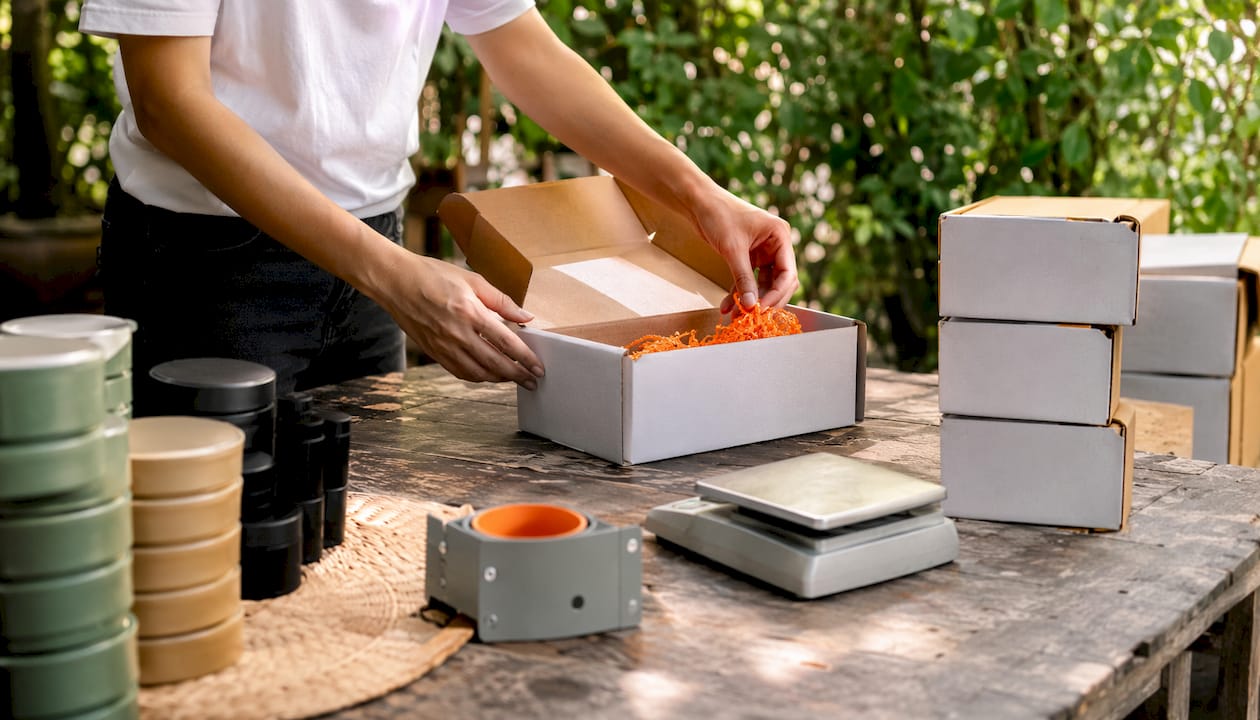
Strengths: Kitting and assembly, per-pick pricing, multiple US locations. Limits: Less suited for B2B or marketplace-heavy sellers.
Red Stag Fulfillment
The go-to for heavy, oversized, or high-value goods. Red Stag operates two US fulfillment centers (East and West) and publishes accuracy guarantees that are unusual in the 3PL market.
Strengths: Accuracy guarantees, specialized handling for large/heavy SKUs, published rate card. Limits: Only two US locations; not ideal for standard-size, high-velocity SKUs.
Deliverr
Marketplace-first fulfillment designed to earn fast-shipping badges on Amazon, Walmart, and eBay. Deliverr's distributed network and simple per-unit pricing make it accessible for sellers scaling across multiple marketplaces quickly.
Strengths: Multi-marketplace badge eligibility, fast onboarding, distributed US network. Limits: Less suited for complex B2B or international flows.
ForwarderOne
ForwarderOne is a freight forwarder and DDP specialist for small and mid-sized Amazon sellers moving inventory from China and Korea to US and Mexico FBA fulfillment centers. The core service covers the entire inbound leg: freight booking (air, sea, express courier), customs clearance, ISF filing, FBA labeling, cargo insurance, and DDP delivery to the fulfillment center. Every account gets a dedicated account manager, and the published on-time delivery rate is over 99%.
Strengths: DDP all-in pricing, FBA-specialist labeling and compliance, dedicated account management, China/Korea to US and Mexico coverage, over 99% on-time delivery. Limits: Focused on inbound freight and customs, not domestic warehousing or last-mile delivery after FBA intake.
Category-level trade-offs
| Category | Best trigger | Key strength | Key trade-off |
|---|---|---|---|
| Marketplace-integrated fulfillment | Amazon/Shopify-first sellers | Ecosystem integration, Prime SLAs | Platform lock-in, limited cross-border |
| Neutral 4PL orchestration | Complex omnichannel, multi-carrier | Carrier neutrality, control-tower visibility | Long implementation, consulting fees |
| Lightweight DTC fulfillment | Growing DTC brands | Simple pricing, fast onboarding | Less suited for B2B or international |
| DDP freight forwarding | China to US FBA inbound | All-in customs/duties, FBA labeling | Covers inbound leg only |
What do pricing and onboarding timelines actually look like?
Pricing in this space is rarely what the headline rate suggests. Here's where costs actually live.
Common pricing shapes by category:
- Marketplace-integrated (FBA, SFN): Per-unit fulfillment fees plus storage fees (monthly and long-term). Accessorial charges for non-standard dimensions, returns, and labeling add up fast.
- 3PL / fulfillment networks (ShipBob, ShipMonk, Red Stag, Deliverr): Per-order or per-pick fees plus storage. Published rate cards exist, but request a sample invoice for your actual SKU mix.
- 4PL orchestration: Consulting-led pricing is common. Implementation fees, recurring management fees, and freight pass-throughs are often separate line items not visible in the initial proposal.
- DDP freight forwarding (ForwarderOne): Per-shipment transactional pricing that includes customs, duties, and delivery. No long-term contract or monthly retainer.
Cost drivers to request line-item detail on:
- Return handling and restocking fees
- Re-labeling and FBA prep charges
- Accessorial fees (oversized, hazmat, non-conveyable)
- Cross-dock and inbound freight surcharges
- Exception handling (delays, customs holds, damaged goods)
Typical onboarding timelines:
- Marketplace-integrated (FBA, SFN): Days to weeks; largely self-service.
- 3PL / fulfillment networks: 2–12 weeks depending on integration complexity.
- 4PL orchestration: 3–9 months; expect a consulting-led project plan.
- DDP freight forwarding: 1–2 weeks to first shipment with a dedicated account manager.
Always request a sample invoice from a comparable account and a projected 6-month TCO before signing. For 4PL proposals specifically, require that implementation fees, recurring management fees, and freight pass-throughs appear as separate line items.
4PL vs 3PL vs freight forwarder: which model fits your supply chain?
These three terms describe fundamentally different jobs, and conflating them is one of the most common sourcing mistakes.
4PL (fourth-party logistics): An orchestration layer. A 4PL designs and manages your entire supply chain program, selecting and governing carriers, warehouses, and technology on your behalf. The defining feature is neutrality: a true 4PL owns no assets and selects partners by performance. The control-tower software that provides end-to-end visibility is the product. Best for complex omnichannel brands managing multiple markets, carriers, and fulfillment nodes.
3PL (third-party logistics): An execution layer. A 3PL operates warehouses, picks and packs orders, and manages domestic transportation. They own or lease the physical assets. Best for high-volume domestic fulfillment where you need reliable execution at scale.
Freight forwarder: An international freight and customs specialist. A freight forwarder books cargo space, manages documentation, files customs entries, and coordinates delivery to a destination warehouse or fulfillment center. A DDP freight forwarder goes further, absorbing duties and taxes into a single all-in price. Best for cross-border inventory moves, especially China to US FBA inbound shipments.
Use-case matrix:
- High-complexity global omnichannel, multiple markets: 4PL orchestration.
- High-volume domestic fulfillment, Amazon/Shopify-first: 3PL or marketplace-integrated network.
- Cross-border FBA inventory from China or Korea: freight forwarder with DDP capability, paired with FBA for domestic execution.
Hybrid models make sense for most growing Amazon sellers. A DDP freight forwarder handles the inbound international leg (factory to FBA fulfillment center), while FBA or a 3PL handles domestic storage and last-mile. This keeps each specialist focused on what they do best without forcing a single provider to cover every function. If you later need a 4PL to orchestrate across multiple 3PLs and carriers, you can layer that on top.
Pro Tip: Before signing with any 4PL, negotiate a written data-handover clause that specifies exactly which data fields (order history, inventory records, carrier scorecards) transfer to your ERP or WMS if you exit. Without it, switching costs balloon and you lose operational continuity.
Key Takeaways
The right Wayfindr.io alternative is determined by your primary operational trigger: inbound freight, domestic fulfillment, or enterprise orchestration.
| Point | Details |
|---|---|
| Match model to job-to-be-done | Use a DDP freight forwarder for China to US inbound, a 3PL for domestic fulfillment, and a 4PL for complex multi-carrier orchestration. |
| Demand published SLAs | Request OTIF metrics from the last 90 days before contracting; vague "fast shipping" claims are not a substitute. |
| Normalize TCO before comparing | Strip out implementation fees and model a 12-month TCO including management fees, pass-throughs, and accessorials. |
| Watch for captive-asset bias | Ask for a written neutrality policy and carrier-scoring scorecard from any 4PL candidate. |
| ForwarderOne for China to US FBA | ForwarderOne covers DDP, customs clearance, FBA labeling, and inbound freight with over 99% on-time delivery and no long-term contract. |
What the shortlist looks like from where ForwarderOne sits
Most of the alternatives in this article solve the domestic fulfillment problem well. What they don't solve is the inbound leg: getting inventory from a factory in Shenzhen or Seoul to an Amazon fulfillment center in the US without delays, mis-classifications, or surprise duty bills.
That's the specific problem ForwarderOne was built for. The service covers freight booking (air, sea, express courier), customs clearance, ISF filing, HTS classification, Section 301 tariff management, FBA labeling, cargo insurance, and DDP delivery to the fulfillment center. Small and mid-sized Amazon sellers get a dedicated account manager from the first shipment, not a ticket queue. The DDP model means duties and taxes are priced in upfront, so there are no surprise charges at the port.
For sellers who want to test the lane before committing, a single test shipment is a practical starting point. The freight forwarding process for Amazon sellers is straightforward when the provider specializes in FBA workflows rather than treating them as a variation on general freight.
ForwarderOne covers the inbound leg the others leave to you
The fulfillment providers in this article handle domestic warehousing and last-mile delivery well. None of them solve the China to US customs and DDP problem for Amazon sellers. That's where ForwarderOne fits.
ForwarderOne manages the entire inbound freight workflow for small and mid-sized Amazon sellers: DDP shipping from China and Korea, customs clearance, FBA labeling, cargo insurance, and delivery directly to US and Mexico fulfillment centers. Over 99% on-time delivery, a dedicated account manager, and per-shipment pricing with no long-term contract. If you're sourcing inventory from Asia and losing time coordinating between a freight broker, a customs broker, and an FBA prep center, ForwarderOne consolidates all of that into one transaction.
Start with a DDP freight quote or review the full service list to confirm fit before your next shipment.
Need the inbound freight leg solved before fulfillment?
ForwarderOne covers DDP freight, customs, FBA labeling coordination, cargo insurance, and delivery to US and Mexico fulfillment centers.