A freight forwarder is a specialized logistics partner that manages the moving pieces of international shipping on behalf of sellers. That includes cargo booking, document review, customs coordination, inland delivery, and shipment visibility. The practical reason sellers use freight forwarders is simple: a forwarder turns a multi-vendor, high-risk process into one managed workflow.
This matters most for e-commerce sellers sourcing inventory from China, Korea, or Mexico and delivering it to US Amazon fulfillment centers, Walmart WFS warehouses, TikTok Shop partners, or private 3PLs. A shipment can fail because of one missing carton label, one vague commercial invoice line, one late Importer Security Filing, or one port delay that no one reroutes in time. A capable forwarder reduces those failure points before cargo leaves the supplier.
Why sellers use freight forwarders
The benefits of freight forwarders usually fall into five categories: cost, compliance, time, risk, and visibility. Each one affects a seller's landed cost and stock availability.
- Cost control through consolidation. Sellers who cannot fill a full container can use LCL consolidation, shared air freight, or scheduled DDP lanes instead of booking inefficient one-off shipments.
- Carrier access and rate leverage. Forwarders aggregate shipment volume across clients, which can unlock better air, ocean, trucking, and warehouse options than a small seller can negotiate alone.
- Customs and document coordination. A forwarder checks commercial invoices, packing lists, HS code assumptions, declared value, country of origin, and duty scope before the shipment hits customs.
- Time savings for the seller. Instead of coordinating carriers, brokers, truckers, warehouses, and Amazon delivery appointments across time zones, the seller works with one account team.
- Exception handling. When a port backs up, a flight is cancelled, or Amazon changes receiving instructions, an experienced forwarder can reroute, escalate, or rebook quickly.
- Better shipment visibility. Tracking updates, document status, estimated arrival dates, and delivery milestones help sellers plan ads, inventory replenishment, and cash flow.
For a broader definition of the role, read what a freight forwarder does. If you are comparing partners, use the Amazon seller forwarder checklist before approving a quote.

What a forwarder actually does for sellers
A freight forwarder does not just "ship the boxes." A useful seller-focused forwarder owns the operational handoffs that make cross-border cargo hard to manage.
- Shipment intake. The forwarder collects supplier city, ready date, carton count, dimensions, gross weight, product category, declared value, destination, and deadline.
- Mode selection. The team compares air, ocean, express, LCL, FCL, and DDP options based on margin, speed, stockout risk, and destination rules.
- Document review. Commercial invoices, packing lists, certificates, FBA carton labels, and shipment references are checked before booking.
- Customs coordination. The forwarder works with licensed brokers or in-house brokerage teams to prepare customs entries and duty payment workflows.
- Origin and destination handling. Supplier pickup, export handling, warehouse transfer, drayage, transloading, and final delivery are sequenced into one plan.
- Delivery appointment support. For Amazon FBA and other retail warehouses, the forwarder plans appointment windows and final-mile requirements.
- Tracking and exception updates. The seller gets status updates before problems become stockouts.
| Need | Handled by a freight forwarder | What sellers avoid |
|---|---|---|
| Carrier booking | Books space across air, ocean, trucking, and DDP lanes. | Calling separate carriers and comparing incomplete quotes. |
| Customs paperwork | Reviews invoice, packing list, HS code assumptions, and duty scope. | Port holds caused by vague descriptions or missing data. |
| FBA delivery | Plans labels, carton data, delivery appointment, and warehouse rules. | Amazon receiving delays and rejected shipments. |
| Insurance and risk | Explains cargo insurance and carrier liability limits. | Assuming carrier liability covers full inventory value. |
| Visibility | Tracks milestones and escalates exceptions. | Discovering delays only after inventory runs out. |
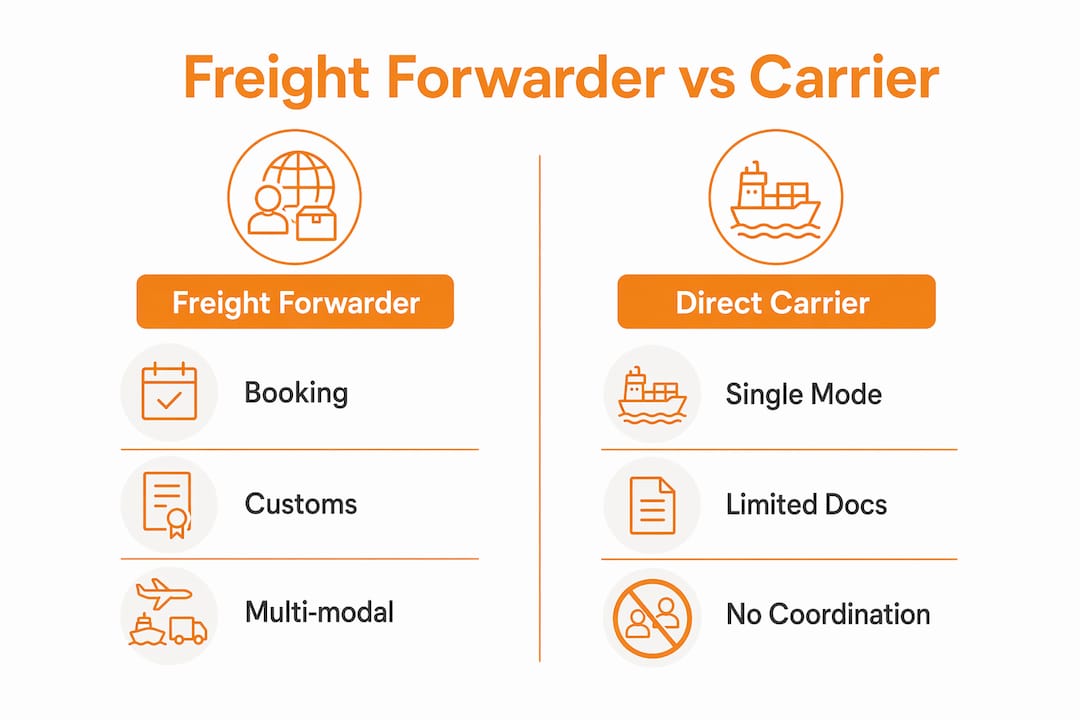
Why choose a freight forwarder over booking direct?
Direct carrier booking can work for simple domestic shipments or large shippers with in-house logistics staff. It breaks down for sellers who need cross-border customs, multiple transport modes, destination delivery, and warehouse appointment coordination.
A direct ocean carrier may move a container from Shanghai to Los Angeles, but that does not automatically include supplier pickup, customs entry, duty payment, drayage, transloading, Amazon appointment scheduling, or exception management. A forwarder coordinates the full chain.
The difference becomes obvious when something goes wrong. If a port is congested, a forwarder with multiple carrier and warehouse relationships can evaluate alternate ports, air-sea split plans, partial air replenishment, or adjusted delivery windows. A seller booked directly with one carrier often has fewer options and less leverage.
Practical rule: if a shipment crosses a border, has customs duties, needs FBA or retail delivery compliance, or matters to your inventory calendar, use a forwarder instead of treating freight as a single carrier booking.
For Amazon sellers shipping from China, duty handling and DDP planning are often the deciding factors. A clear DDP quote can prevent surprise charges and reduce the number of vendors a seller has to manage.
How to select the right freight forwarder
Choosing a forwarder by the lowest headline rate is risky. The cheap quote is often missing destination handling, customs scope, insurance, warehouse fees, or appointment support. Sellers should compare the full operating model.
- Trade lane expertise. A partner that ships China to USA FBA every week will understand documentation, carrier schedules, customs patterns, and Amazon delivery rules on that lane.
- Pricing transparency. Ask for origin charges, freight, duty scope, customs fees, destination charges, final delivery, and exception fees in one itemized quote.
- Customs capability. Confirm whether the forwarder has in-house brokerage or a named broker partner, especially for regulated goods or changing tariff exposure.
- Digital visibility. Tracking, document portals, and proactive updates are no longer optional for growing sellers.
- Crisis response. Ask what happens when cargo is delayed at port or Amazon reschedules receiving. Specific answers matter more than broad promises.
- FBA readiness. If the destination is Amazon, the forwarder should understand FNSKU labels, carton labels, shipment plans, split destinations, and delivery appointments.
Pair this selection process with the FBA freight forwarder comparison and the freight cost factors guide so you compare total landed cost instead of only freight rate.
Practical ways sellers use freight forwarding to grow
Freight forwarding is not only a defensive service. Used well, it can support growth because sellers can source internationally without hiring a full logistics department.
- Testing new SKUs. LCL, air, and DDP services let sellers test smaller orders before committing to full-container volume.
- Protecting launch dates. A forwarder can plan partial air shipments for launch inventory while moving the main replenishment by ocean.
- Entering new origin markets. Sellers sourcing from Korea or Mexico can use the same logistics planning discipline without building local expertise from scratch.
- Reducing stockouts. Better tracking and exception handling help sellers keep replenishment aligned with sales velocity.
- Improving margin planning. DDP quotes and itemized landed-cost estimates help sellers price products with fewer surprises.
Key takeaways
| Point | Seller impact |
|---|---|
| Forwarders coordinate the full shipment chain. | Less vendor management across carriers, brokers, truckers, warehouses, and final delivery. |
| Consolidation can lower per-unit freight cost. | Small and mid-sized sellers can ship internationally without full-container volume. |
| Customs review protects inventory timelines. | Better invoices, HS code checks, and duty planning reduce port holds. |
| Direct carrier booking leaves gaps. | Sellers still need customs, inland delivery, appointments, tracking, and exception handling. |
| DDP planning improves landed-cost confidence. | Amazon sellers can reduce surprise charges before inventory reaches fulfillment centers. |
ForwarderOne freight forwarding built for sellers
ForwarderOne supports small and mid-sized sellers shipping inventory from China, Korea, and Mexico to US fulfillment centers. The service is built around DDP freight forwarding, customs coordination, duty planning, tracking, and final delivery in one workflow.
If you need FBA-ready shipping from China, compare the China-to-USA freight forwarding service, review Amazon FBA shipping support, or estimate scenarios with the shipping cost calculator before approving your next quote.
FAQ
What does a freight forwarder actually do for sellers?
A freight forwarder books cargo space, manages shipping documentation, coordinates customs clearance, arranges inland delivery, supports delivery appointments, and provides tracking updates across the shipment lifecycle.
Why choose a freight forwarder instead of booking directly with a carrier?
Direct carriers move cargo on their own network, but they usually do not manage customs, multiple transport modes, final delivery, Amazon appointment rules, or exception recovery. Forwarders coordinate the full chain.
How do freight forwarders save sellers money?
Forwarders can consolidate smaller shipments, negotiate carrier rates, reduce document errors, prevent avoidable port holds, and provide itemized landed-cost planning before the shipment moves.
What is DDP shipping and why does it matter for Amazon sellers?
DDP, or Delivered Duty Paid, means duties, customs scope, and final delivery are planned into the freight workflow. For Amazon sellers, DDP can reduce surprise destination charges and simplify receiving at fulfillment centers.
How do I know if a freight forwarder is reliable?
Look for trade lane expertise, itemized pricing, clear customs capability, real tracking tools, named account ownership, and specific answers for port delays, customs holds, or Amazon delivery changes.
Ready to simplify seller freight?
Share supplier city, carton count, cargo value, product category, destination warehouse, deadline, and duty assumptions. ForwarderOne will map the freight mode, customs scope, delivery plan, and landed-cost estimate.