Delivered Duty Paid (DDP) shipping is defined as a delivery arrangement where the seller assumes full responsibility for all costs and risks until goods arrive at the buyer’s specified location. That includes freight, export clearance, import customs, duties, taxes, and final delivery. Under DDP, the buyer receives their order without paying a single additional fee at the door. Platforms like Shopify and carriers like UPS, FedEx, and DHL all support DDP workflows for cross-border orders. 69% of consumers will switch brands for more convenient delivery. That number alone explains why DDP shipping has become the default choice for serious e-commerce sellers.
What is DDP shipping and how does it work?
DDP shipping follows a defined sequence of seller responsibilities from the moment an order is placed to the moment it lands at the buyer’s door. The seller controls every step. Nothing is left for the buyer to figure out.
Here is how the process works in practice:
- Order and freight booking. The seller books freight with a carrier or freight forwarder, such as DHL, UPS, or a specialist like ForwarderOne. The seller selects the mode of transport, whether air, sea, or express courier.
- Export customs clearance. The seller files export documentation in the country of origin. For shipments from China, this means export declarations and commercial invoices.
- International transit. The shipment moves under the seller’s risk. Any damage, loss, or delay during transit is the seller’s problem to resolve.
- Import customs clearance. The seller, through their freight forwarder or customs broker, files import documents in the destination country. The seller bears all costs including duties, taxes, port charges, and broker fees.
- Final delivery. The carrier delivers to the buyer’s address. Risk and ownership transfer only at this point.
- Duty and tax settlement. The seller pays all import duties and taxes directly. The buyer never receives a customs bill.
Accurate product data is non-negotiable at step four. Incorrect HTS codes and vague product descriptions are the leading cause of customs delays and surcharges for DDP shipments. A wrong code can trigger a hold that delays delivery by days and adds unexpected fees to the seller’s cost.
Pro Tip: Build a product classification library with verified HTS codes before you scale DDP shipping. One accurate code file saves hours of customs back-and-forth per shipment.

What are the benefits of DDP over DDU shipping?
DDU (Delivered Duty Unpaid) places import costs on the buyer. DDP places them on the seller. That single difference has a large effect on customer experience and conversion rates.
Price transparency reduces cart abandonment
75% of consumers worry about the total cost of an online order. DDU shipping creates exactly the problem they fear: a surprise customs bill at delivery. DDP eliminates that friction by showing the full landed cost at checkout. Buyers know what they pay. They complete the purchase.
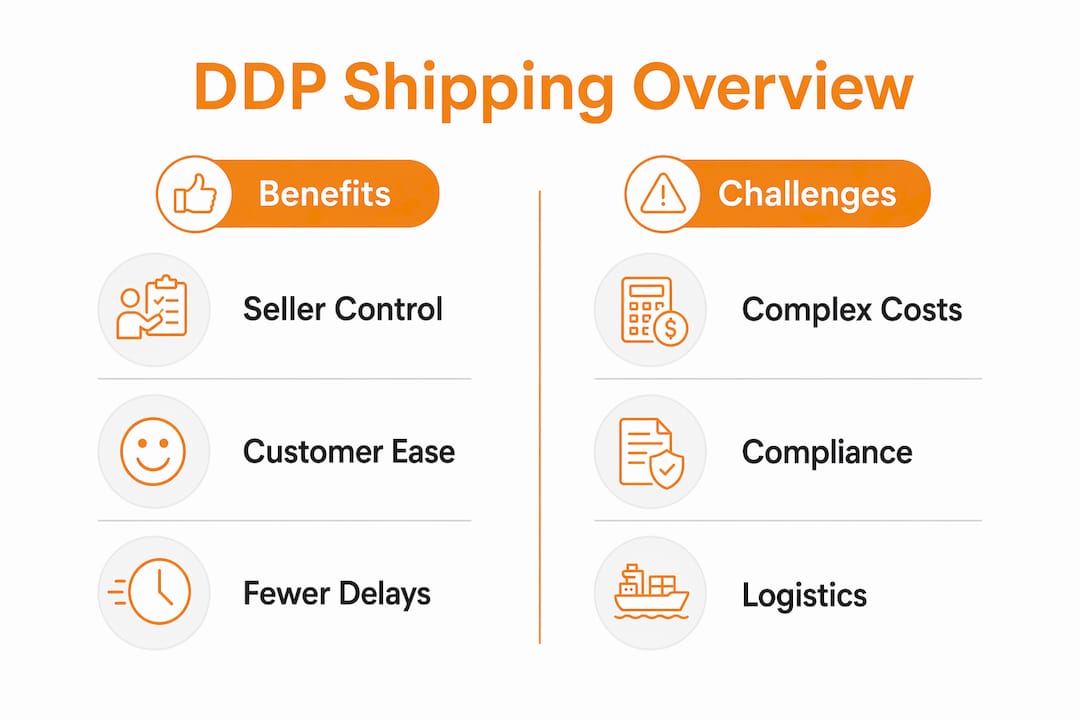
Customer satisfaction improves with DDP
DDP removes the buyer’s need to interact with customs brokers or pay fees upon delivery. For international buyers, receiving a package with zero extra steps is a premium experience. That experience drives repeat purchases and positive reviews.
Consolidated logistics responsibility reduces delays
Under DDU, if customs holds a shipment, the buyer must resolve it. Most buyers have no idea how to do that. Under DDP, the seller or their freight forwarder handles the issue directly. Resolution is faster because the responsible party has the tools and contacts to act.
Here is a direct comparison of the two terms:
| Factor | DDP | DDU |
|---|---|---|
| Who pays import duties | Seller | Buyer |
| Buyer surprise fees | None | Possible |
| Customs clearance responsibility | Seller | Buyer |
| Cart abandonment risk | Lower | Higher |
| Seller cost control | Full | Partial |
| Best for | Customer-focused sellers | B2B or experienced importers |
The US de minimis threshold and DDP
The US de minimis threshold sits at $800 in 2026. Shipments valued below $800 enter the US without formal customs entry or duty payment. For e-commerce sellers shipping low-value consumer goods from China, this means many DDP shipments carry zero duty cost. The seller still manages the process, but the financial exposure is minimal.
What are the practical challenges of implementing DDP shipping?
DDP is not a free service. The seller absorbs every cost that the buyer would otherwise pay. Understanding where those costs come from is the first step to pricing DDP shipments correctly.
The main cost and compliance challenges include:
- Bundled pricing. Sellers must factor duties, taxes, and broker fees into their product price or shipping charge. Underestimating landed costs erodes margins on every order.
- Documentation accuracy. Freight forwarders like UPS, FedEx, and DHL manage customs billing under DDP, but they rely on the seller’s product data. Errors in commercial invoices or packing lists cause delays that the seller is responsible for fixing.
- De minimis overpayment risk. Sellers who ignore de minimis thresholds in destination countries pay unnecessary customs clearance fees. A shipment worth $200 entering the US requires no duty, but a seller using a full customs entry process pays broker fees they did not need to pay.
- Import regulations by country. Each destination country has its own restricted goods lists, labeling requirements, and import licensing rules. A product that ships freely to the US may require a permit in Canada or the EU.
- Insurance and liability. The seller carries full risk during transit. Cargo insurance is not optional under DDP. A lost or damaged shipment is the seller’s financial loss until delivery is confirmed.
Pro Tip: Request a landed cost breakdown from your freight forwarder before quoting DDP prices to customers. Include freight, insurance, duties, and broker fees in one number so your pricing reflects actual costs.
The most common misconception about DDP is that it means a hands-off experience for the seller. The opposite is true. The seller must provide correct product data, maintain compliance with destination country regulations, and actively monitor customs clearance timelines. The freight forwarder executes the process, but the seller owns the outcome.
How can sellers implement DDP shipping effectively?
Execution quality determines whether DDP shipping becomes a competitive advantage or a cost drain. These steps give sellers a practical path to reliable DDP operations.
- Choose a freight forwarder with proven DDP experience. Not every forwarder handles import customs in the destination country. Verify that your forwarder has licensed customs brokers in the US, or wherever your buyers are located. ForwarderOne, for example, specializes in DDP shipping for Amazon FBA sellers moving goods from China to US fulfillment centers.
- Display landed costs at checkout. Integrate your shipping platform so buyers see the full DDP price before they pay. Shopify and WooCommerce both support landed cost display through third-party apps. Hiding costs until after purchase defeats the purpose of DDP.
- Monitor customs clearance timelines. Build a tracking process for import filings. The customs clearance timeline for standard sea freight from China to the US typically runs three to seven business days after arrival. Delays beyond that window usually signal a documentation issue.
- Negotiate bundled rates. High-volume sellers can negotiate all-in DDP rates that cover freight, customs, and delivery in a single line item. This simplifies accounting and makes landed cost calculations predictable.
- Audit your HTS code library regularly. Trade regulations change. A code that was correct in 2024 may carry a different duty rate in 2026. Schedule a quarterly review with your customs broker to catch changes before they affect your costs.
Technology also plays a real role here. Shipment tracking platforms that integrate with customs filing systems give sellers real-time visibility into where a shipment is in the clearance process. That visibility lets you act on delays before they become customer service problems.
Key Takeaways
DDP shipping gives sellers full control over the import process, which directly reduces buyer friction and improves conversion rates for international orders.
| Point | Details |
|---|---|
| DDP definition | The seller pays all freight, duties, taxes, and customs costs until delivery. |
| DDP vs DDU | DDP eliminates surprise fees for buyers; DDU passes import costs to the buyer. |
| US de minimis rule | Shipments under $800 entering the US avoid duties, lowering DDP costs for many sellers. |
| Documentation accuracy | Correct HTS codes and product descriptions prevent customs delays and surcharges. |
| Implementation priority | Partner with a DDP-experienced freight forwarder and display landed costs at checkout. |
Why DDP is the right default for cross-border sellers in 2026
The conventional wisdom says DDP costs more, so sellers should use DDU to protect their margins. I disagree with that framing. The cost of a lost customer from a surprise customs bill is higher than the cost of absorbing the duty. I have watched sellers lose repeat buyers because a $15 customs fee showed up at the door with no warning. That is not a shipping problem. That is a trust problem.
The sellers who treat DDP as a cost center are thinking about it wrong. DDP is a customer retention tool. When a buyer in Germany or Canada receives their order with zero extra steps, they remember that experience. They come back. They leave reviews that mention how easy the purchase was. That word-of-mouth compounds over time in ways that a lower shipping cost never will.
The practical reality in 2026 is that cross-border e-commerce competition is intense. Buyers have more choices than ever. The sellers who win are the ones who remove every possible point of friction. DDP removes the biggest friction point in international delivery. The sellers who treat it as a standard operating procedure, not a premium option, are the ones building durable international businesses.
One more thing: do not assume your freight forwarder handles everything under DDP. You still own the product data. You still own compliance. The forwarder executes. You are responsible. Know the difference before your first shipment clears customs.
— Keven
ForwarderOne’s all-inclusive DDP services for Amazon sellers
Amazon sellers shipping from China face a specific set of logistics challenges: tight FBA receiving windows, strict labeling requirements, and customs compliance that leaves no room for error. ForwarderOne addresses all of these directly through its all-inclusive DDP freight forwarding service, which covers customs clearance, duties, and final delivery to US fulfillment centers in a single workflow.
ForwarderOne reports over 99% on-time delivery and assigns a dedicated account manager to every account. That means you have one point of contact who knows your products, your suppliers, and your FBA requirements. Whether you ship from China, Korea, or Mexico, ForwarderOne handles the import process so you can focus on sales. Small sellers and large accounts both get the same level of service. If you are ready to ship with confidence, explore DDP shipping options built specifically for Amazon FBA sellers.
FAQ
What does DDP mean in shipping?
DDP stands for Delivered Duty Paid. The seller covers all transportation, customs clearance, duties, and taxes until the goods reach the buyer’s location.
How is DDP different from DDU shipping?
Under DDU (Delivered Duty Unpaid), the buyer pays import duties and customs fees upon delivery. Under DDP, the seller pays all of those costs, so the buyer receives the order with no additional charges.
Does DDP shipping eliminate all customs fees for the buyer?
Yes. DDP removes the buyer’s need to interact with customs brokers or pay fees at delivery. All import costs are settled by the seller before the package arrives.
When can DDP shipments avoid US import duties?
The US de minimis threshold is $800 in 2026. Shipments valued below that amount enter the US without formal customs entry or duty payment, which reduces the seller’s DDP cost significantly.
What is the biggest risk for sellers using DDP shipping?
Inaccurate product data is the top risk. Incorrect HTS codes and vague product descriptions are the leading cause of customs delays and unexpected surcharges under DDP terms.
Need an all-inclusive DDP quote?
Send supplier city, cargo value, HTS assumptions, destination warehouse and deadline. ForwarderOne will quote customs, duties and final delivery in one DDP workflow.