What is shipping insurance and why does it matter?
Shipping insurance reimburses you for the declared value of goods lost, stolen, or damaged during transit. It is not the same as the limited liability that carriers extend by default, and that distinction costs shippers real money every year.
Here is what you need to know upfront:
- Standard carrier liability is capped. UPS, FedEx, and USPS typically cover only up to $100 in declared value at no extra charge. Anything above that requires you to pay for additional coverage or purchase a separate policy.
- Shipping insurance covers the full declared value of your shipment, subject to the policy terms you agree to at purchase.
- Coverage applies to loss, theft during transit, and physical damage to the contents of your package.
- Major U.S. carriers offer their own coverage add-ons, but third-party insurers often provide broader protection at lower cost.
- You must purchase coverage before or when creating your shipping label. Once a package is in transit, coverage cannot be added retroactively.
Think of it this way: the carrier’s default liability is a courtesy, not a safety net. Shipping insurance is the actual safety net.
What does shipping insurance cover, and what does it exclude?
Coverage varies by provider, but most policies share a consistent core.
Typically covered:
- Loss of a package that never arrives at its destination
- Theft that occurs while the package is in the carrier’s possession and in transit
- Physical damage to the contents caused during handling or transport
- Shipments up to the declared value stated at the time of purchase
Common exclusions:
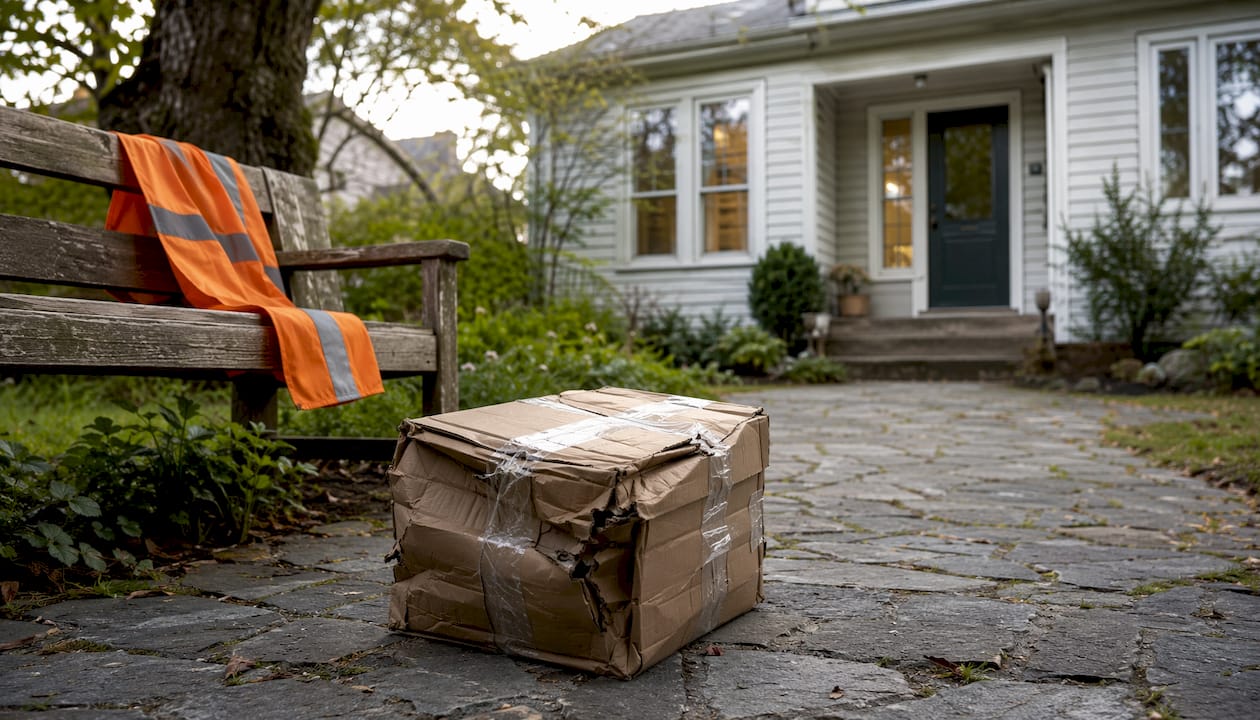
- Porch piracy. Most standard policies do not cover theft after a confirmed delivery. Some third-party insurers do extend coverage to post-delivery theft, but you need to verify this explicitly.
- Pre-existing damage. If an item was already broken before it shipped, no policy will cover it.
- Inadequate packaging. Carriers require double-wall boxes with 2 inches of cushioning as a minimum standard. Claims get denied regularly when packaging falls short of this.
- Fraudulent value declarations. Overstating an item’s value to collect a larger payout voids the claim entirely.
Packaging is where most people get burned. A cracked screen or crushed corner is not automatically covered if the box was a single-wall mailer with no padding. Meet the carrier’s packaging standards before you ship anything fragile or valuable.
How much does shipping insurance cost?
Pricing is generally a percentage of the declared value, and the rate depends on whether you go through the carrier directly or use a third-party provider.
Carrier direct rates:
- USPS: $2.55 for the first $50 of coverage over $100, plus $0.75 per additional $100
- UPS: $1.05 per $100 of declared value, with the first $100 included at no charge
- FedEx: $3.40 minimum fee, plus $1.20 per $100 of declared value
Key cost factors:
- Declared value of the shipment
- Carrier or insurer chosen
- Type of goods (fragile, high-value, or perishable items may cost more)
- Volume: high-volume shippers often qualify for discounted rates through third-party providers
Third-party insurers spread risk across many shippers, which lets them offer lower premiums and better terms than carriers typically do. For businesses shipping regularly, the savings add up fast. If you want a deeper look at how coverage options compare across shipment types, ForwarderOne’s breakdown of freight insurance examples is worth reading before you commit to a provider.
When does buying shipping insurance actually make sense?
Not every shipment needs insurance. A $15 phone case probably does not. A $1,200 camera lens absolutely does.
Buy coverage when:
- The item’s value exceeds $100, since that is where carrier liability ends for most services
- You are shipping electronics, designer goods, jewelry, art, or collectibles
- The shipment crosses international borders and passes through multiple transit points
- You are shipping during peak seasons like the holidays, when package volume spikes and handling errors increase
- You are a seller whose reputation depends on making customers whole quickly after a loss
Business-specific considerations:
- High-volume shippers sending low-value goods may find self-insurance more economical than paying premiums on every package.
- Sellers who offer insurance-backed shipping build customer trust faster, because a lost package gets resolved without a dispute or a bad review.
- During peak seasons, insurance also supports business resilience by absorbing the financial hit of increased loss rates.
For shippers moving fragile or high-value goods internationally, the risk calculus shifts sharply toward buying coverage. A single uninsured loss on a $2,000 shipment wipes out the premium savings from dozens of uninsured packages.
Pro Tip: Photograph the item before you pack it, and again after it is packed but before you seal the box. These photos prove the item’s condition and match its declared value, which is often the deciding factor in whether a claim gets approved or denied.
How to purchase shipping insurance in the U.S.
The process is straightforward, but timing is everything.
- Decide on coverage before label creation. You cannot add insurance after a package enters the carrier’s network. Make the decision at checkout or when generating your label.
- Choose your provider. Add coverage directly through UPS, FedEx, or USPS at the time of label purchase, or use a third-party insurer for potentially lower rates and broader terms. For importers, reviewing cargo insurance types helps clarify which policy structure fits your shipment.
- Declare the accurate value. State what the item is actually worth, backed by a commercial invoice or receipt. Undervaluing limits your payout; overvaluing voids the claim.
- Document everything before shipping. Photos of the item, the packaging, and the completed label all support a future claim.
- Keep your proof of shipment. Tracking confirmation, receipts, and carrier records are required for any claim filing.
- File claims within the deadline. UPS and FedEx require claims within 60 days of the shipment date or scheduled delivery. Miss that window and you forfeit compensation entirely.
For niche or high-value shipments, the documentation step matters more than most shippers realize. A vintage guitar shipping guide illustrates exactly how thorough pre-shipment documentation protects a claim on a fragile, high-value item.
Carrier liability vs. shipping insurance: what actually protects you?
Carrier liability and shipping insurance are not the same thing, and confusing them is an expensive mistake.

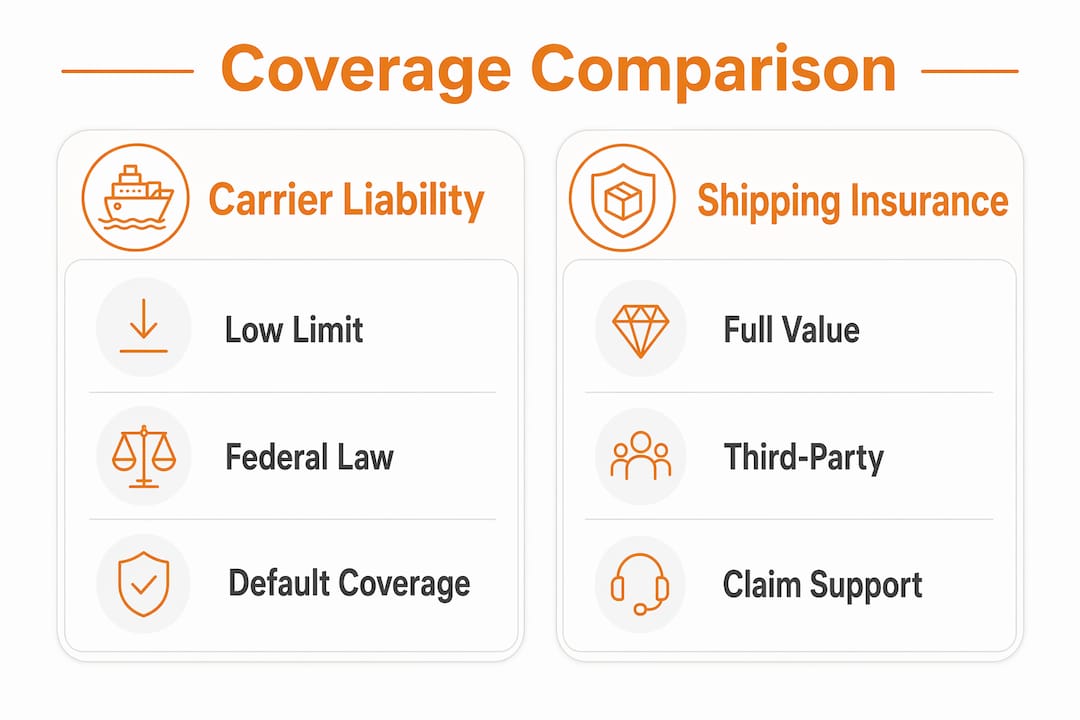
Carrier liability is governed by federal law, specifically the Carmack Amendment for domestic freight, and it caps what a carrier owes you regardless of the item’s actual value. For most parcel services, that cap sits at $100. The carrier sets the rules, investigates the claim, and decides the outcome.
Shipping insurance pays the full declared value, subject to policy terms, and the insurer handles the claim independently of the carrier. Third-party insurers often resolve claims faster and with less friction than carriers do.
| Feature | Carrier liability | Shipping insurance |
|---|---|---|
| Coverage limit | Usually $100 | Full declared value |
| Who decides the claim | The carrier | Independent insurer |
| Porch theft coverage | No | Sometimes (third-party) |
| Claim filing deadline | Varies | Usually 60 days |
| Resolution time | Varies | Typically several business days |
Claims require comprehensive documentation: proof of value (invoice or receipt), proof of shipment (tracking), and evidence of damage (photos). Submitting incomplete documentation is the second most common reason claims get denied, right after inadequate packaging.
Key Takeaways
Shipping insurance pays the full declared value of a lost, stolen, or damaged shipment, while standard carrier liability caps out at $100 for most U.S. parcel services.
| Point | Details |
|---|---|
| Carrier liability is limited | UPS, FedEx, and USPS cap default coverage at $100; anything above requires purchased insurance. |
| Packaging standards affect claims | Double-wall boxes with 2 inches of cushioning are the recognized minimum; inadequate packaging voids claims. |
| Buy before the label is created | Coverage cannot be added once a shipment is in transit or has been delivered. |
| File claims within 60 days | UPS and FedEx require claims within 60 days of shipment; missing the deadline forfeits compensation. |
| Third-party insurers often cost less | They spread risk across many shippers, offering lower premiums and broader terms than carrier-direct options. |
Protect your shipments with ForwarderOne
For Amazon sellers moving inventory from China to U.S. fulfillment centers, every shipment carries real financial risk. ForwarderOne’s DDP freight forwarding services handle customs, duties, and delivery in a single workflow, with dedicated account management and over 99% on-time delivery. If you want freight forwarding built around protecting your inventory and your margins, explore ForwarderOne’s FBA shipping solutions and see how integrated coverage fits into your supply chain.
Need freight coverage decisions tied to the shipping plan?
ForwarderOne helps sellers plan DDP freight, customs milestones, carrier handoffs, and coverage documentation before inventory leaves the supplier.