The freight booking process is the formal procedure of reserving cargo space with a carrier to secure shipment movement under agreed terms and timelines. Also called freight reservation or cargo booking, this process covers everything from submitting shipment details to receiving a confirmed booking number. For e-commerce sellers moving inventory from China to US fulfillment centers, understanding each step is the difference between stock arriving on time and a costly out-of-stock situation. The process spans ocean, air, and road freight modes, each with its own documentation requirements and lead times.
What is the freight booking process, step by step?
The freight booking process is a structured sequence of five core phases: shipment planning, quote request, booking confirmation, documentation, and post-booking management. Each phase builds on the last, and a failure at any stage can delay the entire shipment.
Phase 1: Shipment planning and data gathering
Every booking starts with collecting accurate cargo details. You need the cargo description, weight, dimensions, freight class, and any special handling requirements such as temperature control or hazmat classification. Freight class ranges from 50 to 500 based on density, and misclassifying your cargo leads to rate adjustments and compliance issues at the carrier level. Getting this data right before you request a quote saves significant back-and-forth later.

Phase 2: Requesting and comparing quotes
Once you have your cargo details, you submit a rate request to one or more freight forwarders or carriers. The critical mistake sellers make here is comparing only base freight rates. Rates must be evaluated inclusive of surcharges, terminal handling charges, and carrier-specific fees. A quote that looks $200 cheaper can end up $500 more expensive once all fees are applied. Always request an all-in rate breakdown before making a decision.
Phase 3: Booking confirmation
After accepting a rate, the carrier or forwarder issues a booking confirmation. This document locks in the cargo space, the agreed rate, the vessel or flight, and the departure date. Speed matters here. Delays in accepting quotes often result in space being reallocated to other shippers, especially during peak periods like Q4. Treat the booking confirmation as a contract, not a formality.
Phase 4: Documentation
A confirmed booking triggers a documentation checklist. The Bill of Lading, shipping instructions, commercial invoice, packing list, and HS codes must all be prepared accurately and submitted before the carrier’s cutoff date. Shipping documents must be complete and aligned with the cargo details in the booking. A mismatch between the booking and the documents is one of the most common causes of shipment holds at customs. Sellers shipping to Amazon FBA centers also need to align their documentation with Amazon’s receiving requirements.
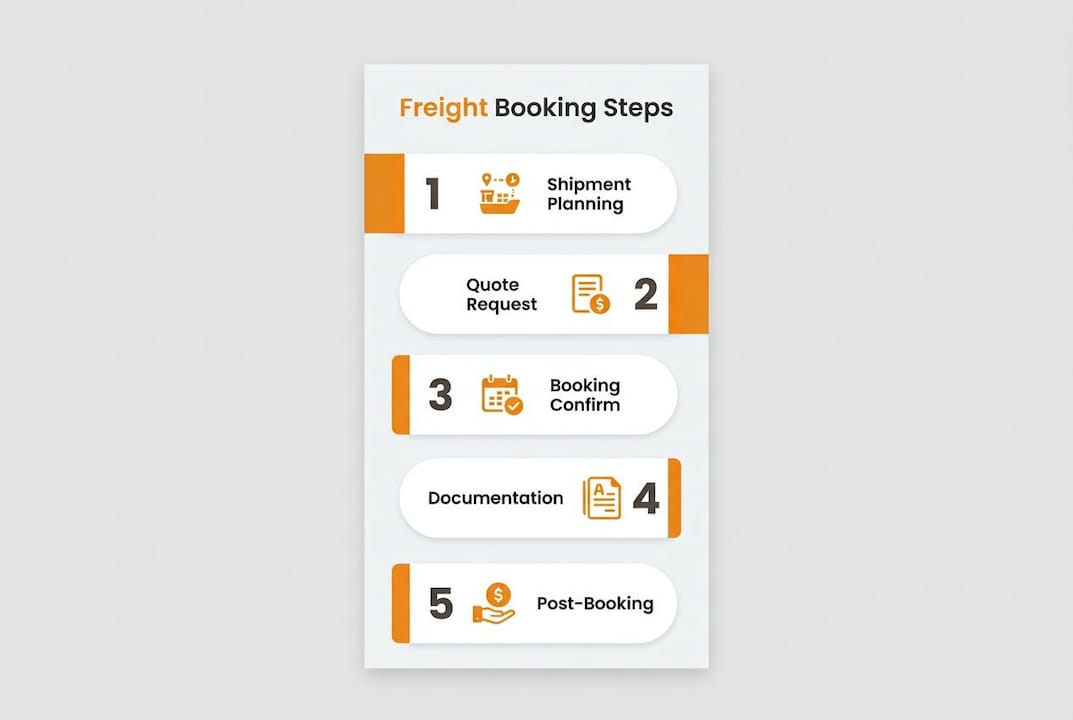
Phase 5: Post-booking management and amendments
The period between booking confirmation and vessel departure is more active than most sellers expect. Cargo weight shifts, documentation cutoffs, and blank sailings frequently require booking amendments. A standard booking can involve 10–20 emails before reaching final confirmation. That volume of communication reflects the real operational complexity of freight booking. Proactive amendment management is what separates sellers who ship on schedule from those who scramble at the last minute.
Pro Tip: Set a documentation deadline for yourself that is at least 48 hours before the carrier’s cutoff. Carriers rarely grant extensions, and a missed cutoff means rolling your cargo to the next sailing.
Why does accurate information matter so much in freight booking?
Incomplete cargo data is the primary cause of errors in the freight booking and shipping lifecycle. The problem compounds quickly. A vague cargo description leads to an inaccurate quote. An inaccurate quote leads to a rate dispute at confirmation. A rate dispute delays the booking, which delays the documentation, which delays the shipment. Incomplete or vague shipment data triggers errors that cascade through every stage of the process.
Special cargo categories add another layer of complexity. Hazardous materials require Material Safety Data Sheets and carrier pre-approval. Temperature-controlled goods need cold chain documentation and equipment booking. Missing either triggers regulatory holds that no amount of follow-up emails can fix quickly. Understanding US customs clearance requirements before you book prevents the most common compliance delays.
The data accuracy requirement extends to your HS codes. An incorrect HS code can trigger a customs examination, add days to your transit time, and generate unexpected duty charges. For Amazon sellers, those delays translate directly to lost Buy Box time and suppressed listings.
Key data points to validate before submitting any booking:
- Cargo description (specific, not generic)
- Gross weight and volumetric weight
- Exact dimensions per carton and total shipment
- Freight class or commodity code
- Hazmat status and UN number if applicable
- Destination address and delivery requirements
“Confirmed booking alone can fail without document and customs readiness. A booking number does not move cargo. The documents, customs filings, and delivery orders must all align and be ready before departure.”
This is the insight most sellers learn the hard way. The booking is the reservation. The documents are the key that actually opens the door.
How do freight market dynamics affect space availability?
Global freight markets in 2026 remain volatile. Carrier capacity shifts, port congestion, and geopolitical disruptions create a market where confirmed space today can disappear tomorrow. Locking in a freight rate requires swift acceptance; delays risk losing reserved space, especially during peak periods. This is not a theoretical risk. Carriers routinely reallocate unconfirmed space within 24–48 hours of issuing a quote.
Understanding freight spot rates is critical for sellers who book outside of long-term contracts. Spot rates fluctuate weekly and can spike dramatically during Chinese New Year, Golden Week, and the pre-holiday shipping rush in Q3 and Q4. Sellers who wait for rates to drop often find themselves paying more for less reliable space.
| Market Condition | Booking Risk | Recommended Action |
|---|---|---|
| Peak season (Q3/Q4) | High reallocation risk | Book 6–8 weeks in advance |
| Port congestion | Transit time uncertainty | Build buffer stock |
| Blank sailings | Confirmed space cancelled | Have backup carrier options |
| Rate spikes | Budget overruns | Lock in rates early with DDP terms |
Pro Tip: During peak season, request space on two vessels simultaneously and cancel the backup once your primary booking is confirmed. Most forwarders accommodate this with advance notice.
Blank sailings are a particularly underappreciated risk. A carrier can cancel a scheduled sailing with minimal notice, rolling your cargo to the next available vessel. Sellers without buffer stock have no protection against this. The logistics labor market in freight also tightens during peak periods, which adds pressure to documentation processing times at ports.
What best practices help e-commerce sellers book freight efficiently?
The sellers who handle freight booking well treat it as a business process, not a one-off task. They build repeatable workflows that reduce errors and eliminate last-minute scrambles.
- Plan shipments at least 4–6 weeks in advance. Ocean freight from China to the US typically takes 25–35 days in transit alone. Add booking lead time, documentation preparation, and customs clearance, and you need to start the process well before your inventory runs low.
- Validate all cargo data before requesting quotes. Use a pre-booking checklist that covers weight, dimensions, commodity codes, and special handling requirements. One wrong entry creates a chain of corrections.
- Request all-in quotes, not base rates. Ask for a full breakdown including origin charges, ocean freight, destination charges, and customs fees. This is the only way to compare providers accurately.
- Use digital freight platforms where possible. Digital booking tools reduce the email volume that standard bookings generate and create a documented audit trail for every amendment.
- Align customs readiness with your booking timeline. A confirmed booking can fail without document and customs readiness. File your ISF (Importer Security Filing) at least 24 hours before vessel departure to avoid CBP penalties.
- Build contingency into your schedule. Factor in one amendment cycle per shipment as a baseline. Cargo weights change, documentation needs corrections, and carriers occasionally adjust schedules.
- Track your shipment actively after booking. Visibility does not end at confirmation. Use freight tracking systems to monitor your cargo from origin pickup through final delivery.
Sellers who ship regularly from China should also consider working with a China-based agent for supplier pickup and consolidation. Consolidating multiple supplier orders into a single shipment reduces per-unit freight costs and simplifies the booking process significantly.
Key Takeaways
The freight booking process requires accurate cargo data, fast rate confirmation, complete documentation, and proactive amendment management to succeed.
| Point | Details |
|---|---|
| Accurate data is non-negotiable | Vague cargo details trigger rate disputes, compliance holds, and cascading delays. |
| Confirm rates quickly | In volatile markets, unconfirmed quotes lose space within 24–48 hours. |
| Documents drive delivery | A booking number alone does not move cargo. Documents and customs filings must align before departure. |
| Plan 4–6 weeks ahead | Ocean transit plus booking lead time requires early action, especially during peak season. |
| Manage amendments proactively | Budget for at least one amendment cycle per shipment and track changes against documentation cutoffs. |
What I’ve learned from watching sellers get freight booking wrong
After working with dozens of Amazon sellers on cross-border shipments, the pattern I see most often is this: sellers treat freight booking as a clerical task instead of a control point. They hand off the details to a forwarder and assume the process runs itself. It does not.
The sellers who consistently hit their FBA stock targets are the ones who own their booking data. They know their cargo dimensions before they contact a forwarder. They read the booking confirmation instead of filing it. They check the documentation cutoff date and work backward from it. That level of attention is not excessive. It is the minimum required to ship reliably.
Technology helps, but it does not replace process discipline. Digital freight platforms reduce email volume and create audit trails, but they still depend on the data you feed them. Garbage in, garbage out applies to freight booking as much as it does to any other business system.
The sellers I have seen struggle most are those who only engage with freight when something goes wrong. By then, the options are expensive and limited. The sellers who thrive build a repeatable booking workflow, review it after every shipment, and refine it over time. Freight booking is a skill. Treat it like one.
— Keven
How ForwarderOne handles freight booking for Amazon sellers
Freight booking is complex enough when everything goes right. For Amazon sellers moving inventory from China to US fulfillment centers, the process also involves FBA compliance, customs duties, and delivery coordination on top of standard booking steps.
ForwarderOne manages the entire freight booking workflow under a single DDP (Delivered Duty Paid) service. That means customs, duties, carrier coordination, and FBA delivery are handled in one place, with a dedicated account manager overseeing your shipment from origin to fulfillment center. With over 99% on-time delivery, ForwarderOne gives sellers the reliability they need to maintain stock levels during peak sales periods. Explore ForwarderOne’s freight forwarding services to see how the booking process works end to end for small and mid-sized Amazon sellers.
FAQ
What is the freight booking process in simple terms?
The freight booking process is the formal procedure of reserving cargo space with a carrier, submitting shipment details, and managing documentation until the cargo departs. It covers everything from the initial quote request to the Bill of Lading issuance.
How far in advance should I book freight from China to the USA?
Book at least 4–6 weeks before your target departure date. Ocean transit from China to the US takes 25–35 days, and booking lead time, documentation, and customs clearance add additional time before your cargo moves.
What documents are required for a freight booking?
A standard international freight booking requires a Bill of Lading, commercial invoice, packing list, shipping instructions, and HS codes. Hazardous or regulated goods require additional certificates and carrier pre-approval.
Why does a confirmed booking sometimes fail to ship?
A confirmed booking can fail if documents, customs filings, or delivery orders are not ready before the carrier’s cutoff date. The booking reserves the space, but the documents authorize the actual movement of cargo.
How do freight spot rates affect my booking decisions?
Spot rates fluctuate weekly based on capacity and demand. Accepting a rate quickly is critical in volatile markets because carriers routinely reallocate unconfirmed space within 24–48 hours of issuing a quote.
Need help turning a quote into a shipped booking?
ForwarderOne coordinates supplier pickup, carrier booking, customs documents and fulfillment-center delivery so sellers can protect inventory timing.