An SDS alone does not clear a lithium battery shipment. What actually gets your package accepted is the correct UN classification, a UN 38.3 test summary from the manufacturer, proper Watt-hour marking, and the right shipping papers. Before you book anything, collect the battery model, chemistry, and configuration details including UN number and state of charge, along with the test summary. The SDS supports handling and emergency response, but the paperwork above is what a carrier or inspector will actually ask for.
TL;DR:
- The correct UN classification, test summary, Watt-hour marking, and proper shipping papers are essential for lithium battery approval, not the SDS alone.
- Confirm battery model, chemistry, configuration, UN number, and test summary before booking shipments to avoid avoidable rejections.
- Shipping lithium batteries by air requires adherence to strict rules, including state of charge limits and mode-specific regulations, which vary by configuration and quantity.
- Proper labeling with UN numbers, hazard labels, and additional markings like “Cargo Aircraft Only” are critical to prevent refusals at acceptance.
- Many shipment rejections result from missing or incorrect documentation and misclassification, which can be prevented through pre-shipment compliance checks.
Quick Pre-Shipment Checklist for Lithium Battery Documents
Most rejected battery shipments fail for the same handful of reasons, and almost all of them are avoidable with a five-minute document check before you ever contact a carrier.
Start with the battery itself. You need the exact model number, the chemistry (lithium ion or lithium metal), and the Watt-hour rating printed on the battery casing. Starting in 2024, 49 CFR 173.185 requires external Watt-hour marking on lithium ion cells and batteries, so a battery without that marking is already a red flag to any carrier acceptance staff who knows what to look for.
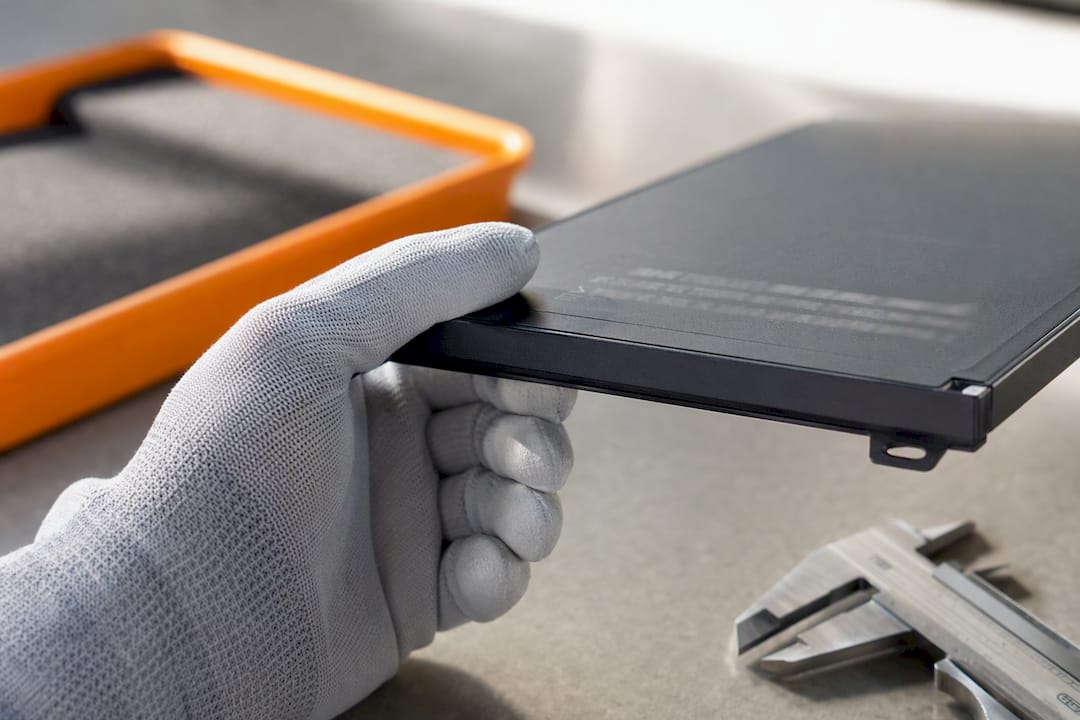
Next comes configuration, and this trips up more shippers than any other single item. Are you shipping batteries alone, batteries packed with equipment, or batteries installed inside equipment? That distinction decides whether you’re working under UN3480 (lithium ion, alone) or UN3481 (lithium ion, packed with or contained in equipment), and it changes your packing instruction, your label, and sometimes your quantity limit.
Before you tender the shipment, gather:
- Battery model, chemistry, and Watt-hour rating (or lithium content in grams for metal cells)
- Configuration and correct UN number (UN3480, UN3481, or UN3090/3091 for lithium metal)
- UN 38.3 test summary from the manufacturer or supplier
- Current SDS for handling and hazard communication reference
- Photos of the finished package, plus weight and dimensions
- State of charge documentation if shipping by air
- A 24-hour emergency response phone number for the shipping papers
Pro Tip: Call your carrier’s dangerous goods desk before you book, not after you pack. A five-minute conversation about your exact configuration and Watt-hour rating can save you a returned shipment and a rebooking fee.
Does Shipping Lithium Batteries Require an SDS?
An SDS is not always legally required for lithium batteries, and even when one exists, it rarely functions as the primary transport document. Under OSHA’s Hazard Communication Standard, a battery that qualifies as an “article” (a manufactured item that doesn’t release hazardous chemicals under normal use) is often exempt from SDS requirements in the workplace context entirely. Many finished, sealed lithium batteries meet that definition.
That confuses a lot of shippers, because they assume “no SDS needed” means “no documentation needed.” It doesn’t. Transport regulators care about a completely different question: does this battery pass the safety testing required to move it by air, sea, or road? That’s where the UN 38.3 test summary takes over.
The UN 38.3 test summary is a document, usually one to a few pages, confirming that a specific battery model passed the eight tests in the UN Manual of Tests and Criteria, Part III, subsection 38.3: altitude simulation, thermal test, vibration, shock, external short circuit, impact/crush, overcharge, and forced discharge. PHMSA’s lithium battery guidance confirms every cell and battery offered for transport must have passed these tests, and manufacturers are required to make the summary available on request.
An SDS and a test summary answer different questions:
- SDS: What is this material, what are its hazards, and how do I handle a spill, fire, or exposure?
- UN 38.3 test summary: Has this exact battery model been proven safe enough to transport by the mode you’ve chosen?
Carriers, freight forwarders, and regulators ask for the test summary because it’s the document that actually governs whether the battery can fly, sail, or ride in a truck. An SDS won’t get your shipment past a dangerous goods acceptance check if the test summary is missing.
Where the SDS still earns its keep is downstream of that acceptance check. If a battery shipment catches fire in a warehouse, or a forklift punctures a case in transit, first responders and warehouse staff need the SDS to know what they’re dealing with; that’s a Section 14, hazard identification, and firefighting measures job, not a transport classification job. Keep both documents on hand, but never let the SDS substitute for the test summary when a carrier asks for proof of transport eligibility.
How Do You Classify Lithium Batteries for Shipping?
Getting the UN number right decides almost everything else: your packing instruction, your label, your quantity limit, and whether you need Class 9 markings at all. Misclassification is one of the most common reasons shipments get flagged at acceptance.
The starting question is always the same: is this a cell, a battery, and is it shipped alone, packed with equipment, or already installed inside equipment?
- Lithium ion cells and batteries shipped alone: UN3480
- Lithium ion batteries packed with or contained in equipment: UN3481
- Lithium metal cells and batteries shipped alone: UN3090
- Lithium metal batteries packed with or contained in equipment: UN3091
Lithium metal batteries (the non-rechargeable kind, common in cameras, watches, and some industrial equipment) carry different lithium content thresholds than the Watt-hour thresholds used for lithium ion. Get the chemistry wrong on a shipping declaration, and you’ve picked the wrong UN number before you’ve even started on packaging.
Watt-hour rating and lithium content don’t just identify the chemistry; they also determine whether a shipment qualifies for reduced requirements. Small cells and batteries under specific Watt-hour or gram thresholds can sometimes ship under Section II of the applicable packing instruction, which trims some marking and documentation burden compared to full Section IA or IB shipments. That’s a meaningful cost and time difference for sellers moving smaller consumer electronics, and it’s worth checking against your exact battery specs rather than assuming the strictest rules apply by default.
The “packed with equipment” versus “contained in equipment” distinction matters just as much as chemistry. A battery packed alongside a device in the same box (spare batteries for a camera, for instance) follows different rules than a battery already installed inside that device. Get this wrong and your packing instruction reference will be off, which cascades into wrong labels and wrong quantity limits. When in doubt, treat the shipment under the more conservative classification until you’ve confirmed the correct one with your manufacturer’s transport documentation or your forwarder’s compliance team.
What Packaging and Quantity Rules Apply to Lithium Battery Shipments?
Packaging performance requirements scale with battery size, configuration, and mode of transport, and getting them wrong is one of the fastest ways to see a shipment bounced back from a carrier’s dock.
49 CFR 173.185 sets the baseline: outer packaging strong enough to withstand a 1.2 meter drop test in any orientation without damaging the cells or batteries inside, preventing short circuits, and keeping the batteries from shifting during transport. That drop height applies regardless of mode, once you’re moving beyond the smallest exempted quantities.
“Smaller” cells and batteries get real relief here. Cells and batteries under specific Watt-hour thresholds, when packed and marked correctly, can qualify for exceptions that reduce full UN performance packaging requirements and, in some cases, remove the need for Class 9 hazard labeling altogether (though the lithium battery mark generally still applies). This exception exists because a coin cell poses a dramatically different risk profile than a pack of 18650 cells wired together, and the regulations reflect that difference.
Work through packaging selection in this order:
- Confirm chemistry and configuration (ion vs. metal, alone vs. packed vs. contained), which determines your UN number and packing instruction.
- Check Watt-hour rating or lithium content against the exception thresholds in 173.185 to see if reduced packaging applies.
- Select outer packaging rated for the 1.2 meter drop test if you don’t qualify for a small-battery exception.
- Cushion and separate individual cells or batteries inside the outer packaging to prevent short circuits and movement.
- Confirm inner packaging keeps terminals protected from contact with conductive materials.
- Cross-check the mode-specific quantity limit for your carrier before finalizing box count per shipment.
Mode-specific quantity limits vary more than most shippers expect. Air cargo, passenger aircraft, ocean, and ground transport each carry their own thresholds for how many kilograms of batteries can move in a single package or overpack, and postal shipping through the US Mail imposes yet another, generally stricter, set of limits. The HAZMATEAM lithium battery guide is a useful quick reference for these mode-by-mode differences, since they shift often enough that memorizing a single number is a mistake.
Certain lithium battery shipments are also restricted to Cargo Aircraft Only (CAO), meaning they cannot travel on passenger flights regardless of how well they’re packaged. This typically applies to higher-quantity lithium metal battery shipments and to some lithium ion configurations exceeding passenger aircraft thresholds. If you don’t confirm this before booking, you risk a shipment being accepted by one carrier’s cargo division and rejected outright by a passenger-network airline.
Pro Tip: Keep a one-page packaging reference specific to each battery SKU you regularly ship. Watt-hour rating, UN number, applicable exception, and required drop-test rating in one place will save your warehouse team from re-deriving classification every time a reorder comes in.
What Labels and Markings Do Lithium Battery Packages Need?
A correctly classified and packaged shipment can still get bounced at acceptance over a marking error, and marking errors are shockingly common because the requirements are more specific than most shippers assume.
The lithium battery mark itself has fixed proportions and required content: it must be printed at a minimum size (generally no smaller than 100mm by 100mm for most shipments, with a reduced size allowed for small packages), must display the appropriate UN number or numbers, and must include a telephone number for additional information. That phone number requirement catches a lot of shippers off guard. It’s not optional, and it needs to reach someone who can actually answer questions about the shipment’s contents, not a generic company switchboard.
Class 9 miscellaneous hazard labels follow their own placement rules. The label needs to be visible on the package’s exterior, not tucked under other markings or partially obscured by shipping labels applied afterward. If the battery shipment is placed inside an overpack, the overpack itself needs to carry visible Class 9 labeling and lithium battery marks unless the original package markings remain clearly visible through the overpack.
Common marking failures that lead to refusal:
- Lithium battery mark missing the required telephone number
- UN number printed too small to read, or the wrong UN number entirely for the configuration
- Class 9 label obscured by a shipping label, barcode sticker, or tape
- Overpack shipped without repeating the required marks and labels
- “Cargo Aircraft Only” text missing on shipments restricted from passenger aircraft
- Passenger aircraft prohibition text omitted on ground or rail shipments that require it for downstream handling clarity
Highway and rail-only shipments that would otherwise qualify for air transport under different rules still need to carry appropriate text markings if there’s any chance the shipment could be intercepted into an air network later in its route. Freight forwarders see this most often with consolidated shipments where one leg is trucked and a later leg unexpectedly shifts to air due to capacity issues.
According to PHMSA’s guidance, configuration mismatches, meaning batteries declared as “packed with equipment” when they’re actually shipped alone, or vice versa, rank among the most frequent classification errors regulators encounter during compliance reviews. That single mismatch cascades into wrong labels, wrong packing instructions, and a shipment that looks compliant on paper but fails a physical inspection.
What Are the Air Transport Rules for Lithium Batteries?
Air transport carries the strictest lithium battery rules of any mode, and IATA’s packing instructions are where shippers most often lose time because they didn’t confirm which instruction applies before booking.
Three IATA packing instructions govern most lithium ion shipments by air: PI 965 covers lithium ion cells and batteries shipped alone, PI 966 covers lithium ion batteries packed with equipment, and PI 967 covers lithium ion batteries contained in equipment. Each instruction splits further into Section IA, IB, and Section II, with Section II reserved for smaller batteries that qualify for reduced marking and documentation under specific Watt-hour thresholds. Get the wrong section and you’ll either over-document a small shipment or under-document a larger one, both of which cause delays.
State of charge is where air transport diverges sharply from other modes. IATA and ICAO guidance calls for many lithium ion cells and batteries shipped by air, particularly standalone shipments, to be offered at a state of charge not exceeding 30% of rated capacity. Batteries shipped at a higher charge for operational reasons generally require specific approval from the state authorities involved, which is not something you want to discover the day you’re trying to book cargo space.
Passenger versus cargo aircraft limits add another layer:
- Some lithium battery configurations can travel on passenger aircraft within specific net quantity limits per package.
- Higher-quantity shipments, particularly lithium metal batteries, often require Cargo Aircraft Only routing.
- Small cells and batteries meeting specific exceptions may qualify for relaxed net-quantity limits regardless of aircraft type.
- Damaged, defective, or recalled batteries are forbidden from air transport entirely, addressed further below.
Every airline and forwarder network layers its own operational restrictions on top of the baseline IATA rules, and this is the part shippers underestimate most. One carrier might accept a Section II shipment that another carrier’s dangerous goods team flags for additional review based on internal risk policies. Always confirm acceptance directly with the specific carrier or your forwarder before finalizing a booking, especially if you’re shipping a battery configuration you haven’t moved through that route before.
What Documents Do You Need for a Lithium Battery Shipment?
Shipping papers for lithium battery shipments need specific language that goes beyond a standard dangerous goods declaration, and missing a single required notation can hold up an entire consignment at the dock.
At minimum, your shipping papers need the proper shipping name, the correct UN number, the packing group where applicable, and the total quantity by package. For shipments qualifying under certain exceptions in 49 CFR 173.185, a specific notation such as “Lithium ion batteries in compliance with §173.185(e)” or similar language may be required on the shipping paper to document which exception applies. Get the exact wording wrong and an inspector may treat the shipment as undocumented for that exception.
For air shipments, the IATA Dangerous Goods Declaration (DGD) needs the same core information plus air-specific entries: the applicable packing instruction number, state of charge confirmation where relevant, and any special provisions that apply to your configuration. Our guide to filling out the IATA Dangerous Goods Declaration walks through each field if you’re completing one for the first time.
Where should the UN 38.3 test summary itself live in your documentation package? A few practices have become standard:
- Keep a paper copy attached to the shipment file for physical inspections at origin.
- Provide a hosted URL or QR code linking to the test summary, which IATA guidance now recognizes as an accepted practice for many carriers.
- Never rely solely on a digital link if you’re working with a carrier or region known to require paper documentation on hand.
- Reference the manufacturer or supplier name and model number directly on the summary so it’s traceable to the exact battery being shipped.
Your shipping papers also need a 24 hour emergency response telephone number, staffed by someone (or a contracted service) who can provide immediate technical guidance in the event of an incident. A generic customer service line that closes at 5 PM does not meet this requirement. Before you tender the shipment, confirm with your carrier what pre-acceptance documentation they want reviewed, since some carriers request the test summary and SDS in advance rather than at the dock, and a rejected shipment at the dock costs far more time than a document review the day before. Our dangerous goods documentation checklist covers the broader paperwork sequence if you’re building this process from scratch.
Can You Ship Damaged or Defective Lithium Batteries?
Damaged, defective, or recalled lithium batteries face the tightest transport restrictions of any battery category, and air transport is generally forbidden for these shipments outright.
A battery counts as “damaged or defective” for transport purposes if it shows physical damage, has been identified as defective for safety reasons, is subject to a recall for a safety-related issue, or shows evidence of leaking, swelling, or other physical deformity. These batteries pose a meaningfully higher fire and short circuit risk than an undamaged battery of the same model, which is why the rules diverge so sharply from standard shipments.
Ground and vessel transport remain options for damaged or defective batteries, but only under special packaging and approval conditions specific to that category, generally involving more rigorous outer packaging, individual cell isolation, and often a requirement for the shipment to move under a competent authority approval depending on the battery type and quantity. Air transport, by contrast, is forbidden for damaged or defective lithium batteries under nearly all circumstances.
Required markings differ too. Packages containing damaged or defective batteries typically need specific text markings indicating the damaged or defective status, separate from standard lithium battery marks, so that handlers at every point in the chain know to apply extra caution.
If you’re coordinating a return, recall, or disposal of damaged batteries, treat it as its own compliance project rather than folding it into routine outbound shipments. Contact your carrier or forwarder early to confirm which approval pathway applies to your specific battery type and damage category, since the process typically takes longer than a standard hazmat shipment and rushing it is exactly how damaged battery incidents happen during transport.
How Do You Get an SDS and UN 38.3 Test Summary From a Manufacturer?
Getting the right documents from a manufacturer is mostly a matter of asking the right person the right question, but plenty of shippers waste days emailing a generic sales inbox that has no idea what a test summary even is.
- Contact the manufacturer’s compliance or quality assurance department, not general sales, and specifically request the Section 14 (Transport Information) data along with the UN 38.3 test summary for the exact model number you’re purchasing.
- Ask for the SDS in parallel, even if you already suspect the battery qualifies as an OSHA “article,” since having it on file supports emergency response planning regardless of the transport classification outcome.
- Check the manufacturer’s website first. Larger suppliers increasingly publish test summaries directly, sometimes via a QR code printed on the battery packaging itself, which speeds up the whole process.
- Request written confirmation, even a short email, that ties the specific battery model and lot or batch to the test summary provided, since carriers occasionally ask for that traceability during audits.
- If the manufacturer is non-responsive or can’t produce a summary, hold the shipment rather than proceeding. You have three real options at that point: wait for the manufacturer to produce it, pursue re-testing through an accredited lab (typically expensive and slow), or work with a forwarder experienced in navigating stricter handling classifications for undocumented batteries.
Representative SDS examples from manufacturers like DEWALT show how Section 14 transport information should read: UN number, packing instruction reference, and small-battery exception notes clearly laid out. Use one of these as a template when evaluating whether a supplier’s documentation is complete.
Pro Tip: Build a simple spreadsheet tracking SKU, manufacturer contact, date requested, date received, and file location for every test summary and SDS you obtain. When a carrier or auditor asks for proof six months later, you want a two-minute lookup, not a re-run of the entire request process.
ForwarderOne’s View: Why Shipments Actually Get Rejected
Most lithium battery rejections we see come down to one of two things: a missing UN 38.3 test summary, or a package marked for the wrong configuration. Not a lack of paperwork entirely, just the wrong paperwork attached to a shipment that looked fine on the surface.
The pattern is predictable. A seller reorders a battery-powered product from a new supplier, assumes the packaging and documentation match the last supplier’s SKU, and doesn’t verify Watt-hour marking or configuration until the carrier flags it at acceptance. By then, the shipment is already palletized and booked, and every hour spent tracking down a test summary is an hour that inventory sits instead of moving toward a fulfillment center.
Pre-acceptance checks fix this before it becomes expensive. Confirming test summary availability, checking Watt-hour marking against the physical battery, and verifying configuration against the declared UN number, all before a shipment reaches the dock, catches the overwhelming majority of issues that would otherwise cause a rejection. It’s a five-minute review that prevents a multi-day hold.
We’ve watched shipments that would have been detained for days clear without incident simply because someone caught a mismatched UN number on a pre-shipment document review, before the pallet ever reached the carrier’s warehouse. That’s the difference between a documentation problem you solve at your desk and one you solve while your inventory sits in someone else’s holding area, accumulating storage fees and missed sales windows.
— Keven
How ForwarderOne Handles Lithium Battery Compliance for You
Chasing down UN 38.3 test summaries, double checking Watt-hour marking, and confirming which IATA packing instruction applies is exactly the kind of work that eats a week if you’re doing it alone between supplier emails and Amazon inventory dashboards.

ForwarderOne builds compliance verification into the shipping process itself, rather than leaving it as a separate task you have to manage before you ever contact a carrier. Our DDP Shipping China to USA service handles customs, duties, and delivery in one workflow, and that includes coordinating the documentation battery shipments specifically require, so you’re not stuck reconciling test summaries and shipping papers on your own while a supplier goes quiet on emails. With a dedicated account manager assigned to your account, you get one point of contact who already knows your product line instead of a new support ticket every time a shipment needs a compliance check.
If you’re moving battery-powered inventory from China to a US fulfillment center and want documentation handled as part of the shipping process rather than bolted on afterward, start with our Amazon FBA freight forwarding service and get a quote based on your specific product line.
Sources
- PHMSA lithium battery guidance
- 49 CFR 173.185 (Lithium batteries)
- IATA lithium battery guidance document
- HAZMATEAM lithium battery guide (2026)
- DEWALT Lithium Ion Battery Packs SDS
FAQ
Do I need an SDS for lithium batteries?
An SDS is required for many bulk or non-article lithium battery products under OSHA’s Hazard Communication Standard, but finished, sealed batteries often qualify as “articles” and may be exempt. Either way, transport eligibility depends on the UN 38.3 test summary, not the SDS.
Are lithium batteries considered dangerous goods for shipping?
Yes. Lithium batteries are classified as Class 9 miscellaneous dangerous goods under UN3480, UN3481, UN3090, or UN3091 depending on chemistry and configuration, and they’re regulated under 49 CFR 173.185 for domestic transport.
Do you need a hazmat certification to transport lithium ion batteries?
Anyone who classifies, packages, marks, labels, or documents lithium battery shipments generally needs hazmat training under federal requirements, though the exact training obligation depends on your specific role in the shipping process. Working with a forwarder experienced in dangerous goods reduces this burden significantly for smaller shippers.
What are the requirements for shipping lithium ion batteries?
You need the correct UN classification (UN3480 or UN3481), a UN 38.3 test summary from the manufacturer, compliant packaging meeting the 1.2 meter drop test standard, correct lithium battery marks and Class 9 labels, and shipping papers with the required notations and an emergency contact number. Air shipments add state-of-charge limits and the applicable IATA packing instruction.
Can ForwarderOne help verify my lithium battery shipping documents?
Yes. ForwarderOne’s DDP Shipping and FBA freight forwarding services include documentation coordination as part of the shipping workflow, helping confirm test summaries and classification details before a shipment reaches the carrier.
Need lithium battery paperwork checked before pickup?
ForwarderOne helps ecommerce sellers confirm battery classification, DDP scope, customs handoff, and final delivery before freight leaves the supplier.