
For Amazon FBA sellers shipping from China to the US, the best approach is an all-inclusive DDP workflow that bundles landed-cost quoting, customs clearance, and FBA-compliant delivery into one managed service. It removes the two biggest friction points in cross-border ecommerce: surprise import bills and customs delays that stall your inbound inventory. Get a landed-cost quote from ForwarderOne before your next shipment.
Why ecommerce sellers choose DDP over other Incoterms
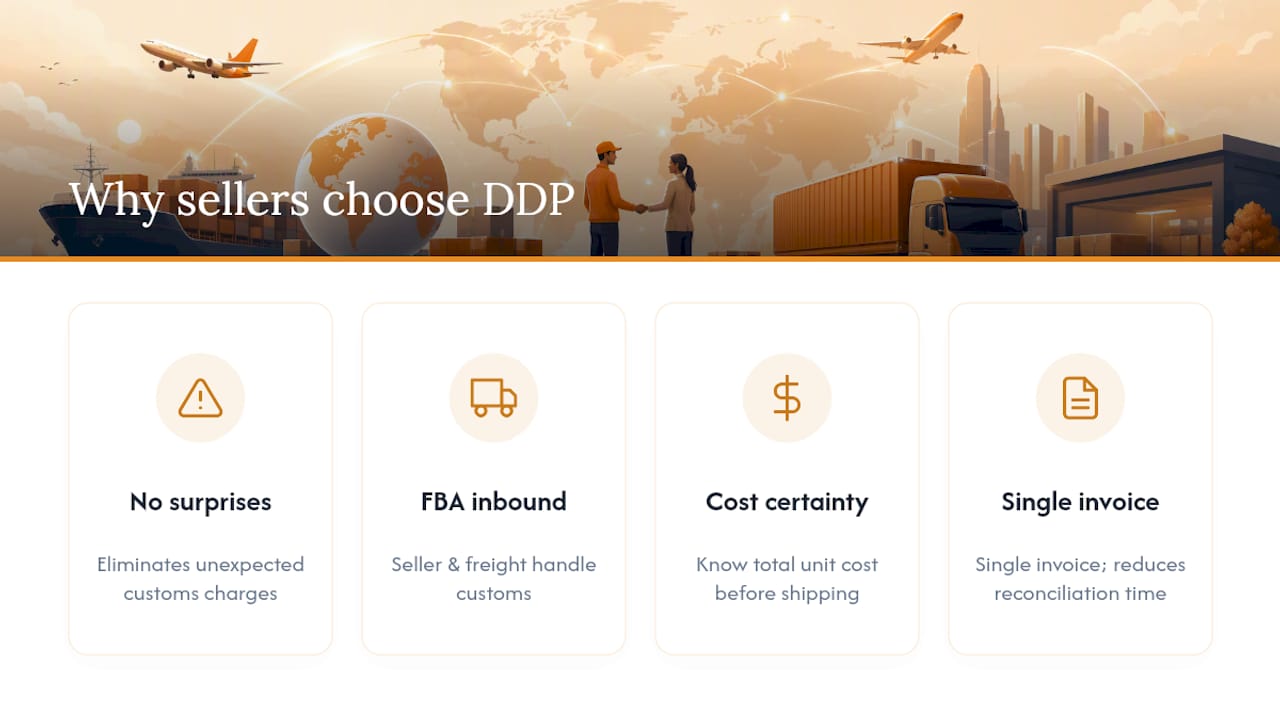
The commercial case for DDP comes down to one thing: buyers hate surprise charges. When a customer in the US orders from an international seller and gets hit with an unexpected customs bill, the return rate climbs and the review score drops. DDP eliminates that scenario entirely.
For Amazon FBA sellers specifically, DDP shipping simplifies the inbound process by keeping customs responsibility with the seller and the freight partner rather than splitting it across multiple parties. Your inventory moves from a factory in Shenzhen to an Amazon warehouse in Ohio without you managing a customs broker separately, coordinating duty payments, or chasing down a carrier for status updates.
The landed-cost certainty also makes margin planning straightforward. You know the total cost per unit before the shipment leaves China, which means your pricing decisions are grounded in real numbers rather than estimates. Full-service managed logistics providers consolidate freight, customs, and last-mile delivery under a single invoice, which cuts reconciliation time significantly. That consolidated billing model matters most when you’re running multiple SKUs across several shipments per quarter.
How much does DDP shipping cost, and how long does it take?
Landed cost under DDP is the sum of several components, and understanding each one helps you negotiate better and spot inflated quotes:
- Ocean or air freight (the largest variable, driven by weight, volume, and route)
- US import duties (set by HS code and country of origin)
- Federal and state taxes where applicable
- Customs brokerage fees (filing, bond, ISF)
- Fuel and peak-season surcharges
- Cargo insurance (typically optional but strongly recommended)
- FBA prep and labeling fees if included
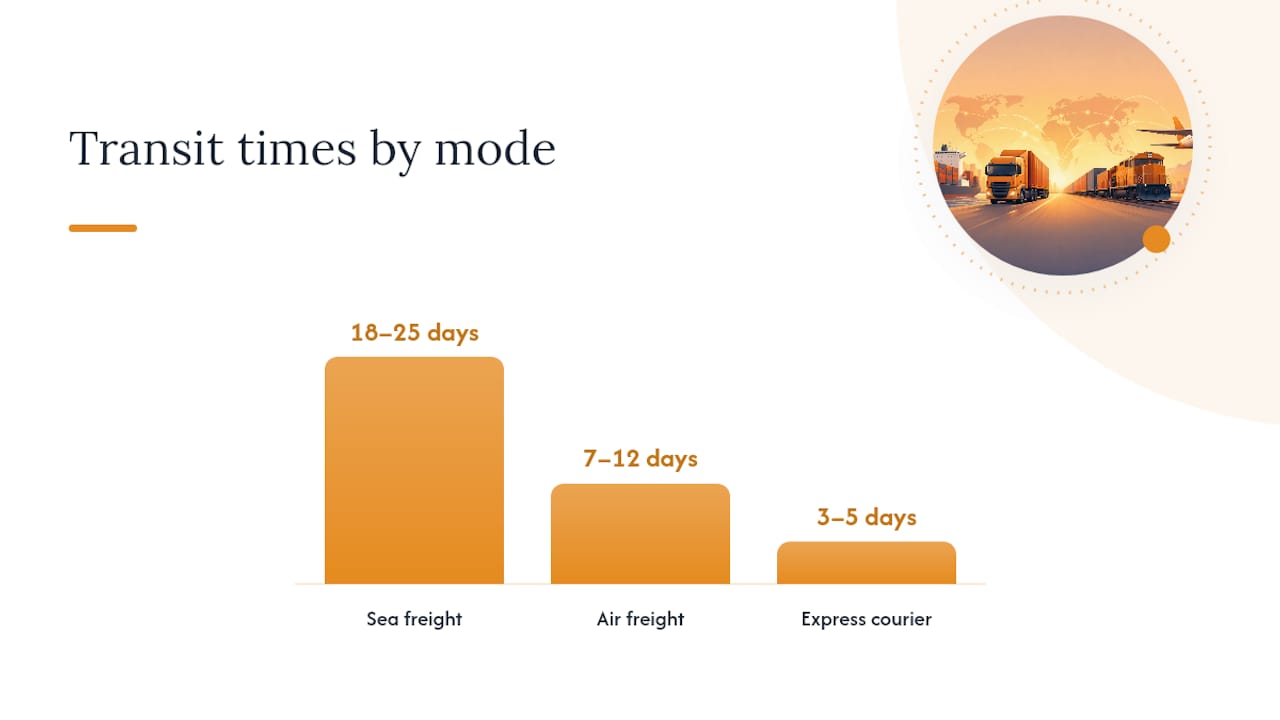
Transit times vary significantly by mode. Sea freight from China to a US West Coast port runs roughly 18–25 days, plus 3–7 days for customs clearance and inland delivery to an FBA center. Air freight cuts that to 7–12 days total. Express courier (DHL, FedEx, UPS) delivers in 3–5 days but at a cost per kilogram that makes it practical only for high-value, low-weight SKUs.
Pro Tip: Confirm your HS codes before requesting quotes. An incorrect HS code can shift your duty rate by several percentage points, and the difference compounds fast across a full container. ForwarderOne’s team can verify codes as part of the quoting process.
When DDP is not the right fit
DDP is not always the best option. When your margins are thin, import complexity is high, or you’re selling into a market where local customs brokers have a structural cost advantage, other arrangements can work better.
DAP (formerly DDU) makes sense when your buyer is a business with its own customs infrastructure, or when you’re selling B2B into markets where the importer of record has preferential duty rates you can’t access. Split-shipment strategies, where goods land at a US bonded warehouse before moving to FBA, give you more flexibility on timing and reduce the risk of a single large shipment being held at customs. For sellers testing a new market with low volumes, working with a local customs broker directly can be cheaper than a full DDP arrangement.
Hybrid models are worth considering too. Some sellers use DDP for their core China-to-FBA lane and switch to DAP for secondary markets where their freight partner lacks local customs expertise. For a detailed look at how DDP compares to other approaches, this breakdown of DDP alternatives covers the tradeoffs clearly.
How ForwarderOne handles DDP shipments end to end
ForwarderOne’s all-inclusive DDP service covers every step from your supplier’s door in China (or Korea) to an Amazon FBA fulfillment center or US warehouse, with 99%+ on-time delivery and a dedicated account manager assigned to your account from day one.
The operational flow works like this:
Origin pickup and consolidation. ForwarderOne coordinates pickup directly from your supplier, consolidates cargo if needed, and handles export documentation and Chinese customs filing.
Freight booking. Sea, air, or express courier is selected based on your timeline and budget. You get a confirmed booking with tracking from the start.
US customs clearance. Duties and taxes are paid by ForwarderOne as part of the DDP arrangement. The customs broker files ISF and entry documents, and you receive confirmation once cleared.
FBA prep and labeling. FNSKU labels, carton marks, and any Amazon-specific prep requirements are handled before delivery. Shipments arrive at the fulfillment center ready for check-in.
Delivery and invoicing. A single itemized invoice covers the full landed cost. Tracking is available through the process, and your account manager is reachable directly if anything needs attention.
For delays or disputes, ForwarderOne maintains a documented process rather than leaving sellers to chase carriers independently. That matters most during peak periods like Q4, when port congestion and carrier capacity constraints create the most risk.
How to get a landed-cost quote from ForwarderOne
Collect your purchase order, commercial invoice, HS codes, packing list, product value, and the destination FBA address or warehouse before you reach out. That set of documents covers everything needed for an accurate quote.
- Gather your commercial invoice (supplier name, product description, declared value, quantity)
- Confirm your HS codes for each SKU (6-digit minimum, 10-digit for US entry)
- Prepare your packing list (carton count, dimensions, gross weight)
- Note your FBA shipment ID or warehouse delivery address
- Specify your preferred transit mode (sea, air, or express) and target delivery date
- Include any FBA prep instructions (FNSKU labels, poly-bagging, bundling)
The document checklist for DDP shipments is straightforward, but the quality of your HS codes and declared values directly affects quote accuracy. ForwarderOne’s team reviews both before finalizing the landed-cost figure. Submit your inquiry with all six items above and you’ll typically receive a detailed quote within one business day.
Key Takeaways
An all-inclusive DDP workflow with a partner like ForwarderOne is the most reliable way for Amazon FBA sellers to move inventory from China to US fulfillment centers without customs surprises or compliance delays.
| Point | Details |
|---|---|
| DDP vs. DAP | Under DDP, the seller pays all duties and taxes; under DAP, the buyer does — a critical difference for FBA inbound. |
| Core cost drivers | Landed cost includes freight, duties, brokerage, surcharges, and insurance — confirm HS codes before quoting. |
| Transit times | Sea freight runs 18–25 days; air runs 7–12 days; express courier delivers in 3–5 days. |
| Provider checklist | Require itemized quotes, FBA compliance, documented on-time rates, and a named account manager. |
| ForwarderOne | Offers all-inclusive DDP with 99%+ on-time delivery, FBA prep/labeling, and a dedicated account manager for China-to-US shipments. |
Why all-inclusive DDP is the right default for most sellers
The conventional wisdom in ecommerce logistics is that sellers should keep customs management in-house to stay in control. After working through the numbers on what that actually costs, the argument falls apart for most small and mid-sized sellers.
Managing a customs broker relationship separately means coordinating documentation across two parties, reconciling two invoices, and absorbing the delay risk when communication breaks down. For a seller running 10–20 shipments a year from China, that overhead is real and it compounds. An all-inclusive DDP arrangement collapses that into one relationship, one invoice, and one point of accountability.
The legitimate caveat is margins. If your landed cost under DDP is tight enough that a 2% duty miscalculation wipes out your profit on a SKU, you need a partner who verifies HS codes before quoting, not after. ForwarderOne’s process includes that verification step, which is the specific thing that separates a DDP arrangement worth trusting from one that creates a different kind of surprise.
ForwarderOne handles China-to-FBA DDP so you don’t have to
ForwarderOne is built for exactly the seller this article describes: a small or mid-sized Amazon business moving inventory from China to US fulfillment centers, needing customs, duties, FBA prep, and delivery handled without managing four separate vendors.
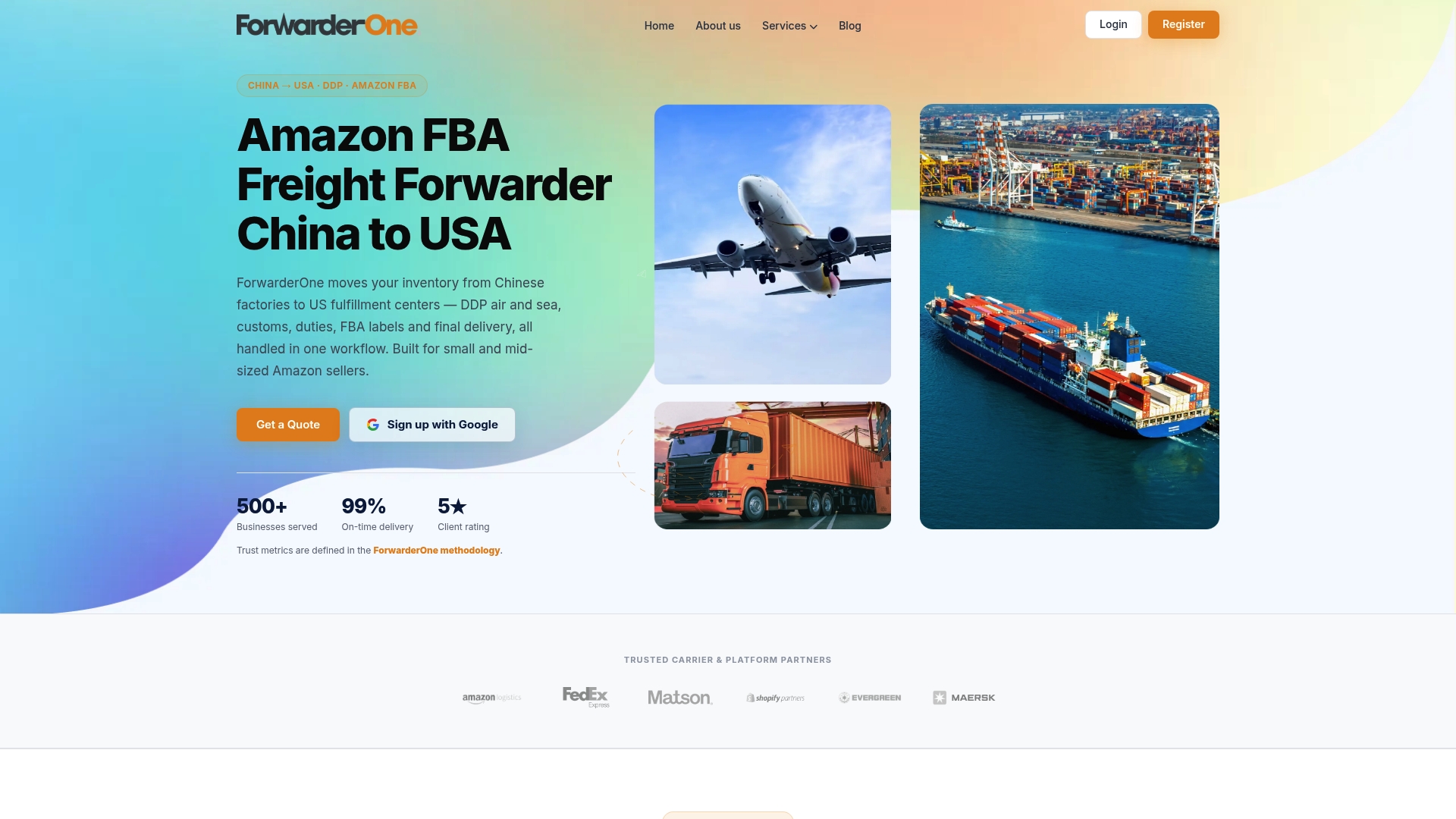
The all-inclusive DDP service covers origin pickup, export docs, US customs clearance with duties paid, FBA labeling, and final delivery under one itemized invoice. You get a dedicated account manager, 99%+ on-time delivery, and a quote within one business day when you submit your commercial invoice, HS codes, and packing list.
Ready to price your next shipment? Request a landed-cost quote with your cargo details and get a full breakdown before you commit.
Need a clearer landed-cost plan?
ForwarderOne coordinates supplier pickup, DDP customs clearance, duty payment, FBA prep details, and final delivery under one shipment plan.