San Pedro Bay and several West Coast gateways are running elevated container dwell times and intermittent vessel queues right now. Plan for multi-day inland delays and higher drayage costs, especially at Los Angeles and Long Beach. Your immediate move: reconfirm every gate appointment, model total door-to-door time (not just ocean transit), and verify chassis availability before cargo lands.
TL;DR:
- West Coast ports currently face container dwell times of five to seven days at San Pedro Bay terminals, significantly longer than the healthy sub three-day average.
- Congestion is driven by chassis shortages, rail equipment constraints, terminal delays, and policy-driven scheduling, rather than vessel shortages.
- Extended dwell times increase inventory risks, detention and demurrage costs, chassis fees, and strain communication with retail partners and warehouses.
- Proactive mitigation includes verifying gate appointment enforcement, modeling diversion costs, consolidating shipments, and reserving premium transport only for urgent deadlines.
- Detailed planning should involve modeling total transit times, early appointment locking, backup port testing, and reviewing detention and routing clauses to avoid reactive responses.
How Bad Is West Coast Port Congestion Right Now?
The numbers tell a lopsided story. Southern California is absorbing an import surge while the Pacific Northwest is quietly losing volume, and that split changes how you should route cargo this quarter.
Rail container dwell times at San Pedro Bay terminals have climbed into the 5 to 7 day range in some months, according to trade reporting drawing on Pacific Merchant Shipping Association figures. That is a meaningful jump from the sub 3 day averages ports consider healthy, and it directly extends the time your inventory sits before it ever reaches a truck.
Vessel queues have been intermittent rather than constant. Some weeks clear fast, others stack up when multiple ultra-large vessels arrive within a tight window, which is exactly the pattern that catches shippers off guard when they plan on “typical” transit times.
Statistic Callout: North American West Coast ports moved 3.7 million TEUs of laden imports in the second quarter of 2026, a moderate year-over-year increase. Southern California grew at a strong pace while the Northwest Seaport Alliance (Seattle-Tacoma) shrank, opening a notable gap between the two regions. If your routing plan still treats Seattle-Tacoma as a reliable overflow valve, that assumption needs a second look.
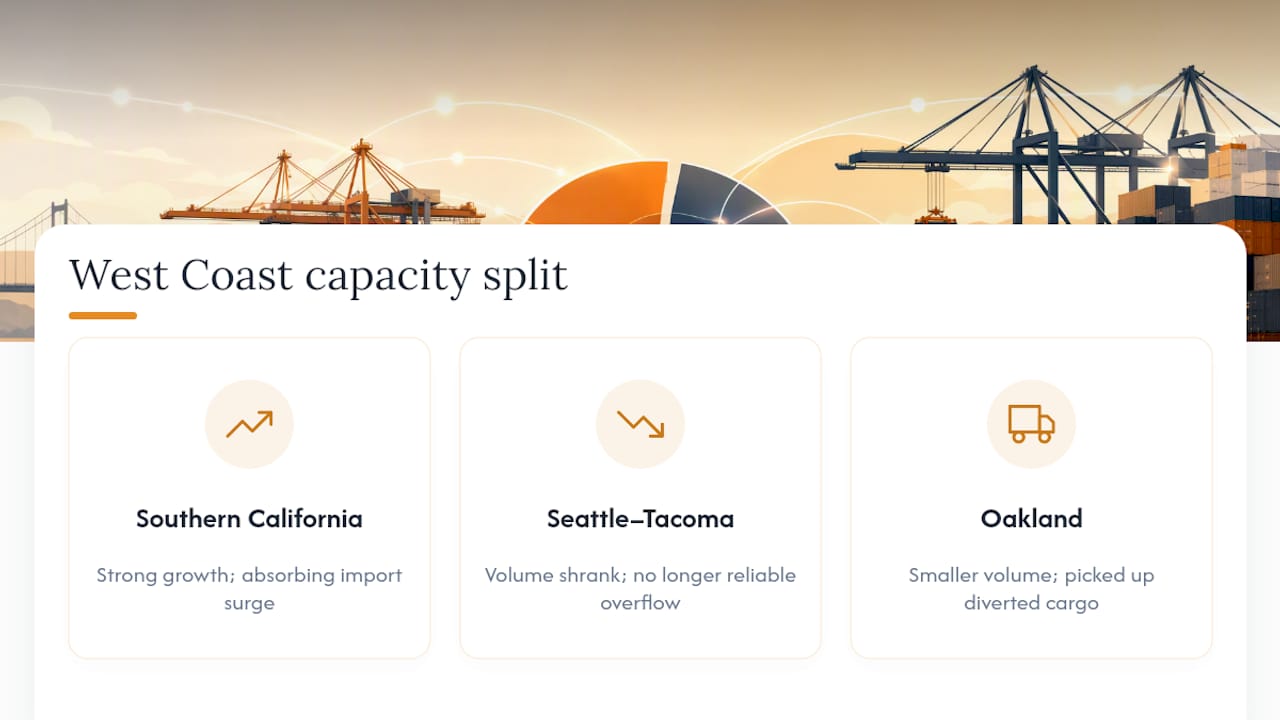
Oakland sits in between: smaller in absolute volume than Los Angeles or Long Beach, but it has picked up some diverted cargo as shippers hunt for capacity outside the most congested berths.
What Is Driving Congestion Now?
Congestion rarely comes from one bottleneck. It is a stack of smaller constraints that compound.
- Chassis shortages. Empty containers pile up when chassis aren’t available to move loaded boxes out, which backs up yard space and slows the next vessel’s unload.
- Rail equipment shortfalls. Union Pacific and BNSF intermodal ramps have faced equipment constraints that stretch the time containers wait for rail departure, adding days before cargo even leaves the port complex.
- Terminal-level friction. Crane outages, tighter appointment windows, and local infrastructure work (including bridge and street redecking projects near port complexes) all cut into daily truck throughput.
- Policy and calendar triggers. Tariff deadlines pull orders forward into short windows, Panama Canal disruptions redirect vessels toward the Pacific, and blank sailings (canceled voyages) create uneven arrival patterns that overload terminals in bursts.
These landside and equipment issues, not a shortage of vessels, are the more direct lever driving dwell times higher right now.
How Does Congestion Hit Your Inventory and Costs?
Every extra day a container sits is a day it isn’t generating revenue on your shelf or in an FBA warehouse.
- Inventory risk. Longer, less predictable dwell times force you to carry heavier safety stock or risk stockouts during peak sales windows.
- Direct cost exposure. Detention and demurrage charges accrue fast once free time expires, and premium trucking or air uplift to cover a missed window can cost multiples of standard rates.
- Chassis and equipment fees. Extended chassis usage during shortages adds daily charges that rarely show up in your original freight quote.
- Communication strain. Retail partners and Amazon compliance windows don’t move just because a port does. You need a standing update cadence with warehouse and sales teams the moment dwell times spike.
Pro Tip: Build a detention/demurrage buffer into your landed cost model before peak season, not after the first surprise invoice arrives. A $150 to $300 per container buffer is cheap insurance against a week of unplanned dwell.
What Are Your Best Mitigation and Routing Options?
You have more control over congestion exposure than the headlines suggest, provided you model the full cost of each option rather than reacting to the first bottleneck you hit.
- Use gate appointment systems, but verify enforcement. Los Angeles, Long Beach, and Oakland have rolled out a unified digital gate appointment system targeting roughly a 20% cut in truck turn times during peak hours. It works best when drayage carriers actually comply and chassis are on hand. Confirm both before counting on the improvement.
- Model diversion as a total-cost decision, not an ocean-rate decision. When East Coast spot rates run significantly higher per FEU than West Coast rates, routing through the West Coast can look attractive. But inland rail and trucking to the Midwest or East Coast can erase that savings fast, so build best, likely, and worst-case door-to-door scenarios before committing.
- Lean on consolidation and chassis pooling. Freight consolidation reduces the number of individual container moves competing for scarce chassis and appointment slots, which matters more during a surge than during normal flow.
- Reserve premium options for genuine deadline risk. Expedited ocean or air freight makes sense when a blank sailing or missed appointment threatens a fixed retail or Amazon compliance date. Booking it as a default hedge, rather than a targeted fix, gets expensive fast.
Statistic Callout: Ports themselves are targeting a 20% reduction in peak-hour truck turn times through the new appointment system. Treat that as a goal to track, not a guarantee your specific terminal will hit this quarter.
What Should Be on Your Planning Checklist This Quarter?
Congestion planning works best as a repeatable cycle, not a one-time fire drill.
- Model total transit time, including inland capacity and chassis availability, not just ocean transit days.
- Lock appointments early and confirm chassis before cargo arrives, especially ahead of any known factory holiday or cutoff period that could trigger a front-loading rush.
- Test an alternate ramp or port as backup capacity before you actually need it during a spike.
- Review your contracts for detention, demurrage, and expedited routing clauses so you know your exposure before a delay, not during one.
| Cadence | What to check |
|---|---|
| Daily | Vessel queue counts, terminal appointment availability |
| Weekly | Dwell-time trends by terminal, chassis fleet status |
| Monthly | TEU volume trends by region, contract and insurance terms |
Front-loading ahead of tariff deadlines tends to produce a temporary import surge followed by a booking cliff, so treat any sudden volume spike as a signal to tighten your monitoring, not relax it.
What Practitioners Get Wrong About Congestion Planning
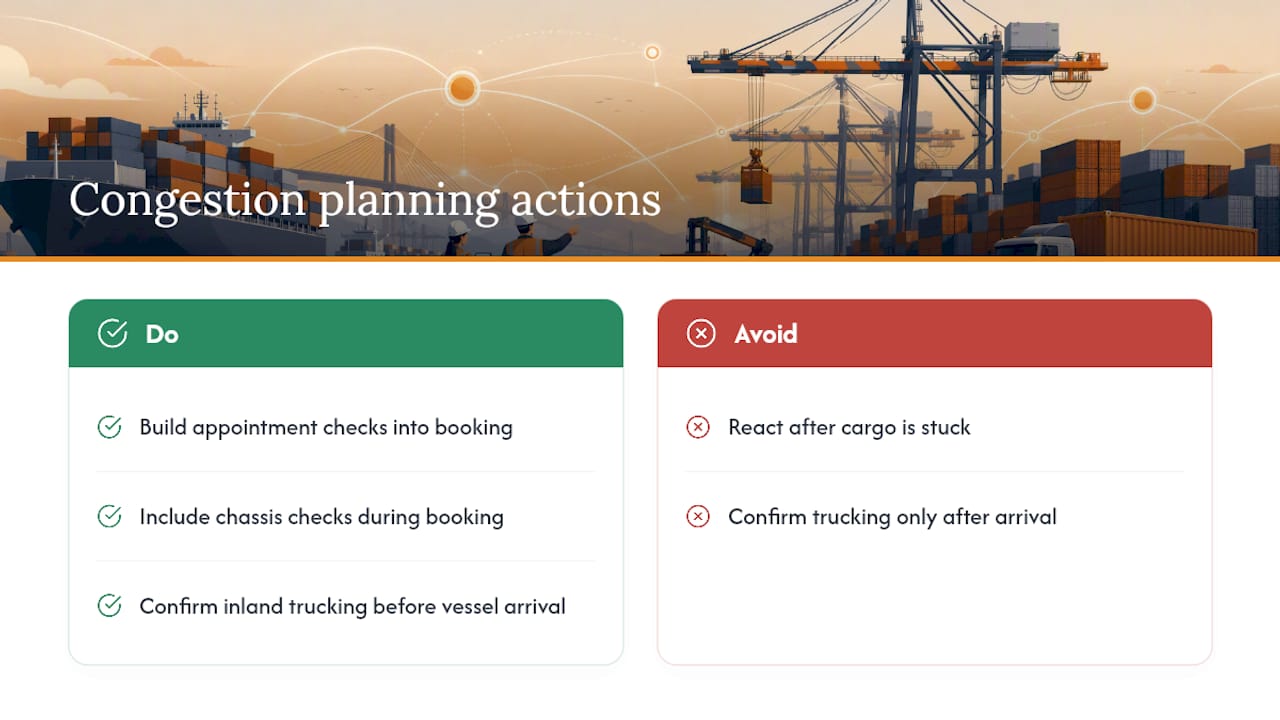
The most common mistake among small and mid-sized Amazon sellers is reacting to congestion after cargo is already stuck, instead of building appointment and chassis checks into the booking process itself. One fix that consistently helps: confirming inland trucking capacity before vessel arrival, not after.
How ForwarderOne Keeps Your FBA Inventory Moving
Port congestion doesn’t have to become your problem to solve alone. Some freight forwarders offer all-inclusive DDP services that handle customs, duties, and inland delivery in one workflow, reducing the complexity of using separate vendors while dwell times climb at San Pedro Bay.
Clients may have a dedicated account manager tracking their shipments through congestion, rather than relying on a support queue. That matters most during exactly the kind of surge described above, when appointment slots and chassis availability change week to week. ForwarderOne’s FBA shipping and DDP service is built specifically for Amazon sellers moving inventory from China to U.S. If you’re planning your next shipment from China to a U.S. warehouse, get a quote through ForwarderOne’s freight forwarding services page and lock in your routing before the next surge hits.
Where to Track Live Port Conditions
Monitor port congestion dashboards for real-time status, PMSA for dwell-time data, and Journal of Commerce or Supply Chain Dive for ongoing analysis.
FAQ
How Can You Avoid West Coast Port Congestion?
Book gate appointments early, confirm chassis availability before vessel arrival, and build inland transit buffers into your schedule rather than assuming standard transit times will hold.
Where Is the Busiest Port in the US?
The Port of Los Angeles and Port of Long Beach together form the San Pedro Bay complex, the busiest container gateway in the country, with Southern California ports currently gaining import share over Pacific Northwest gateways.
What Is Causing Shipping Delays in 2026?
Chassis shortages, rail equipment constraints, terminal crane outages, and tariff-driven front-loading are combining to push container dwell times higher at several West Coast terminals.
Is Long Beach Port Congested Today?
Conditions change week to week, so check a live port congestion dashboard and PMSA dwell-time reports for the current status before finalizing a shipment schedule.
Need a cleaner port-delay plan?
ForwarderOne helps sellers model dwell-time risk, reserve trucking capacity, coordinate DDP customs steps, and keep Amazon FBA delivery windows realistic before cargo lands.