What is freight consolidation?
Freight consolidation is the practice of combining multiple smaller shipments into a single larger load, moving everything together as one unit. Think of it as carpooling for cargo: instead of five separate trucks heading to the same region, one fully loaded truck makes the trip. The result is lower cost per unit shipped, less handling, and fewer vehicles on the road.
A few core elements make consolidation work:
- Consolidation point: A central warehouse or 3PL facility where shipments from different shippers arrive and get grouped together
- Co-loaders: Other shippers whose freight shares space in the same truck or container
- Shared destination region: All cargo must be heading to the same geographic area to justify combining it
Consolidation applies to both domestic and international shipments. Domestically, pallets from multiple shippers form a single full truckload (FTL). Internationally, smaller loads combine into a full container load (FCL) rather than separate less-than-container load (LCL) bookings. One important distinction: consolidation is not the same as LTL shipping. LTL is a carrier pricing model. Consolidation is a shipper-side strategy that replaces LTL by building a single full load.
Key benefits of freight consolidation
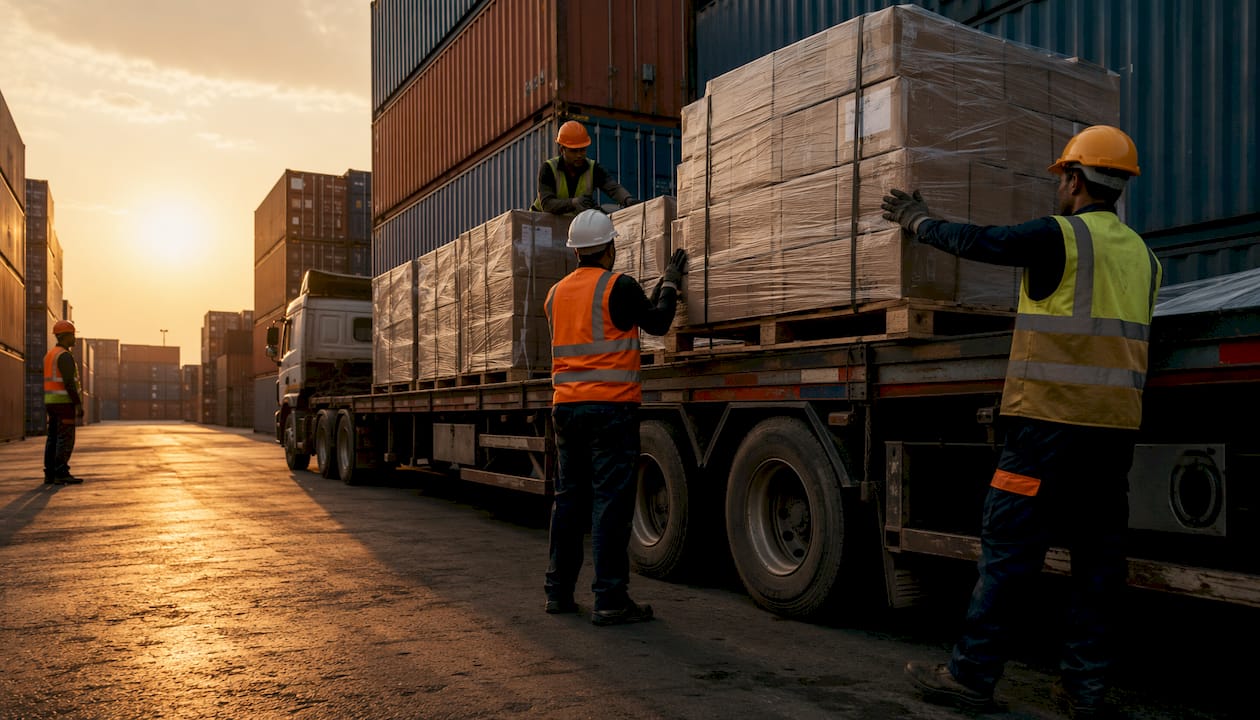
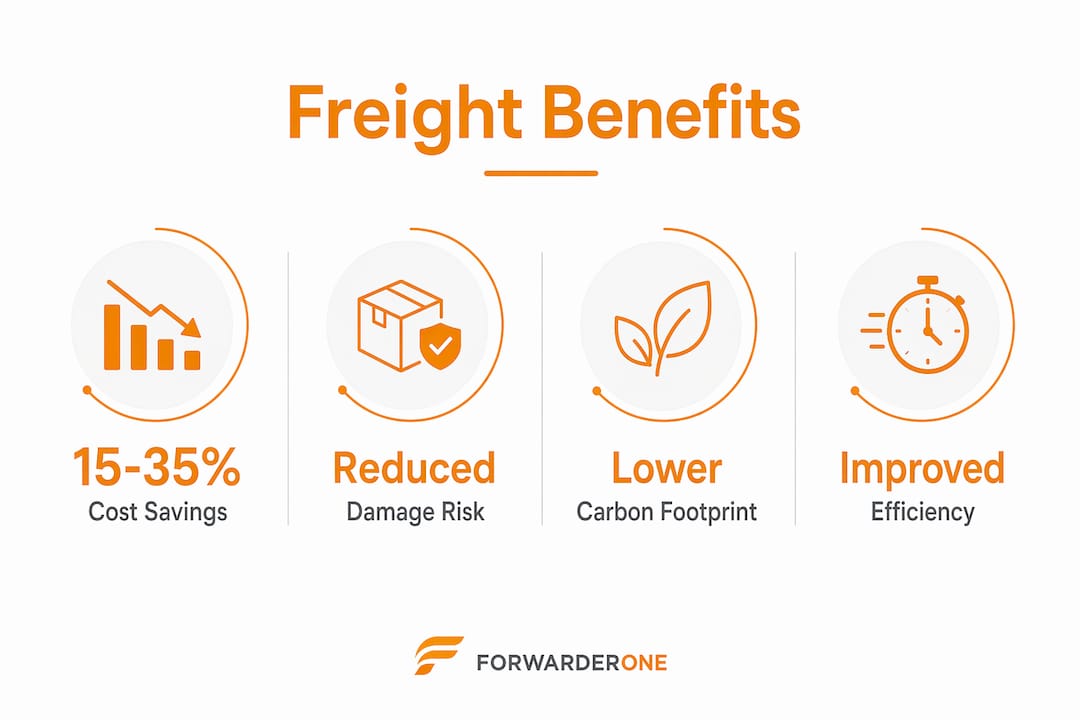
The financial case for consolidation is direct. Businesses shipping multiple LTL loads to overlapping destinations can cut freight costs by 15–35%. That saving comes from replacing several LTL rates, each carrying its own fixed fees for pickup, paperwork, and terminal handling, with a single prorated FTL or FCL rate.
Beyond cost, consolidation delivers several operational and environmental advantages:
- Reduced freight damage: Consolidated shipments move with fewer transfers and less handling than traditional LTL, which passes through multiple terminals before delivery
- Lower carbon footprint: Maximizing vehicle capacity means fewer trucks on the road, cutting fuel consumption and emissions per unit transported
- Less dock congestion: Fewer truck arrivals at a receiving facility reduce detention fees, driver wait time, and the risk of late deliveries
- Simpler administration: One shipment, one rate, one set of paperwork instead of managing a dozen separate bookings
| Benefit | Impact |
|---|---|
| Freight cost reduction | 15–35% savings on LTL-equivalent volume |
| Damage risk | Fewer terminal transfers, lower claim rate |
| Emissions | Fewer trucks, higher load utilization per trip |
| Dock efficiency | Fewer arrivals, reduced detention fees |
Operational challenges and considerations
Consolidation is not a fit for every shipment or every shipper. The main trade-off is time. Accumulating enough freight to fill a truck or container means holding shipments at the consolidation facility until volume builds. That window can stretch from a day to several days, depending on freight flow.
Common challenges include:
- Timing delays: Waiting for co-loaders to contribute freight adds transit time, which can conflict with tight delivery windows
- Scheduling discipline: Successful programs run on a consolidation calendar, with fixed departure days per destination region. Without that structure, batches become ad hoc and savings evaporate
- Coordination complexity: Aligning multiple shippers, vendors, and receivers around a shared schedule requires clear communication and reliable lead times
- Delivery speed trade-offs: Consolidation generally favors B2B and retail replenishment freight over time-critical shipments where a day’s delay has real consequences
The logistics sector, including roles in road freight and third-party logistics, increasingly depends on professionals who can manage these scheduling and coordination demands effectively.
How does freight consolidation work, step by step?
The process breaks into four stages, each with a distinct function in moving freight from origin to final delivery.
- Stage 1: Collection. Shipments from multiple shippers or suppliers are picked up from their origins and routed to a central consolidation facility, often managed by a 3PL.
- Stage 2: Batching. At the facility, cargo is sorted, staged, and grouped by destination region. The goal is to fill a truck or container as completely as possible before it departs.
- Stage 3: Line haul. The consolidated load moves as a single FTL or FCL shipment. The carrier sees one booking, not a dozen small ones, which is where the cost structure changes.
- Stage 4: Deconsolidation. Near the destination, the load is broken back down. Individual shipments are separated and delivered to their final recipients, often through a local delivery hub or cross-dock.
Pro Tip: Build your consolidation calendar around your highest-volume destination first. A single fixed departure day per week to that region is enough to start capturing savings, and you can add more lanes once the process is running smoothly.
What types of freight consolidation methods exist?

The method you use depends on shipment size, mode, and destination.
LCL (Less-than-Container Load) consolidation is the international equivalent of LTL. Multiple shippers share space in one ocean container rather than each booking their own. It suits smaller import and export volumes that don’t justify a full container.
FCL (Full Container Load) consolidation groups shipments from different shippers or suppliers until they fill an entire container. This is the standard approach for Amazon sellers shipping from China who want to avoid the per-unit premium of LCL.
Cross-docking moves freight through a facility with minimal storage. Inbound loads are unloaded, immediately sorted, and reloaded onto outbound trucks. It’s fast and works well when freight arrives in predictable, compatible batches.
Hub-and-spoke consolidation routes shipments from multiple origins through a central hub before dispatching them to final destinations. Retailers with many suppliers and a single distribution center use this model routinely.
Multi-vendor consolidation combines shipments from different suppliers into one inbound load, cutting inbound freight costs and reducing the number of receiving appointments a warehouse has to manage.
How do you know which shipments are right for consolidation?
Not every shipment belongs in a consolidation program. The best candidates share a few characteristics:
- Destination overlap: Freight heading to the same region or city on a regular basis
- Timing flexibility: The ability to hold a shipment one to three days without affecting customer commitments
- Moderate weight and volume: Shipments too small for FTL on their own but large enough to contribute meaningfully to a shared load
- Predictable frequency: Regular shipping lanes where volume is consistent enough to support a fixed consolidation schedule
Freight that is time-critical, temperature-sensitive, or highly irregular in volume tends to be a poor fit. The savings only materialize when the schedule holds.
What technology supports freight consolidation?
Modern consolidation depends on software as much as physical infrastructure. Transportation Management Systems (TMS) like Oracle Transportation Management and MercuryGate let shippers identify shipments heading to the same region, group them automatically, and generate a single consolidated booking. Warehouse Management Systems (WMS) coordinate the physical sorting and staging at the consolidation facility. Real-time tracking platforms give all parties visibility into where a consolidated load is at any point in transit. Together, these tools replace the spreadsheets and phone calls that made consolidation programs difficult to scale.
Cost analysis: what are the real savings?
The savings in consolidation come from three places. First, fixed per-shipment fees, including pickup charges, fuel surcharges, and terminal handling, get spread across multiple shippers instead of charged to each one individually. Second, the line-haul rate per pound drops when a truck runs full rather than partially loaded. Third, fewer shipments mean fewer claims, fewer detention fees, and less administrative time spent managing exceptions.
For Amazon sellers managing freight cost factors across multiple SKUs and suppliers, consolidation is often the single highest-leverage change available. The 15–35% cost reduction assumes a consolidation-friendly shipping profile, meaning consistent volume, overlapping destinations, and the scheduling flexibility to hold freight for a short window before departure.
Key Takeaways
Freight consolidation cuts shipping costs by replacing multiple small shipments with one full load, requiring a consolidation point, co-loaders, and a shared destination region to work.
| Point | Details |
|---|---|
| Core definition | Combines multiple smaller shipments into one FTL or FCL load at a central facility. |
| Cost savings | Businesses can reduce LTL freight costs by 15–35% with a consolidation-friendly shipping profile. |
| Damage reduction | Fewer terminal transfers lower the risk of freight damage compared to standard LTL. |
| Scheduling discipline | A fixed consolidation calendar by destination region is the key to consistent savings. |
| Best-fit shipments | Freight with destination overlap, timing flexibility, and predictable volume gains the most. |
ForwarderOne handles freight consolidation as part of its all-in DDP service for Amazon sellers shipping from China to US fulfillment centers. From supplier pickup and consolidation in China through customs clearance and final delivery, everything moves under one workflow with a dedicated account manager tracking every step. If you’re managing inbound FBA inventory and want consolidation built into your shipping process, explore ForwarderOne’s services to see how it fits your volume and lanes.
Need supplier pickup and consolidation before FBA delivery?
ForwarderOne coordinates pickup, consolidation, customs clearance, and Amazon delivery appointments so small shipments can move under one accountable plan.