
For small and mid-sized Amazon sellers moving inventory from China to US FBA, the clearest path to predictable margins is a DDP (Delivered Duty Paid) freight forwarder as your primary channel, with USPS Ground Advantage handling last-mile for lightweight domestic parcels.
One provider, one customs workflow, one landed-cost figure before the shipment leaves the factory floor.
Here is why that matters for FBA specifically:
- Predictable landed cost. DDP means duties, taxes, and customs brokerage are priced in upfront. No surprise invoices after the cargo clears customs.
- Fewer FBA compliance errors. A forwarder experienced with Amazon inbound rules handles carton labeling, pallet configuration, and pre-advice scheduling, reducing rejected shipments.
- Single-provider orchestration. You are not coordinating between a Chinese freight agent, a US customs broker, and a domestic carrier. One contact owns the chain.
Your immediate next step: request a DDP landed-cost quote for one representative SKU (include carton dimensions, declared value, and HS code), and ask the forwarder to confirm Amazon FBA pre-advice capability before you commit to a shipment.
How do the main shipping channels compare for China to US FBA?
Every channel type serves a different volume and urgency profile. Here is a practical breakdown.
Express couriers (DHL Express, FedEx, UPS) move small parcels door-to-door in a few days. They are fast and fully tracked, but per-kilo rates are high and accessorial fees can be a significant portion of a typical UPS or FedEx invoice. Best for urgent restocks or samples, not routine inventory.
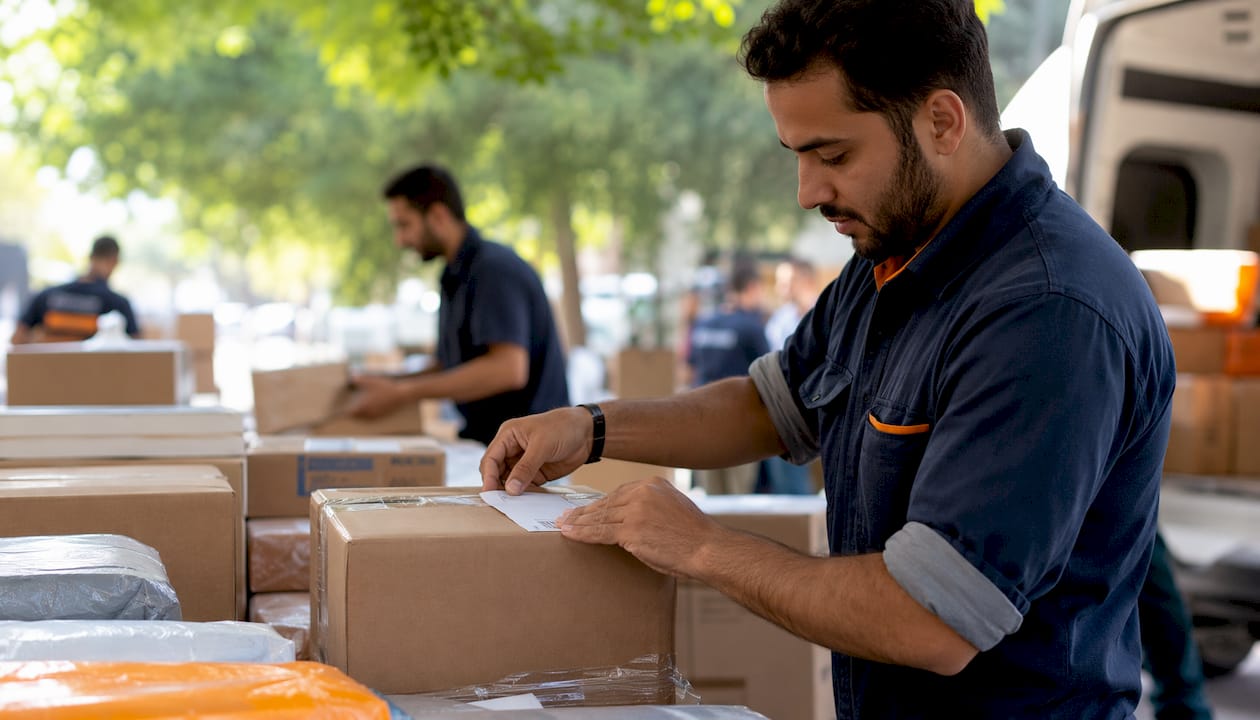
China Post / ePacket is the budget postal option for lightweight parcels under 2 kg. Transit runs 15–30+ days, tracking goes dark mid-route, and Amazon's inbound acceptance rules make it impractical for FBA pallets. Useful only for direct-to-consumer dropship, not FBA replenishment.
Air consolidation groups your cargo with other shippers on a commercial flight. Transit is 7–14 days, rates sit between express and sea, and it suits mid-weight shipments (50–500 kg) that cannot wait for ocean freight.
Sea LCL/FCL is the lowest per-kilo cost for large volumes. LCL (less-than-container load) runs 28–45 days; FCL (full container load) is similar but cheaper per unit at high volume. Demurrage and port delays add risk.
DDP freight forwarder bundles freight mode selection, customs clearance, duties, and FBA delivery into one quoted price. It removes the coordination burden that trips up most small sellers.
| Channel | Typical transit to US FBA | Landed-cost predictability | Hidden-surcharge risk | Best for | Documentation burden |
|---|---|---|---|---|---|
| Express courier | 3–7 days | Low (accessorials vary) | High | Urgent restocks, samples | Low |
| China Post / ePacket | 15–30+ days | Medium | Low | D2C dropship only | Low |
| Air consolidation | 7–14 days | Medium | Medium | 50–500 kg mid-urgency | Medium |
| Sea LCL | 28–45 days | Medium | Medium-high (demurrage) | 500+ kg, cost-sensitive | High |
| Sea FCL | 30–45+ days | Medium | Medium-high | Full containers | High |
| DDP forwarder | Mode-dependent | High (all-in quote) | Low | Small/mid FBA sellers | Low (forwarder manages) |
Where each channel commonly breaks for Amazon FBA:
- Express couriers: residential and additional handling surcharges inflate the invoice; FBA delivery appointments are not always honored.
- China Post / ePacket: no pallet capability; tracking gaps cause FBA receiving delays.
- Air consolidation: carton labeling must be done before consolidation; errors mean re-labeling fees at origin.
- Sea LCL/FCL: demurrage accrues fast if Amazon's receiving dock is backed up; sellers need a US customs broker unless the forwarder includes one.
What actually drives your landed cost?
Freight is only one line item. The full landed cost for a China-to-US FBA shipment includes:
- Ocean or air freight (per CBM or per kg)
- US customs duties based on HTS classification (tariff rates vary by product category; 2026 US tariffs have shifted significantly for many China-origin goods)
- Customs brokerage fees (typically $75–$150 per entry for a standalone broker)
- Fuel and security surcharges (updated monthly by express carriers)
- Storage and demurrage at port or warehouse if Amazon cannot receive immediately
- Residential and additional handling surcharges from UPS and FedEx (no equivalent with USPS)
- Carrier accessorials — hidden fees like address correction, signature required, and oversize handling
A quick example: a single pallet quoted at $280 ocean freight looks attractive until you add $120 customs brokerage, $85 in duties, $40 demurrage, and a $35 residential surcharge on the final-mile leg. The real cost is $560. A DDP quote at $480 all-in is the better deal, and you knew that before the cargo shipped.
For domestic last-mile, USPS Ground Advantage is the lowest-cost option for packages under 7 pounds, with no residential surcharge and no fuel surcharge structure. UPS and FedEx become more competitive above around 10–12 pounds, particularly to commercial addresses. Dimensional weight pricing applies to all UPS and FedEx services; right-sizing your cartons is the fastest way to avoid DIM overcharges.
How do you pick the right channel for your shipment profile?
Work through this checklist before booking anything.
By shipment size:
- Single parcels under 5 lb: USPS Ground Advantage for domestic last-mile; DHL Express or a DDP forwarder for the China leg.
- Mixed SKUs, 50–300 kg: air consolidation or DDP air forwarder.
- Full pallets, 300+ kg: sea LCL or DDP sea forwarder.
- Frequent small parcel batches: evaluate automation at the 500-parcel threshold (see Section 6).
Questions to ask any provider before committing:
- What is your on-time delivery percentage, and do you guarantee it?
- Do you handle Amazon FBA pre-advice and appointment scheduling?
- What is included in your DDP quote (duties, brokerage, fuel, last-mile)?
- What is your claims process for lost or damaged cargo, and what is the typical resolution time?
- Do you require a minimum shipment volume?
Decision rules:
- Below 10–12 lb domestic: route to USPS unless the destination is commercial and the weight is near the crossover.
- DDP forwarder beats DIY customs for most sellers shipping under 10 pallets per month; the brokerage savings alone often cover the forwarder's margin.
- Express courier only when speed is non-negotiable and the per-unit value justifies the cost.
- Multi-carrier automation pays off at roughly 500 parcels per month; below that, manual rate-shopping costs more in time than it saves in freight.
What does the step-by-step FBA shipping workflow look like?
- Confirm factory packing specs. Agree on carton dimensions, weight, and inner-pack configuration before production ends. Errors here cascade through every downstream step.
- Classify your product. Determine the correct HTS code and estimate duties before booking. Use this to get an accurate DDP quote.
- Create the Amazon inbound shipment plan. Generate FBA labels (FNSKU) and carton content information in Seller Central before cargo leaves the factory.
- Prepare export documents. Commercial invoice, packing list, and any required certificates (CE, CPSC, etc.) must be ready before customs export filing.
- Book the shipment. Confirm mode (air or sea), cutoff dates, and whether the forwarder files ISF (Importer Security Filing) for ocean shipments. ISF must be filed 24 hours before vessel departure. See the freight booking process for cutoff details.
- Apply FBA carton and pallet labels. Carton labels go on each box; pallet labels (4 per pallet, one on each side) are required for palletized shipments. Amazon rejects non-compliant configurations.
- Transit and tracking. Express: 3–7 days. Air consolidation: 7–14 days. Sea LCL: 28–45 days. Sea FCL: 30–45+ days. Add 3–5 days buffer for Amazon receiving.
- US import clearance. Your DDP forwarder or customs broker files the entry, pays duties, and releases cargo. Under DAP or EXW terms, this falls on you.
- Delivery to Amazon FBA. Forwarder books the delivery appointment and delivers to the assigned fulfillment center. Confirm pre-advice is submitted so Amazon's system recognizes the inbound.
- File an insurance claim if needed. Cargo insurance claims typically require documentation within 3–7 days of delivery. Keep photos of packaging and a copy of the packing list.
When does shipping automation actually pay off?
The operational breakeven for multi-carrier rate-shopping automation is roughly 500 parcels per month. Below that volume, the time spent managing integrations, troubleshooting label errors, and reconciling invoices outweighs the freight savings.
Pros of automation (above 500 parcels/month):
- Access to commercial-tier rates without volume minimums through platforms like Easyship or Stamps.com
- Routing logic that automatically selects USPS below 10 lb and UPS/FedEx above it
- Batch label printing and Amazon order import
- Claims automation and tracking aggregation
Cons (below 500 parcels/month):
- Platform subscription fees erode savings at low volume
- Integration maintenance requires ongoing technical attention
- A single DDP forwarder relationship is simpler and often cheaper when shipments are infrequent
For most small FBA sellers shipping from China, a DDP forwarder handles the complex international leg, and a shipping platform (or Seller Central's built-in rates) handles domestic replenishment parcels. The two are not mutually exclusive.
Why a DDP forwarder is often the right call for small and mid-sized Amazon sellers
Consider a seller moving two pallets of kitchen accessories from Guangzhou to an Amazon FBA center in Ohio every six weeks. Under a DIY approach, they coordinate with a freight agent in China, a US customs broker, and a domestic carrier, managing three invoices and three points of failure. Under a DDP forwarder model, one quoted price covers everything, and one account manager owns the outcome.
ForwarderOne is built specifically for this use case. The service covers customs clearance, duty and tax payment, carrier selection, Amazon FBA pre-advice, delivery scheduling, and claims support. Sellers retain responsibility for inventory forecasting and product packaging compliance; everything else is handled.
What sellers consistently underestimate is the cost of customs errors. A misclassified HTS code or a missing certificate of conformity can hold a shipment at the port for days, triggering demurrage and an Amazon stockout simultaneously. A DDP forwarder with Amazon FBA expertise catches these issues before the cargo ships, not after it clears customs.
Trust signals worth verifying with any DDP provider: on-time delivery percentage (ForwarderOne claims 99%+), dedicated account manager availability, and explicit confirmation that they file ISF and handle FBA pre-advice as part of the service. ForwarderOne's small-business DDP service is designed around exactly these requirements.
Key Takeaways
For China-to-US Amazon FBA sellers, a DDP freight forwarder delivers the most predictable landed cost and the lowest operational overhead at small-to-mid shipment volumes.
| Point | Details |
|---|---|
| DDP is the default for FBA | All-in DDP quotes eliminate customs surprises and reduce compliance errors for Amazon inbound shipments. |
| USPS wins under 10 lb domestic | USPS Ground Advantage is cheapest for parcels under 7 lb with no residential or fuel surcharges. |
| Automation threshold is 500 parcels/month | Below that volume, manual or single-provider routing is simpler and often cheaper than a multi-carrier platform. |
| Accessorials add up fast | Hidden fees account for roughly 22% of a typical UPS or FedEx invoice; always compare all-in costs. |
| ForwarderOne for small/mid FBA | ForwarderOne's DDP service handles customs, duties, FBA pre-advice, and delivery with 99%+ on-time performance. |
The case for committing to one provider early
Most sellers I talk to delay choosing a DDP forwarder because they are still comparing freight rates line by line. That comparison is almost always misleading. A $0.30/kg difference in air freight means nothing if the cheaper provider does not file ISF correctly or misses the FBA appointment window.
The smarter test is a single pilot shipment: one SKU, one pallet, full DDP terms. Run it alongside your current process and compare the total landed cost, the number of emails you sent, and whether the cargo arrived on time. That pilot tells you more than any rate sheet.
For lightweight parcels under 5 lb going directly to customers, USPS Ground Advantage is still the right call. No surcharges, no DIM weight games, and it reaches every address in the country. But for the China-to-FBA leg, especially when tariffs and customs classification are in play, a single trusted DDP provider is worth more than the marginal savings from shopping three freight quotes.
ForwarderOne handles the China-to-FBA leg so you do not have to
If you are shipping inventory from China to Amazon FBA and want one landed-cost figure before the cargo moves, ForwarderOne is the direct route. The service covers DDP air and sea freight, customs clearance, FBA pre-advice, and delivery scheduling, with a dedicated account manager on every account.
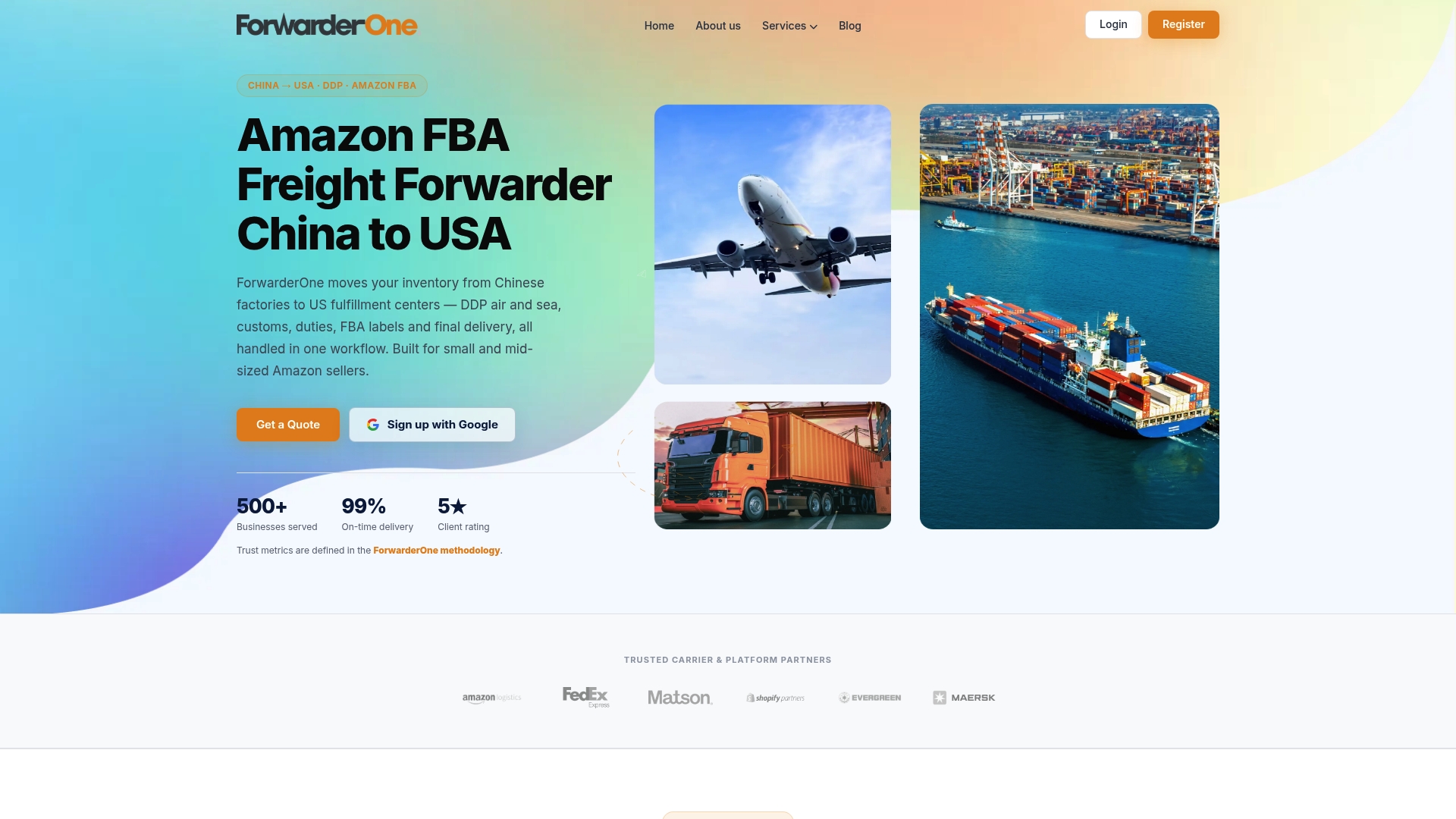
To get a quote, send ForwarderOne the following: SKU description, carton dimensions and weight, total carton count, declared value, HS code (if available), preferred delivery window, and your Amazon inbound shipment ID. That is enough to return a full DDP landed-cost estimate.
With 99%+ on-time delivery and a team that knows Amazon's inbound compliance rules, ForwarderOne removes the coordination overhead that costs small sellers time and stockouts. Get a DDP freight quote or review the FBA shipping service to see what is included.
This article is general information for logistics planning purposes. Tariff rates, customs regulations, and carrier surcharges change frequently. Confirm current figures with your customs broker or a qualified trade professional before shipping.
Need a shipping path sized for a small seller?
ForwarderOne gives small and mid-sized Amazon sellers one DDP quote covering customs, duties, FBA coordination, and delivery.